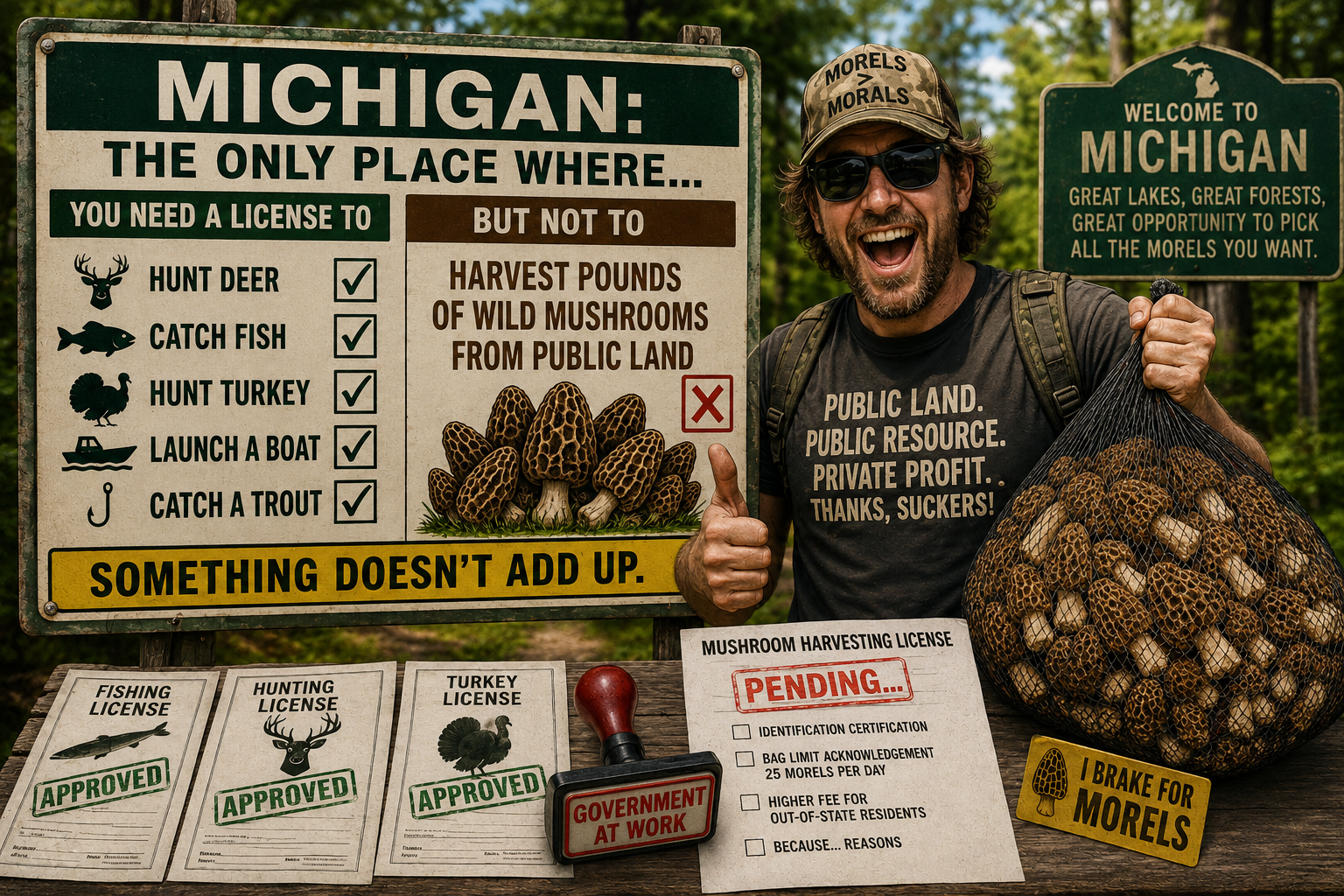
Michigan Needs a Mushroom License — And Deep Down, You Know It

Every spring in Michigan, the forests erupt into a full-scale fungal gold rush. Pickup trucks jam two-tracks. Facebook groups trade morel coordinates like cartel smugglers swapping contraband routes. Grown adults crawl through the woods in camouflage carrying mesh bags full of mushrooms worth more per pound than some cuts of steak. And through all of it, the State of Michigan collects exactly zero dollars from one of the largest seasonal harvest activities on public land.

Michigan: A Peaceful Place Built by Geological Violence

Stand on the bank of the Au Sable River at sunrise and it’s all mist, pine trees, and trout quietly minding their business. Feels like the kind of place that’s always been this way—stable, predictable, friendly. It hasn’t. Michigan is what happens when the earth tries to tear itself apart, fails, gets buried, frozen, crushed, flooded, and then—only after all that—decides to look nice about it.

The Michigan Deer Debacle: How the DNR Managed to Fail Hunters, Farmers, and the Deer Herd All at Once

For generations, deer hunting has been woven into Michigan’s identity. Opening day used to look like a state holiday. Orange jackets in diners at 4 a.m., rifles leaning in pickup trucks, kids learning from their dads and grandfathers that hunting wasn’t just about venison—it was about discipline, stewardship, and tradition. But if you look at the numbers today, something has gone badly wrong. The Michigan Department of Natural Resources has spent decades regulating, restricting, tweaking, and “managing” the deer herd, yet the results speak for themselves: declining harvests, shrinking hunter participation, and a system so tangled that it now struggles to produce enough hunters to even keep the herd under control.

They Promised Us the Right to Hunt. Then They Took It Back.

Hunters were promised respect. We were promised constitutional protection. Instead, we got a regulatory maze where normal behavior is criminalized, enforcement is arbitrary, and tradition is treated as a threat. The same system that sells hunting licenses now treats hunters like suspects. The same agency that depends on hunter dollars increasingly acts as if it knows better than the people who live on and manage the land year-round.