The Coldest Paradise in Recreational Scuba

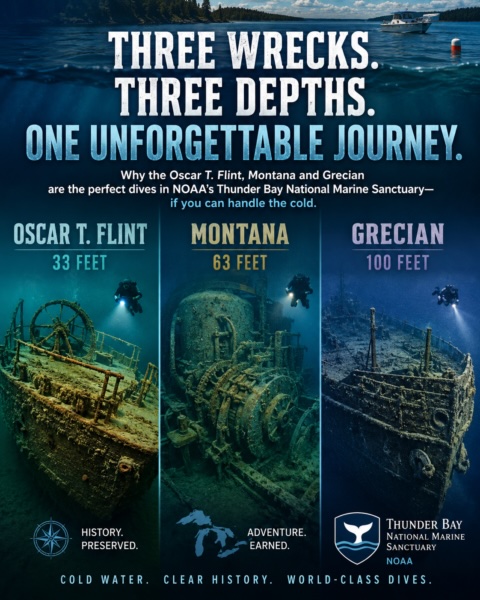
There are places where the water is warm, the reefs are colorful, and every dive feels familiar. Then there’s Thunder Bay. Hidden beneath the cold, crystal-clear waters of Lake Huron lies one of North America’s greatest collections of preserved shipwrecks, where history is measured not in museums, but in feet of depth. From the beginner-friendly “Oscar T. Flint” at 33 feet, to the towering machinery of the “Montana” at 63 feet, and finally the legendary “Grecian” resting around 100 feet below the surface, few places offer such a perfect progression for recreational divers. The only catch? You have to embrace the cold—but those who do are rewarded with an underwater time capsule unlike anywhere else in the world.

Snark: Just Eat the Bugs: Washington’s Brilliant Solution to the American Beef Problem

Perhaps we’ve been looking at America’s beef crisis all wrong. Beef is expensive. The cattle herd is historically small. Drought hammered ranchers. Feed got expensive. Equipment got expensive. Interest got expensive. Land got expensive. Mexican cattle imports were disrupted because a flesh-eating parasite decided to make a comeback. Obviously, the solution is simple. Eat bugs. …

Read more

My Favorite Trees: The strength of a tree

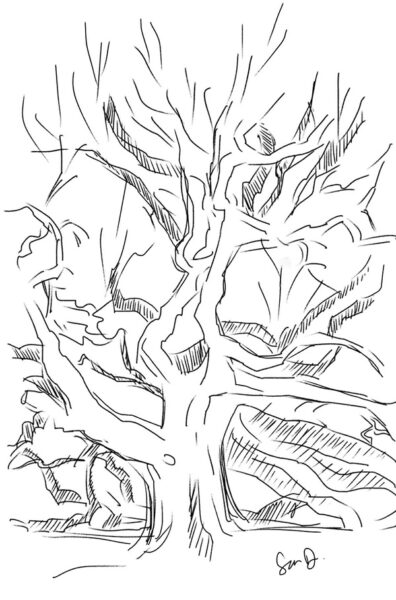
I have a thing for trees. I don’t know why. Maybe because I’ve always been a nerd.

I think it all dates back to my days in Boy Scouts. My cousin Ed Lee and I were second-class Scouts, and we earned our forestry merit badges one summer. Actually, I earned both his badge and mine. He mainly read Archie comic books while I did all the fieldwork.

I’ve been obsessed with trees ever since. Namely, beca

The Questions That Refuse to Die

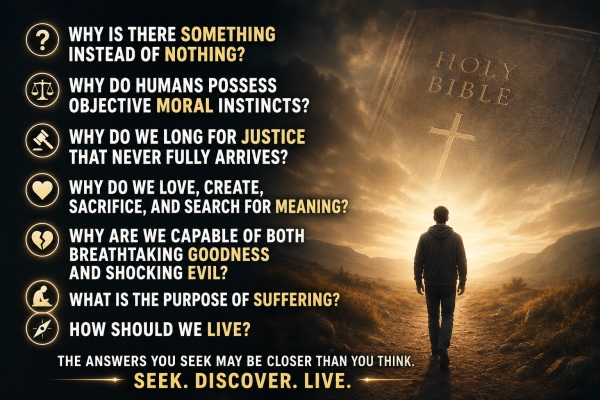
Every generation invents a new philosophy, a new guru, or a new formula for happiness. Yet the questions that have haunted humanity for thousands of years refuse to go away. Why are we here? Why does evil exist? Why do we long for justice? What gives life meaning? Long before self-help books, podcasts, and influencers, one book confronted those questions head-on. Whether you approach it with faith or skepticism, the Bible remains the only book that doesn’t simply tell us how to live—it first explains why life exists at all. Before dismissing its answers, perhaps we should ask whether any other worldview explains reality, morality, purpose, suffering, and the human condition more completely.

How Congress is dealing with the Canadian wildfires #shorts #wildfire #smoke

Dangerous levels of smoke are engulfing major cities in North America as Canadian wildfires send plumes across the Midwest and Northeast. Senators Shelley Moore Capito and Bernie Moreno are responding to the weather catastrophe, but not with the same approach. Kailey Leinz reports

The Great American Lawn: Our Dumb Little Kingdoms of Grass

For a nation founded by farmers, we sure spend a lot of time maintaining grass we can’t eat. The American lawn wasn’t born out of practicality—it was imported from European aristocrats as a symbol of wealth. Today, millions of us faithfully burn fuel, spread fertilizer, and surrender our Saturdays maintaining tiny suburban kingdoms that exist mostly to impress the neighbors. We rejected kings in 1776, then spent the next two centuries pretending to be them, one freshly mowed lawn at a time.

When It Rains, It Pours

Strange weather we’ve been having lately. When I say “lately,” I could go back decades, but I’ll stick to just the past five years or so. Do you recall the winter storm that hit the central and southern US, including Texas and northern Mexico in February of 2021? It was called “Winter Storm Uri,” and at least 240 people died because of it. A strong Arctic air mass plunged deep into the southern US. More than 9 million people lost power while facing record-breaking cold, snow and ice.

The Forgotten Reset Beneath Lake Huron

What if our ancestors really did survive a global catastrophe?

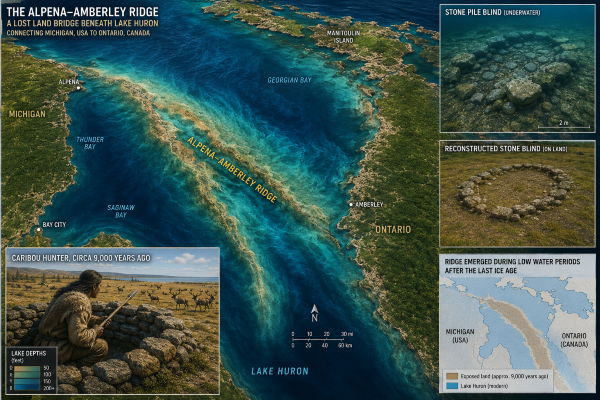
Beneath the waters of Lake Huron lies the Alpena–Amberley Ridge, a prehistoric hunting landscape that once connected Michigan and Ontario. Today it sits submerged and largely forgotten. To some researchers, it is evidence of sophisticated hunters tracking migrating caribou 9,000 years ago. To others, it raises a far bigger question: how much of humanity’s ancient story now lies underwater?

The Younger Dryas Impact Hypothesis remains controversial, but the idea is difficult to ignore. If a cosmic event helped trigger dramatic climate shifts, floods, and environmental upheaval near the end of the Ice Age, what would the world have looked like a few thousand years later? Perhaps not a world of lost super-civilizations, but one of survivors rebuilding, adapting, and passing down memories of a world forever changed.

The Alpena–Amberley Ridge doesn’t prove the theory. What it does prove is that entire landscapes, ecosystems, and chapters of human history can disappear beneath the waves. The real mystery may not be what we’ve found, but what remains hidden.
Oregon’s Coming Expensive Lesson

For decades, hunters and fishermen have quietly funded conservation while everyone else took credit. In Oregon alone, sportsmen contribute nearly a billion dollars annually to the economy and generate tens of millions more through Pittman-Robertson excise taxes that fund wildlife habitat, hunter education, and conservation programs. Yet lawmakers continue treating these same people as a problem rather than partners. Perhaps Oregon should proceed and learn the lesson firsthand. Numbers don’t care about politics. When the funding shrinks, the jobs disappear, and conservation budgets start hurting, the state may discover who was paying the bills all along.

Michigan Needs a Mushroom License — And Deep Down, You Know It

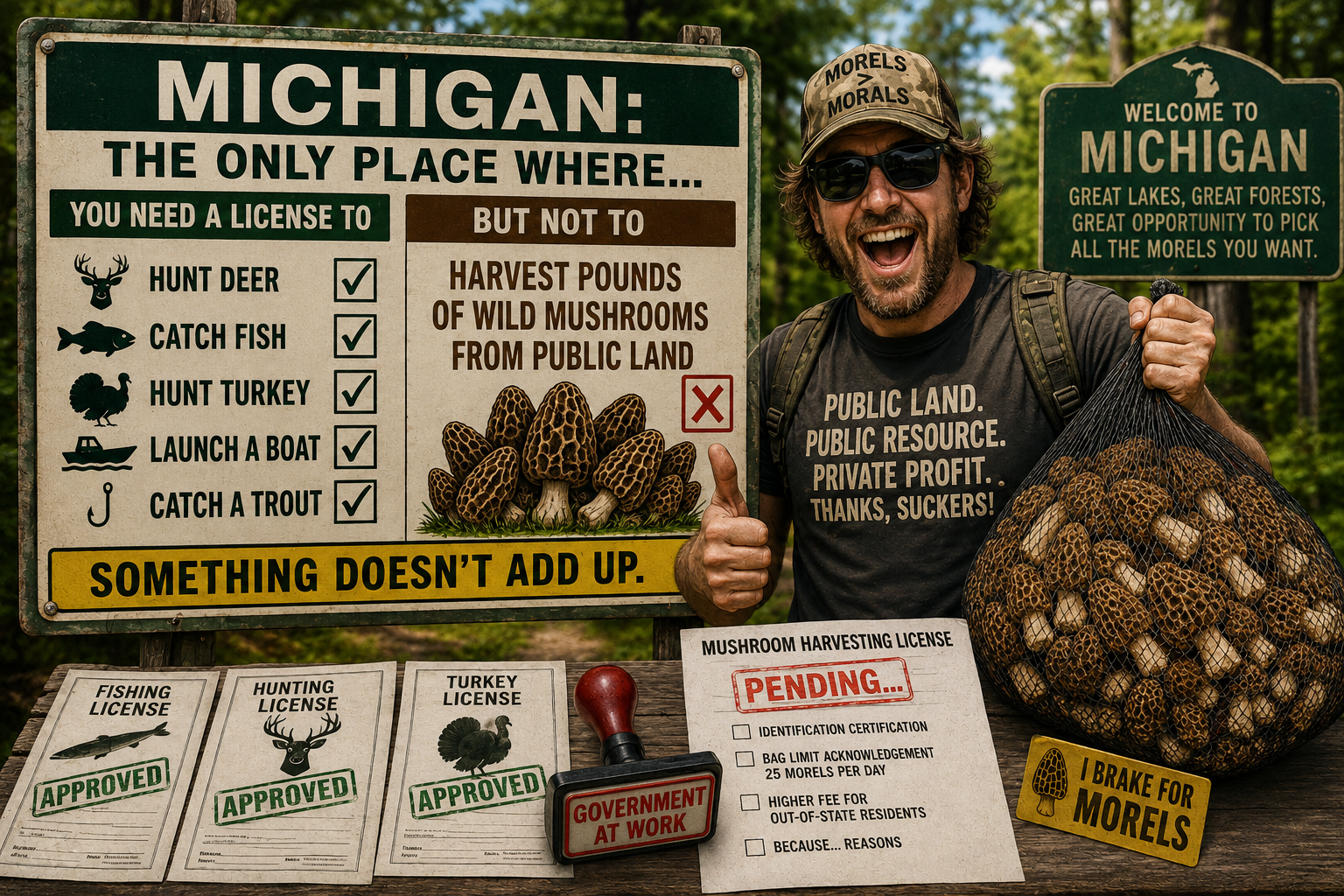
Every spring in Michigan, the forests erupt into a full-scale fungal gold rush. Pickup trucks jam two-tracks. Facebook groups trade morel coordinates like cartel smugglers swapping contraband routes. Grown adults crawl through the woods in camouflage carrying mesh bags full of mushrooms worth more per pound than some cuts of steak. And through all of it, the State of Michigan collects exactly zero dollars from one of the largest seasonal harvest activities on public land.

Michigan: A Peaceful Place Built by Geological Violence

Stand on the bank of the Au Sable River at sunrise and it’s all mist, pine trees, and trout quietly minding their business. Feels like the kind of place that’s always been this way—stable, predictable, friendly. It hasn’t. Michigan is what happens when the earth tries to tear itself apart, fails, gets buried, frozen, crushed, flooded, and then—only after all that—decides to look nice about it.

Three Knots, No Excuses: The Lost Skill That Still Saves Lives

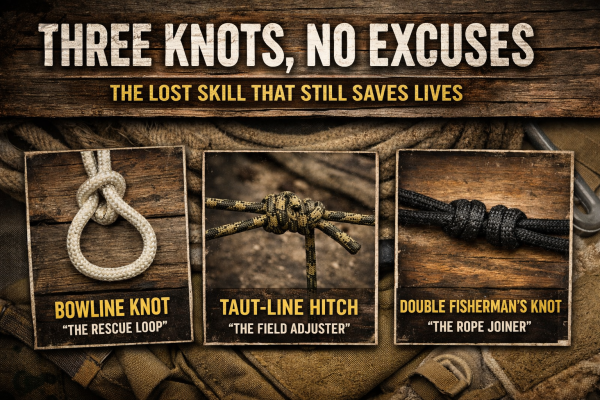
There was a time—not that long ago—when a man who couldn’t tie a knot was considered about as useful as a screen door on a submarine. Today, we’ve got people carrying $1,200 smartphones, satellite GPS, and enough titanium gadgets clipped to their belt to look like a walking REI catalog… and they can’t tie a loop that won’t slip under load.

Aisle Six at Lake Martin: Conversations with a Mallard

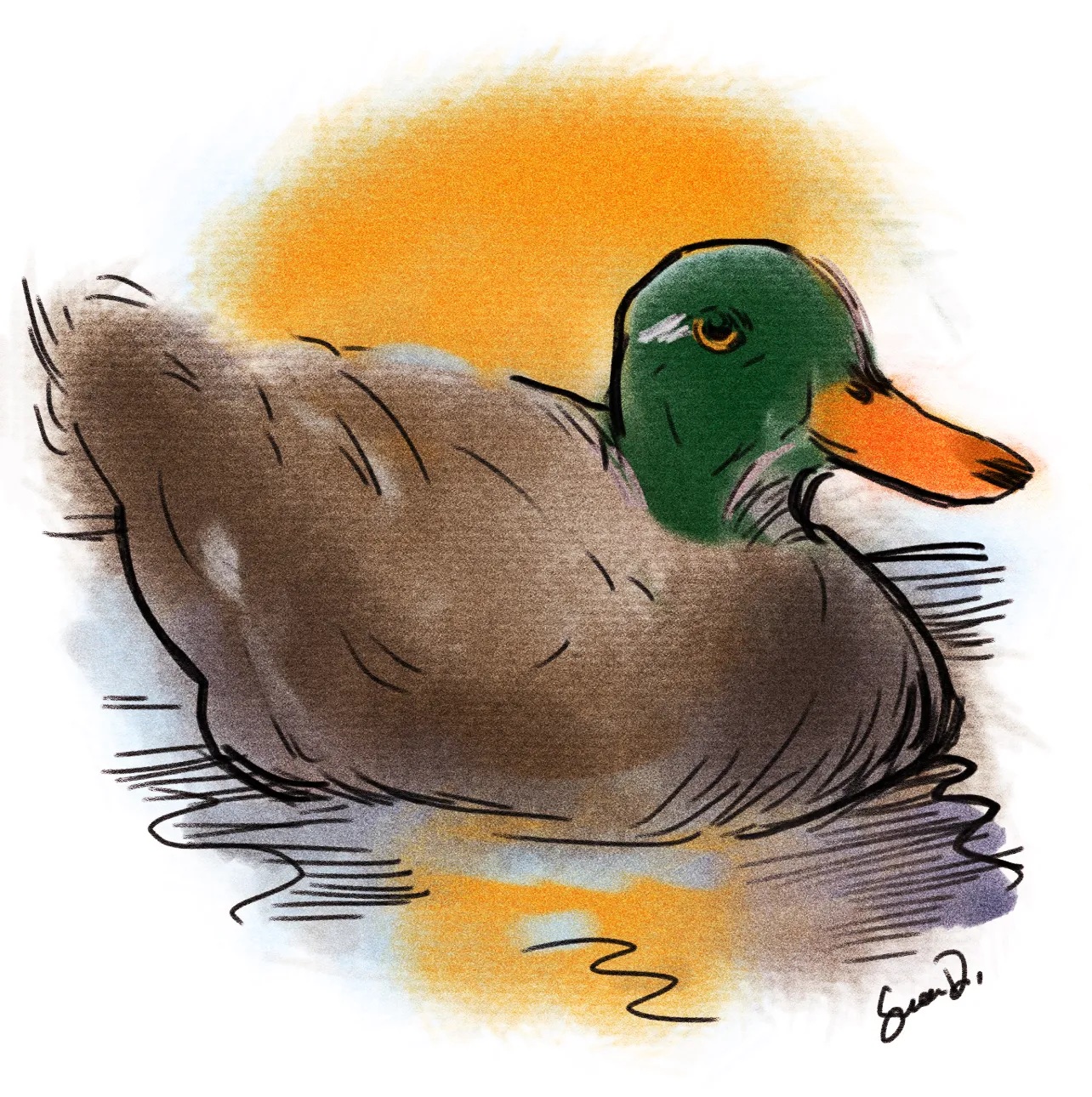
I like ducks. I watch the same two mallards visit this area of Lake Martin. Almost every morning.

I don’t know if they’re married. Ducks are seasonally monogamous. So this could just be a one-season stand.

Still, they are my friends. I guess they’re here to find food. Sort of like going to Piggly Wiggly with your spouse, minus the buggy, and the rolling of your spouse’s eyes whenever one of you places six jars of something you don’t need into the basket because it’s BOGO.

The Interface, the Code, and the War: Why Christianity Becomes Offensive

Some of the sharpest minds of the last century sensed the reductionist story was missing something. Carl Jung looked inward and saw conflict. The ego — the conscious “I” — wants control, moral self-justification, narrative dominance. It insists on sovereignty. Jung recognized the ego was not the whole self and that something beyond it pressed inward, demanding humility and reordering. He called that pressure the “Self.” He diagnosed the tension correctly. He simply refused to name the external authority behind it.

Not Random, Not Accidental: Chuck Missler and the Case for an Engineered Reality

When Missler said we may be living in something like a simulation, he meant that physical reality functions like a user interface. We experience the front end. The underlying code — the laws, constants, and constraints — operate beneath our direct perception. Just as you don’t see the binary code behind your screen but interact with its output, we interact with a physical world governed by informational architecture we didn’t write.

Acorns, Aggression, and Melanin: Why the Black Squirrels Run Northern Michigan

If NATO ever needs a real-world case study in territorial conflict, dominance hierarchies, and cold-weather logistics, they can skip the war colleges and simply hang a bird feeder in northeastern Michigan. Within hours, it becomes a contested supply hub. Within days, a full-blown squirrel conflict emerges—predictable, ruthless, and strangely educational.