When Cement Meets Jihad: How Lafarge Turned War Into a Business Model
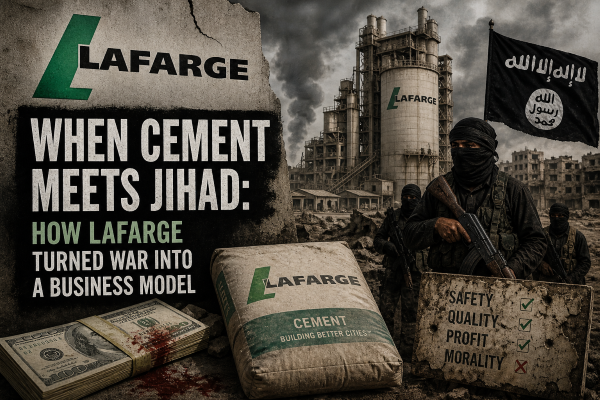
From roughly 2012 to 2014, as Syrian Civil War turned northern Syria into a live-fire apocalypse, Lafarge made a calculated decision: stay open, stay profitable, and if that meant paying off armed groups—including ISIS and al-Nusra Front—then so be it. Business is business. Even if your business partners occasionally crucify people for sport. The company didn’t just stumble into this. Courts later described it as an organized system. Money moved. Deals were made. Raw materials, checkpoints, safe passage—all greased with cash. The same way you’d negotiate trucking contracts in Ohio, just with more AK-47s and fewer HR policies.
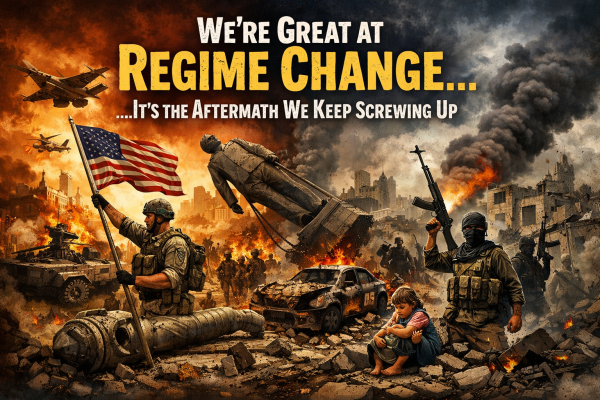
We’re Great at Regime Change… It’s the Aftermath We Keep Screwing Up

Every time the United States gets involved in a foreign conflict, the opening act is usually impressive. Precision strikes, shock-and-awe, special operations raids, satellites, drones, cyber, carrier groups—the whole high-tech orchestra. When it comes to breaking things, the U.S. military is the undisputed heavyweight champion of the world. Regimes fall, palaces empty, statues get pulled down, and cable news runs dramatic graphics about “the end of an era.”

America’s Quiet War: How Political Posturing Keeps Killing Soldiers in a Place Most Americans Forgot Exists

Syria is not a declared war. There is no Syria-specific Authorization for Use of Military Force. There is no victory condition, no end state, no honest explanation that survives five follow-up questions.