Feeding the Fire: How the Outrage Industry Learned to Love Its Own Enemy

America doesn’t just have problems anymore—it has subscription services for problems. Pick your flavor, swipe your card, and congratulations: you’re now funding a permanent crisis that will never quite get solved. Because solving it would be terrible for business.

The Lie We Tell Ourselves About Food—and the Chemical Trick Keeping Billions Alive

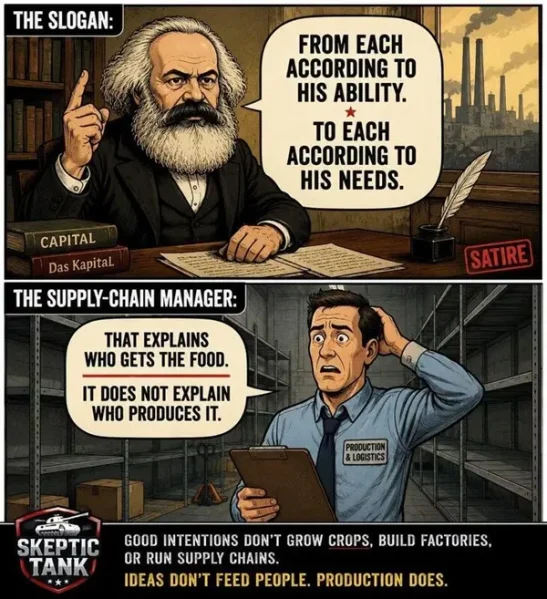
We like to pretend food comes from virtue. Hard work, sunshine, maybe a red barn and a guy in overalls. Reality check: your dinner exists because of industrial chemistry, fossil fuels, and a process that forces atmospheric nitrogen to behave like it’s being interrogated in a back room. At the center of this quiet miracle—and quiet dependency—is the Haber-Bosch process. It doesn’t get headlines. It doesn’t trend. But it’s arguably one of the most important inventions in human history, because it broke the natural limits on how much food we can produce. Without it, the global population wouldn’t look anything like it does today.

When Cement Meets Jihad: How Lafarge Turned War Into a Business Model

From roughly 2012 to 2014, as Syrian Civil War turned northern Syria into a live-fire apocalypse, Lafarge made a calculated decision: stay open, stay profitable, and if that meant paying off armed groups—including ISIS and al-Nusra Front—then so be it. Business is business. Even if your business partners occasionally crucify people for sport. The company didn’t just stumble into this. Courts later described it as an organized system. Money moved. Deals were made. Raw materials, checkpoints, safe passage—all greased with cash. The same way you’d negotiate trucking contracts in Ohio, just with more AK-47s and fewer HR policies.

The devil wears Kagan: Another mean girl liberal icon treats staff like, well, you know what

Mollie Hemingway is promoting her new book, Alito: The Justice Who Reshaped the Supreme Court and Restored the Constitution.

But the biggest revelation in the book is how Justice Elena Kagan bullies her staff. Hemingway discovered Kagan and to a lesser extent, Justice Sonia Sotomayor, have a reputation for being mean girl bosses.

Two Wings, One Bird: How We Traded a Republic for a Revenue Machine

We like to pretend we live in a fierce two-party system. Red vs. blue. Left vs. right. Cable news gladiators screaming like it’s the Super Bowl of righteousness. But step back far enough and the illusion fades. What you actually see is one bird with two wings—and that bird doesn’t care about your values, your vote, or your virtue. It worships one thing: money.

Gold, God, and the Grift: How “Patriot” Pitchmen Sold Fear and Made Millions

There’s a hard truth nobody likes to say out loud: this didn’t just happen because of a few shady coin dealers—it happened because trusted voices carried the water. When names like Glenn Beck, Bill O’Reilly, and Rudy Giuliani lent their platforms—directly or indirectly—to gold pitches, it wasn’t background noise. It was a credibility transfer. And when shows hosted by Laura Ingraham, Mark Levin, and Mike Huckabee ran those same ads day after day, it didn’t just sell metal—it sold trust. That trust had value, and someone cashed it.

The Fragile Grid: Powered by Electricity, Dependent on Foreign Steel

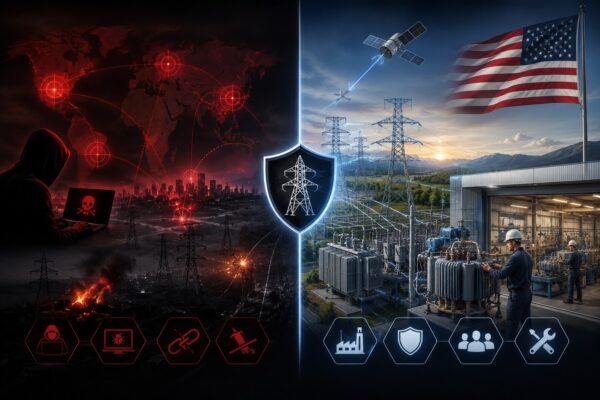
We all love electricity. Flip the switch, lights come on. Coffee maker fires up. Wi-Fi router blinks happily. Data centers hum. Teslas charge. Life is good. Modern civilization runs on electricity the way the human body runs on oxygen. The only time people think about the electrical grid is when it fails—and then suddenly everyone becomes an expert on transformers, substations, and utility companies. But here’s a fun little detail almost nobody knows: the entire grid quietly depends on a specialized material most Americans have never heard of.

Hormuz: 21 Miles of History Proving Geography Still Rules the Modern World

The modern world likes to believe it has outgrown geography. Satellites circle the planet, data moves at the speed of light, and weapons can strike targets from continents away. Military theorists speak confidently about cyber war, artificial intelligence, and fifth-generation conflict conducted across digital networks and orbital platforms. Yet despite all this technological sophistication, the global economy still depends on an astonishingly simple fact of physical geography: about twenty-one miles of ocean between Iran and Oman control roughly a quarter of the world’s oil and enormous quantities of energy-related commodities such as petrochemical feedstocks and fertilizer inputs.

Welfare For the Well-To-Do

On Boxing Day of 2023, I noted an article in The Wall Street Journal concerning investors souring on electric vehicle charging companies. In plug in electric vehicles are the wave of the future, why would investors not be moving into, rather than out of, such companies? Note that the original article was from December of …

Read more

Atlas Rebooted: When the Department of War Decides Your Company Belongs to the State

In Atlas Shrugged, the government doesn’t seize Rearden Metal with bayonets. It does something far more modern. It surrounds it with emergency language, regulatory edicts, patriotic necessity, and administrative suffocation until saying “no” becomes illegal in everything but name. The state never shouts, “We are stealing this.” It simply declares the product too important to be privately controlled.

Stolen Valor Wears Medals — Stolen Charity Wears a Flag and a Suit

There’s stolen valor — the guy at the bar wearing medals he never earned, hoping nobody asks what unit he was in. Then there’s stolen charity — the polished executive in a tailored suit wearing patriotism like a lapel pin while cashing checks “for the troops.” One lies about serving. The other lies about serving those who served. Both are frauds. Only one gets invited to donor banquets.