Ilhan Omar Doesn’t Like the New Rules

The commie wannabes started changing the rules of due process about a nanosecond after the Donald said he intended to make America great again. Now they don’t like the new rules.
Citizen Writers Fighting Censorship by Helping Americans Understand Issues Affecting the Republic.
The commie wannabes started changing the rules of due process about a nanosecond after the Donald said he intended to make America great again. Now they don’t like the new rules.

Dr. Amesh Adalja discusses reports of a suspected plague outbreak in Russia, calling for transparency from the Russian government after a second reported pneumonia-related death at a research lab.
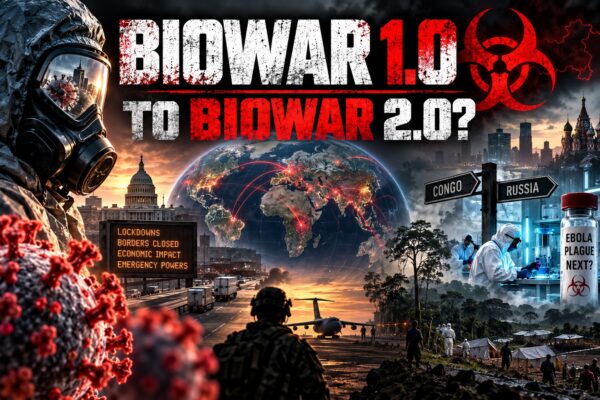
COVID-19 may never be proven to have been an act of biological warfare, but strategically it gave the world something almost as valuable: a full-scale demonstration. A microscopic threat closed borders, disrupted militaries and supply chains, crippled economies, expanded emergency powers, and turned fear and information into weapons—all while leaving cities, factories, farmland, and infrastructure standing. That is the thesis: COVID was effectively the world’s Biowar 1.0 field exercise, regardless of intent. Now, as outbreaks, laboratory incidents, and biological threats generate headlines from Congo to Russia, the unsettling question isn’t whether COVID was deliberately weaponized. It is whether governments watched the experiment, studied the vulnerabilities, and are now saber-rattling—perhaps even conducting psyops—with what Biowar 2.0 might look like.
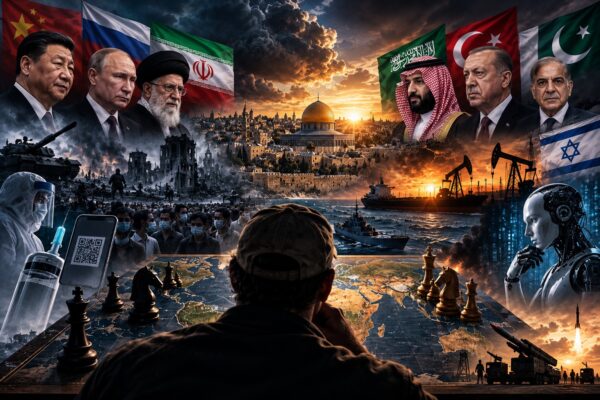
What if World War III didn’t begin with missiles, mushroom clouds, or tanks crossing a border? What if it quietly started around 2016, and we were too busy arguing about elections, surviving COVID, watching AI explode, and complaining about gas prices to notice the clouds gathering? Grab the heavy-duty aluminum foil and follow me down the rabbit hole as we connect geopolitics, oil, emerging alliances, artificial intelligence, biblical prophecy, and one wonderfully uncomfortable question: What if history has already changed—and nobody bothered to send us the memo?
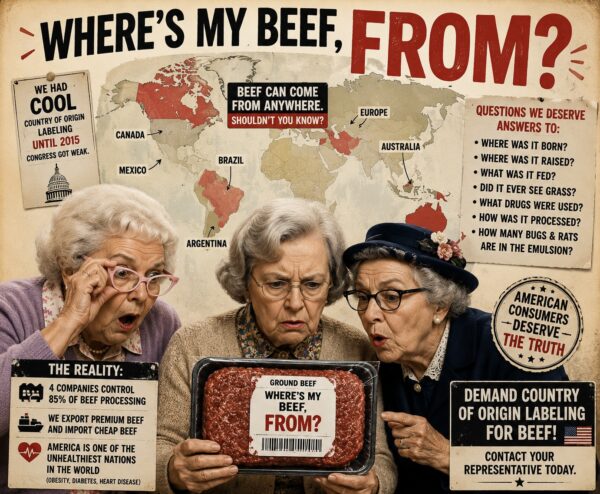
Remember the old Wendy’s commercial: “Where’s the beef?” In 2026, maybe the better question is: “Where’s my beef FROM?” America once required Country of Origin Labeling for beef—until Congress blinked in 2015. Now, while we export premium American beef and import foreign beef for our food supply, consumers deserve a simple answer about what they’re putting on the grill. Teddy Roosevelt took on the Beef Trust. Maybe it’s time to channel a little Bull Moose again.

Twenty-five years after 9/11, Americans still have questions—and apparently asking them remains more dangerous to polite society than leaving them unanswered. We know intelligence agencies had information about future hijackers, critical information wasn’t effectively shared, early accounts of the military response proved inaccurate, Saudi-connected individuals assisted two hijackers, and Building 7 became the first known tall building to completely collapse primarily from uncontrolled ordinary-content fires. None of that proves an inside job. It proves something much simpler: “trust us” isn’t an acceptable substitute for history. Open the remaining files, follow the evidence wherever it leads, destroy the stupid conspiracy theories with facts—and answer the legitimate questions. After 25 years, Americans have earned something better than a press release.
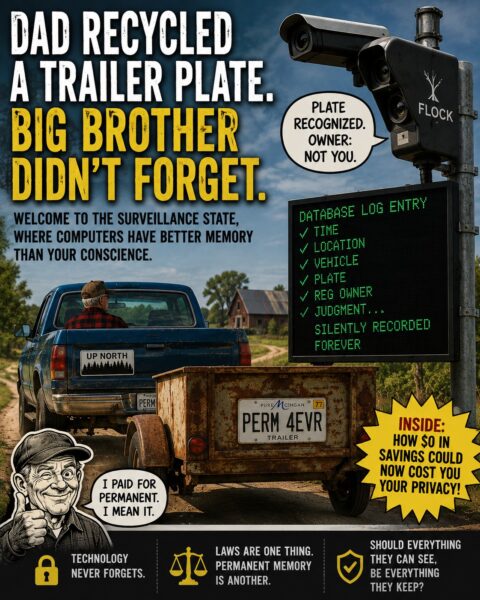
Dad thought “permanent trailer plate” meant permanent. Government apparently meant, “until you buy another trailer, peasant.” For generations, recycling an old trailer plate was the kind of technically-wrong rural economics nobody noticed unless a cop had an actual reason to look. Today, cameras, databases, and algorithms potentially can notice—and remember—things no human officer ever would have bothered with.
That raises a bigger question than Dad’s Great Trailer Plate Crime Spree: **When technology makes it possible for government to notice nearly everything, should it?**

Reagan National was a perfectly reasonable airport when it opened in 1941. Eighty-five years later, we’ve packed commercial jets, military helicopters, presidential transportation, restricted airspace and national-security missions into the same tiny patch of sky—and the warning signs are getting difficult to ignore. After 67 deaths, an emergency airspace redesign, repeated communications failures and a Marine One separation incident, perhaps the problem isn’t the latest procedure or antenna. Perhaps Washington’s convenience has simply outlived the acceptable risk.
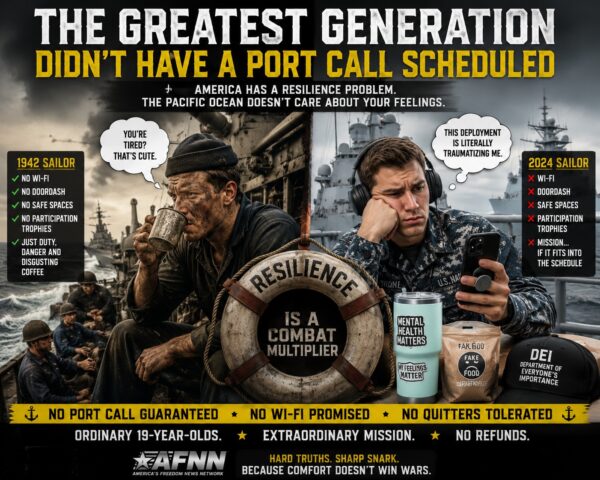
The Greatest Generation didn’t have Wi-Fi, DoorDash, FaceTime, scheduled port calls—or an expected return date. They had a war to win. Today’s sailors aren’t the problem; they’re products of a culture that has become extraordinarily good at eliminating discomfort. The question isn’t whether young Americans are “soft.” It’s whether America still teaches resilience before history demands it the hard way.
The Pacific Ocean doesn’t have an HR department, and the enemy doesn’t care about your deployment schedule.
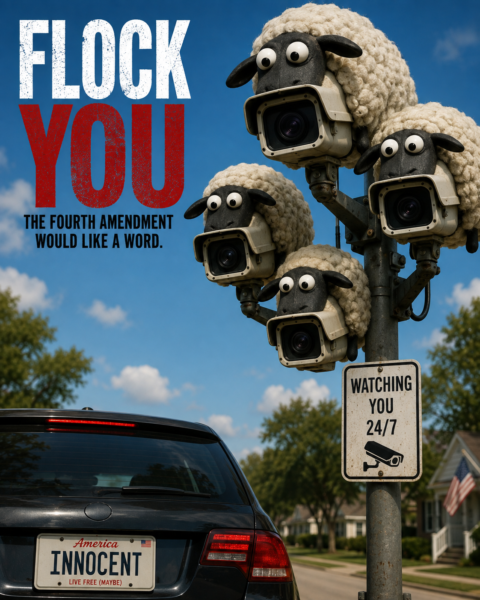
America has built a surveillance network King George III could only dream about. License-plate cameras may help catch criminals, but when government can potentially turn millions of innocent motorists into searchable dots on a map, the Fourth Amendment deserves a seat at the table. Catch the car thief. Find the missing child. But when the government wants to reconstruct where ordinary citizens have been, Americans should remember two beautiful words our Founders would appreciate: Flock you.
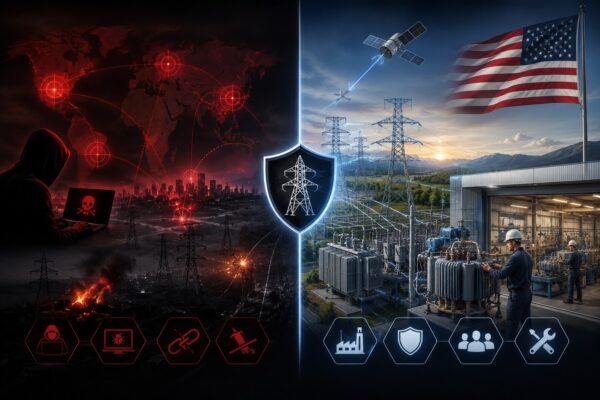
America’s next battlefield may not begin with missiles, tanks, or troops crossing a border. It may begin with a transformer failure, a cyberattack, a communications outage, and a supply chain that suddenly stops supplying. The new executive order protecting America’s bulk-power system recognizes an uncomfortable reality of fifth-generation warfare: the electrical grid is now strategic terrain. Securing foreign vulnerabilities and rebuilding domestic manufacturing are important first steps—but preparing for the next war means building a nation resilient enough to keep fighting, communicating, manufacturing, and rebuilding even when somebody tries to turn the lights out.
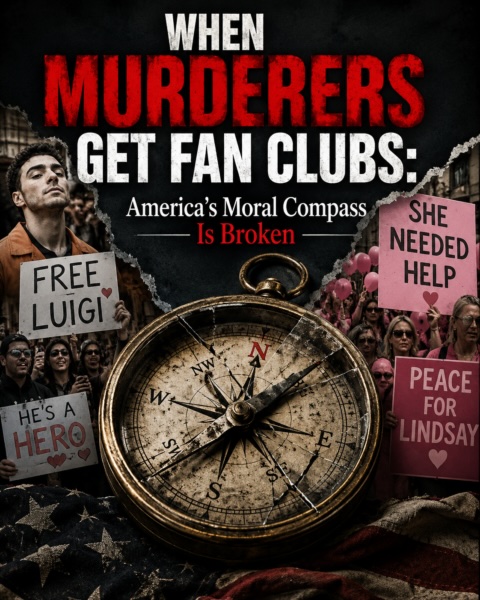
America has always had criminals. What’s new is the fan club. From cheering an accused CEO killer to rallying around a mother who killed her three children, we’re watching sympathy, grievance, and tribal identity compete with basic moral judgment. When the first question becomes “Whose side am I on?” instead of “What is right and what is wrong?” a nation has a serious problem. Isaiah warned about calling evil good and good evil. Maybe our moral compass isn’t merely drifting anymore. Maybe it’s broken.
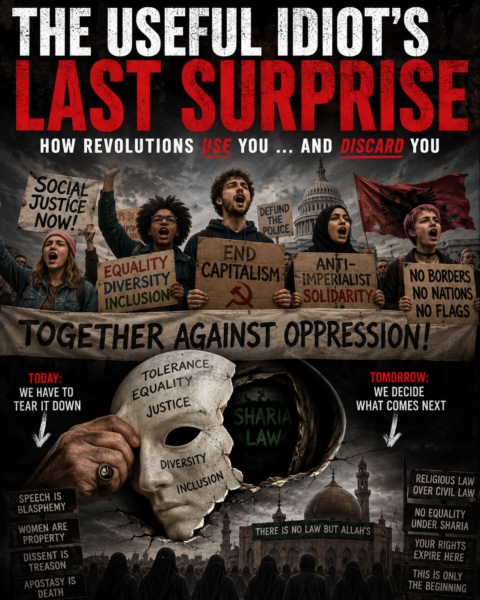
History’s most dangerous political bait-and-switch begins when groups with completely incompatible end goals unite around a common enemy. Iran’s Marxists thought they were using the Islamists; the Islamists had other plans. Today, America’s socialists, progressives, and Islamist activists sometimes find themselves marching beneath the same anti-capitalist and anti-Western banners. Iran offers an uncomfortable warning: before helping tear down the old order, you’d better ask what your revolutionary partners intend to build in its place—and whether they’ll still need you when they’re finished.
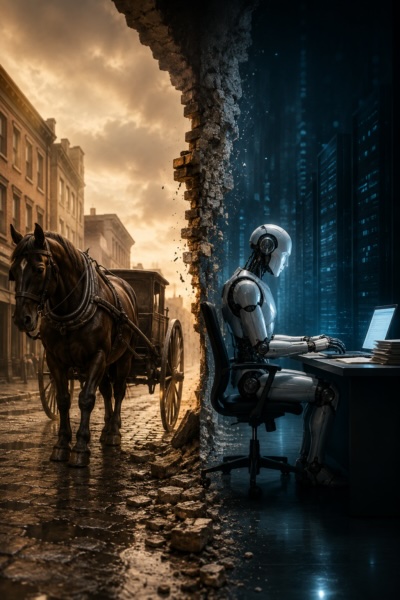
The horse didn’t disappear when the automobile arrived. It simply stopped being essential. Artificial intelligence may be forcing the legal profession into a similar reckoning. When a $20 monthly subscription can research case law, organize evidence, draft motions, and explain legal procedure, the age of the billable hour may finally be facing its greatest challenge. Somewhere, an attorney is still billing in six-minute increments while AI has already finished the paperwork.
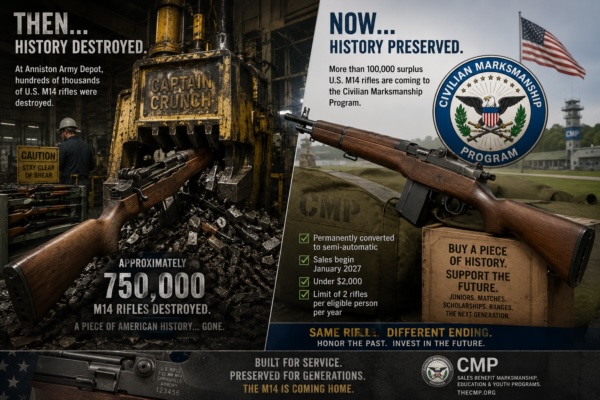
Nearly 750,000 U.S. M14 rifles were destroyed after the Cold War, many meeting their end at Anniston Army Depot in the jaws of a hydraulic shear known as “Captain Crunch.” Now, history is taking a different path. Beginning in January 2027, the CMP expects to offer permanently converted semi-automatic M14s to qualified Americans for under $2,000. Every rifle sold preserves a piece of American military history while helping fund junior shooting programs, Camp Perry, scholarships, and the future of competitive marksmanship. Sometimes, the best way to honor history isn’t to put it in a museum—it’s to put it back on the firing line.

Sixty thousand Moroccan Muslim men of military age have invaded Spain by storming the border fence that separates Ceuta, a Spanish outpost in North Africa, from Morocco. Among the horde were over 1600 newly released prison inmates.
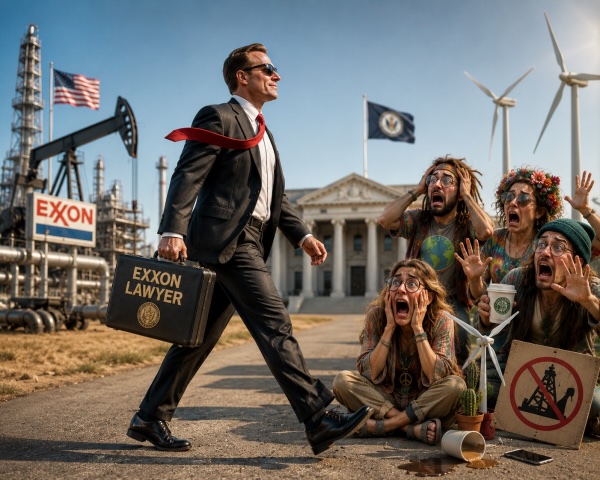
America is about to need more electricity than at any time in generations. AI, reshored manufacturing, data centers, and national security don’t run on hashtags—they run on abundant, reliable energy. So when a veteran ExxonMobil attorney joins the Justice Department, the usual professional panic merchants act like civilization is ending. Maybe it’s not a conspiracy. Maybe it’s just common sense. If America wants to outbuild China instead of outsourcing its future, we’d better start hiring people who know how to keep the lights on.

For more than a century, Americans have spent millions of dollars fighting nature at the Lincoln Memorial Reflecting Pool. Built in 1922 as a grand architectural feature, the pool transformed a former Potomac floodplain into a shallow, artificial body of water that has suffered recurring algae blooms, leaks, sediment buildup, and costly repairs ever since. The latest maintenance controversy isn’t a new problem—it’s simply the latest chapter in a hundred-year struggle to maintain a giant pond where nature never intended one to exist. Instead of pouring more taxpayer dollars into perpetual repairs, perhaps it’s time to ask a different question: what if we reclaimed the 15 acres occupied by the Reflecting Pool and returned that space to the public? Expanded lawns, shaded gathering areas, memorial gardens, event space, and recreational areas could serve millions of visitors far better than a body of water that most people can only walk around and photograph. Sometimes the best way to solve a century-old engineering problem is not to engineer harder—it’s to admit the original idea has outlived its usefulness.
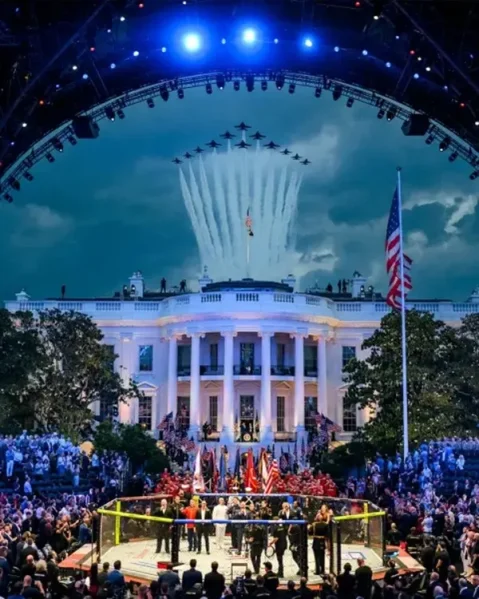
FBI thwarted explosive drone attack against Sunday’s UFC Freedom 250 event on the WH Lawn and have taken 5 suspects into custody. They are still investigating & expect to arrest a dozen more. The multi-phase terror attack allegedly involved using explosive-laden drone aircraft to strike buildings.

Ancient alien theory didn’t emerge from hard evidence—it was stitched together by imaginative authors like Erich von Däniken and Zecharia Sitchin, who took fragments of ancient texts, ignored actual linguistic scholarship, and filled the gaps with cosmic fan fiction. What followed was not discovery, but duplication—a self-reinforcing echo chamber amplified by media like Ancient Aliens, where speculation is recycled until it feels like fact. The result is a modern mythology dressed in the language of science, asking us to believe that early humans couldn’t stack stones without extraterrestrial supervision, while simultaneously expecting us to reject the idea of a Creator as “unscientific.” It’s not that the evidence demands aliens—it’s that the narrative refuses God, and will accept almost anything else.