5th Generation War, 1462: Vlad the Impaler Understood the Human Domain
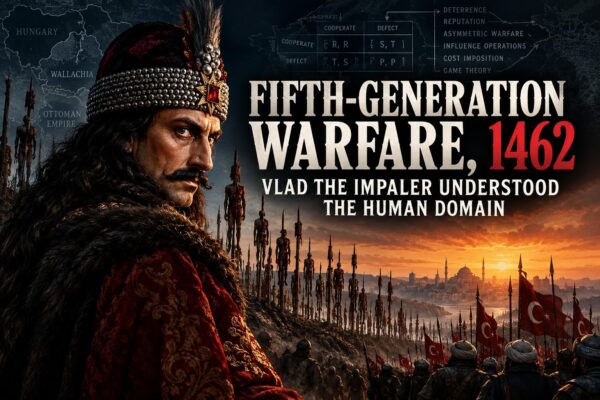
History remembers Vlad the Impaler as a blood-soaked medieval psychopath. But what happens if we assume Vlad was a rational actor? Suddenly the stakes, the terror, and the infamous Forest of the Impaled start looking less like random savagery and more like calculated deterrence. Vlad couldn’t outspend or outfight the Ottoman Empire, so he weaponized the one battlefield where a small power could compete with a giant: the human mind. Five hundred years before “fifth-generation warfare” became fashionable, Dracula was already playing game theory—with sharpened stakes.