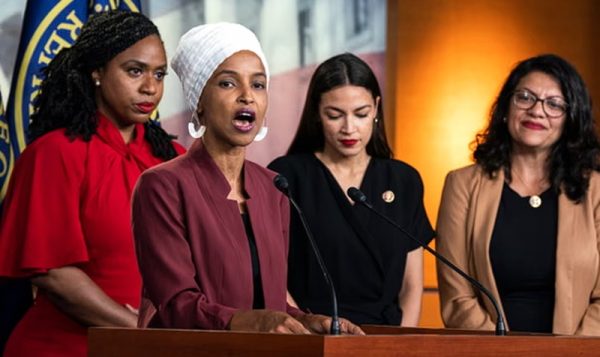
The America 250th Anniversary Celebrations Are Underway And the Anti-Trump, Anti-America Crowd Are Big Mad

The UFC event rose above all the hate and nonsense spewed by this vocal, unhinged and violent segment of our society and their cheerleaders in the LSMBTGANF. The pageantry with the backdrop of the White House predominant with events centered around the Ellipse and the Washington Monument was splendiferous.
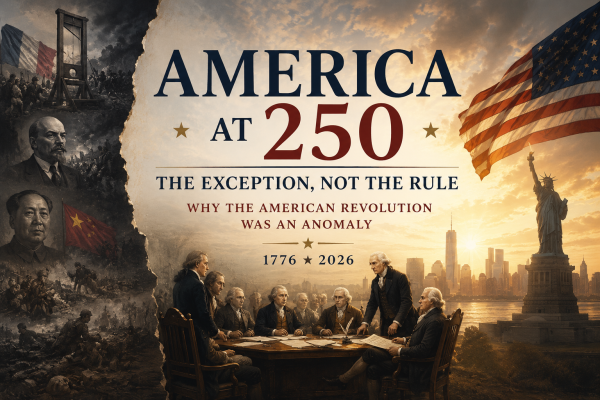
The Exception, Not the Rule: Why the American Revolution Was an Anomaly

Most revolutions begin with promises of freedom and end with new forms of power. The French Revolution produced the Terror and Napoleon. The Russian Revolution produced Lenin and Stalin. The Chinese Revolution produced Mao and mass famine. History’s pattern is clear: tearing down institutions is far easier than building stable replacements. The American Revolution was different. The Founders inherited functioning local governments, a tradition of self-rule, and a deep understanding of human nature. Rather than trusting power, they divided it. Rather than creating permanent revolution, they created a constitutional republic capable of reform without collapse. As America approaches its 250th birthday, the greatest lesson of 1776 may not be that revolution is glorious, but that the true miracle was what came after—the creation of a nation where change could occur without needing another revolution.

Islam Out!

America at 250 years experienced epochal transitions from a Frontier to Agricultural to Industrial to (first-iteration) Post-Industrial society, from colonies to nation-state to world power and empire to super-power to global uber-super-power, economic crises, wars, and its terrible civil war of national definition in the War Between the States. Concurrently, each century had a paramount issue of national definition.

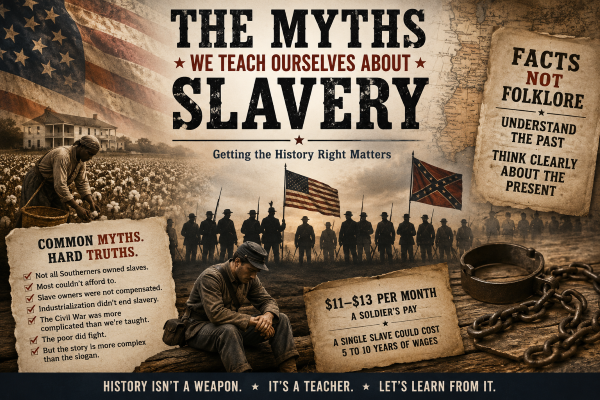
The Myths We Teach Ourselves About Slavery

Slavery was a moral evil, but that doesn’t mean every story we’ve inherited about it is historically accurate. Most Southern households did not own slaves. A common soldier couldn’t afford one. Former slave owners were generally not compensated after emancipation. Industrialization didn’t make slavery obsolete—it often made it more profitable. The Civil War itself was far more complex than the slogans we use to describe it. History deserves better than mythology. We can condemn slavery without reservation while still insisting on facts over folklore, because understanding the past honestly is the only way to understand the present clearly.

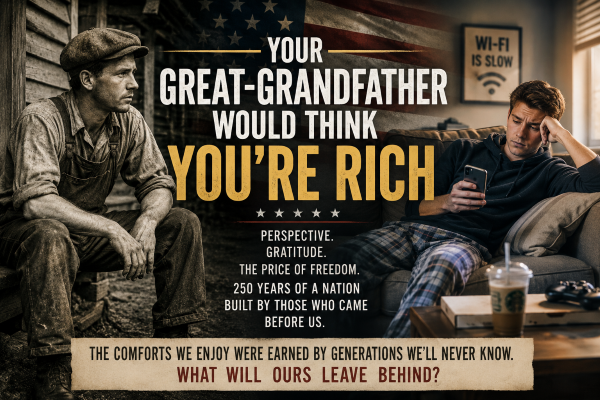
Your Great-Grandfather Would Think You’re Rich

America is about to turn 250 years old, yet many of us live with less gratitude than our great-grandparents who had far less. The average American enjoys comforts that kings, presidents, and industrial tycoons could only dream of—instant communication, modern medicine, air conditioning, safe food, and access to nearly all human knowledge from a device in their pocket. Yet we often act as though we are the most deprived generation in history. This article examines the extraordinary inheritance we’ve received from those who built America, the dangers of historical amnesia, and why our descendants may care less about our complaints than what we chose to build, preserve, and pass on. Before we criticize the nation our forefathers handed us, perhaps we should ask a more uncomfortable question: Are we proving worthy of the gift they left behind?

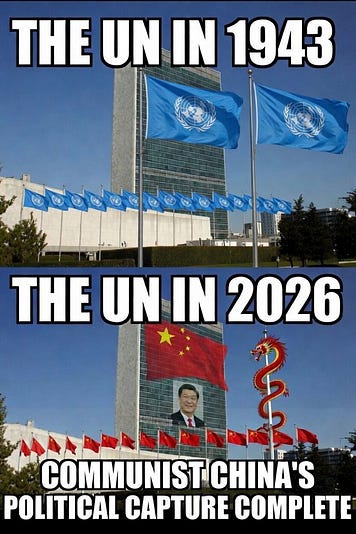
Communist China Has Hollowed Out the UN: Decades of successful CCP subterfuge

The United Nations was chartered in 1945 as a creation of American strategic vision – a Pax Americana scaffolding dressed in multilateral language that was intended to be a cornerstone of the American-made international order shaped after World War II. That calculus has been fundamentally altered over time. The institution has been methodically infiltrated, staffed, and redirected by the Chinese Communist Party over the past 25+ years, transforming the UN from a tool America shaped into a platform Beijing increasingly controls – and paid for in large part by the American taxpayer.

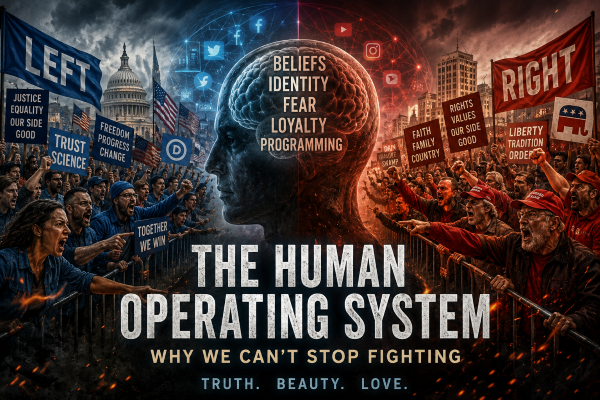
The Human Operating System: Why We Can’t Stop Fighting

What if the greatest battlefield of the 21st century isn’t a nation, a border, or a data center—but the human mind itself?

Every one of us runs on programming: beliefs, identity, experiences, fears, and loyalties that shape how we see the world. Today, those operating systems are colliding. Social media, political tribes, and algorithm-driven outrage have turned neighbors into enemies and disagreement into warfare. The question is no longer whether we’re being programmed. The question is who is writing the code—and whether we’re still capable of distinguishing truth from manipulation.
In an age of constant outrage, perhaps the most radical act is to pursue truth, beauty, and love over tribal loyalty.

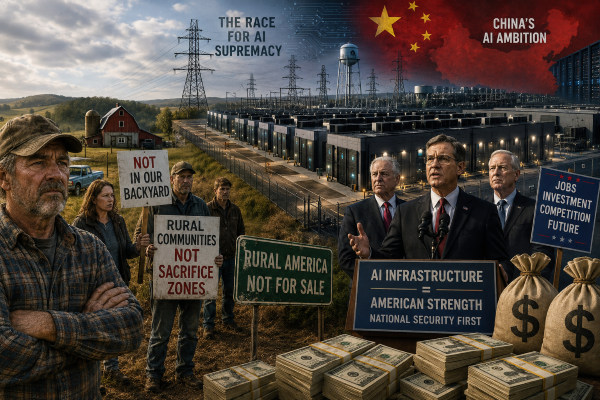
The AI Civil War Nobody Saw Coming

America’s next great divide may not be red versus blue. It may be the people who benefit from artificial intelligence versus the people forced to host its infrastructure. Across rural America, communities are being asked to accept massive data centers, increased power demands, and growing water consumption in the name of national security and the AI race with China. Meanwhile, the economic benefits often flow elsewhere. As politicians, tech companies, and investors promise prosperity and strategic advantage, local residents are left asking a simple question: who gets the rewards, and who carries the burden? The emerging battle over data centers is about far more than technology—it’s about trust, fairness, and whether rural America is a partner in the future or merely the place where the future gets built.