Lies, Cowards, and Politics

The emailer was irate. “When are you finally going to address the lies being told RIGHT NOW to the American people?” the emailer wrote. “You are A COWARD!”
Citizen Writers Fighting Censorship by Helping Americans Understand Issues Affecting the Republic.
The emailer was irate. “When are you finally going to address the lies being told RIGHT NOW to the American people?” the emailer wrote. “You are A COWARD!”

Sean Dietrich answers reader questions as only he can, with wit, wisdom and whimsey.
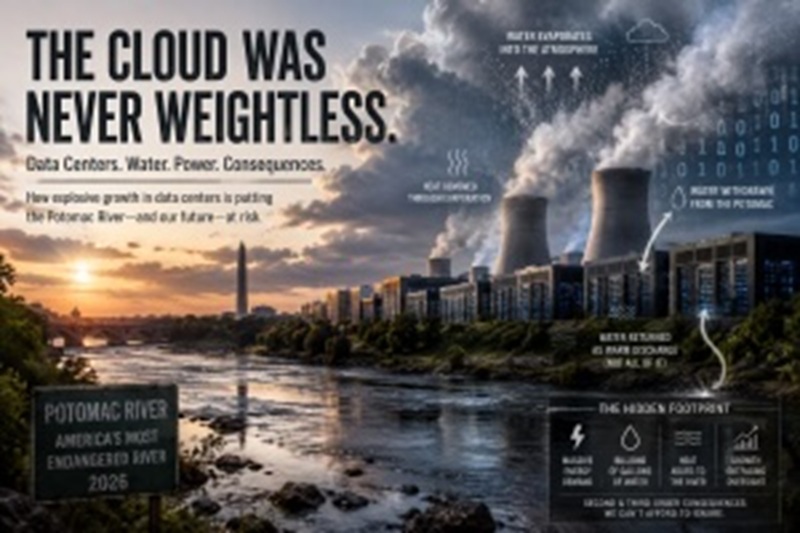
The Potomac River’s designation as America’s most endangered river isn’t really a story about one river. It’s a warning about an entire civilization rushing headlong into a technological revolution without fully understanding the consequences. More than 300 data centers already operate within the Potomac watershed, with hundreds more proposed to support the explosive growth of artificial intelligence and cloud computing. The same digital infrastructure powering our modern lives is quietly consuming vast amounts of electricity and billions of gallons of water. The cloud was never weightless. It was always connected to power plants, cooling towers, transmission lines, and rivers. The question isn’t whether technology will continue advancing. The question is whether we’ll recognize the second and third-order consequences before they become tomorrow’s crisis.

Someone emailed me and said I was an idiot. Which is true, but not for the reasons they cited.

Mom was middle-aged. Maybe early fifties. Her daughter was maybe 18. You could tell it was her daughter because of the way she kept rolling her eyes whenever the middle-aged woman opened her mouth.
December 6, 1944. Somewhere in Germany. Colonel Leander L. Doan sat down and wrote a letter home. He spoke casually of fighting Panzer Lehr and the Adolf Hitler SS Panzer Division, being wounded, surrounded for 36 hours, and watching the men beside him die. Yet there was no bravado, only the quiet matter-of-fact tone of a combat commander doing his duty. What makes the letter extraordinary is that it was written just ten days before the Battle of the Bulge erupted. Doan had survived Normandy, the breakout across France, and the Siegfried Line, but neither he nor his family knew that some of the war’s hardest fighting still lay ahead. Preserved for more than eighty years, this remarkable letter offers a rare glimpse into the mind of a future Major General standing between two of the most consequential campaigns of World War II.

I’m on a plane awaiting takeoff. My carry-on bag is above me in the compartment. A compartment which, according to FAA regulations, is slightly too small for everyone’s carry-on bags.
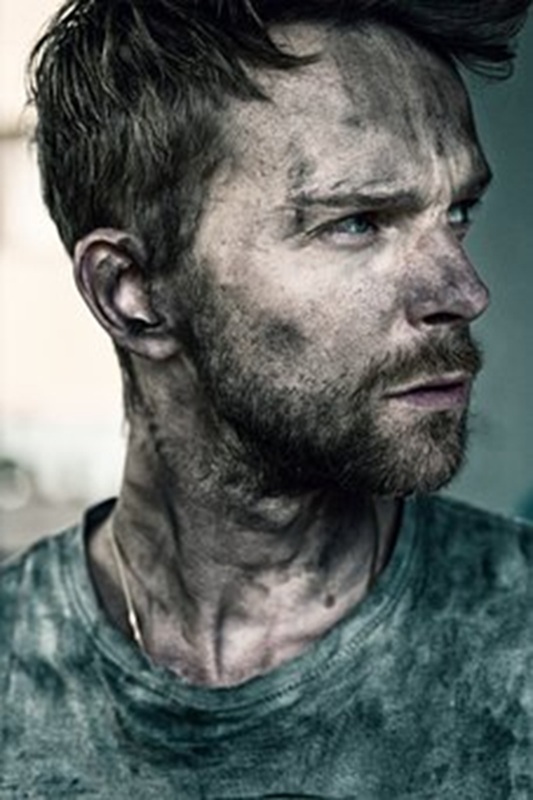
A new Department of Labor report on men found that the American labor force is missing about 7 million men who would otherwise be working. This means close to one-third of all men of working age are not included in the labor force.

As an older student, most professors were part of my peer group. Many teachers had attended the same wild high-school parties I did. Most of which I can’t remember. But there was one teacher who was different.

Rapper Vanilla Ice passionately explains why he will perform at the ‘Freedom 250’ concert in Washington D.C., despite other artists withdrawing on ‘The Story.’
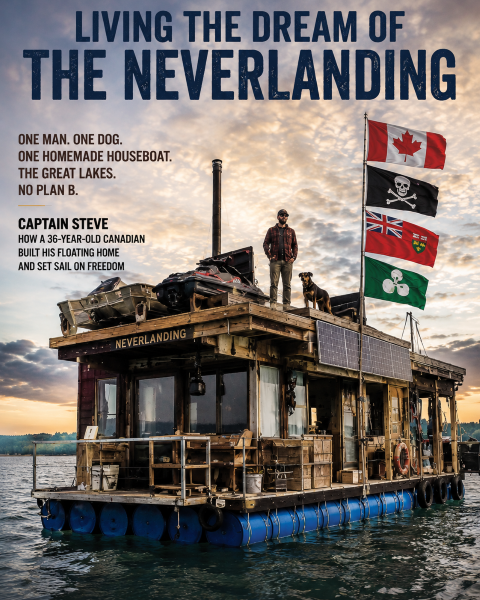
Most people spend their lives dreaming about freedom while signing another payment, another contract, another obligation. Then along comes Captain Steve and the Neverlanding—a homemade houseboat built from lumber, blue barrels, grit, and a stubborn refusal to accept that life must be lived according to someone else’s blueprint. Drifting across the Great Lakes with his dog and a floating front porch, Steve accidentally became a symbol of something modern society desperately misses: adventure, self-reliance, and the courage to untie the dock lines. The Neverlanding isn’t just a boat—it’s a reminder that sometimes the richest life isn’t found in what you own, but in what you’re willing to leave behind.
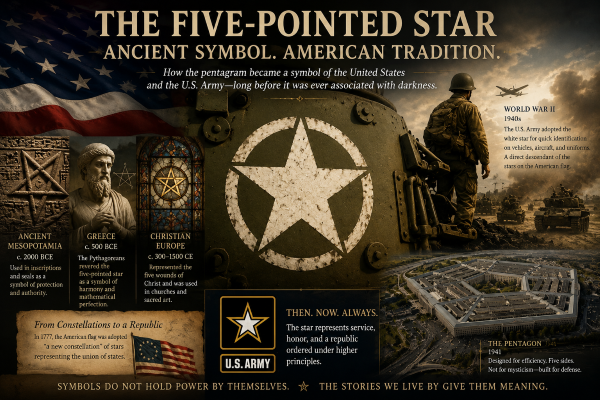
The five-pointed star was a symbol of harmony, divine order, and protection for thousands of years before Hollywood and occult writers gave it a darker reputation. The Greeks saw mathematical perfection in its lines, Christians saw the wounds of Christ, and the American founders saw a “new constellation” representing a republic of united states. The geometry never changed. The story did. And when the U.S. Army painted a white star on tanks and aircraft, it was not invoking ancient magic—it was carrying forward one of humanity’s oldest and most enduring symbols of order, purpose, and identity.

America still pretends elections are grassroots democracy while billionaires, super PACs, media empires, and donor networks quietly write the script behind the curtain. The takedown of Thomas Massie exposed the modern system in full view: loyalty to the political machine now matters more than principles, and dissent against foreign policy orthodoxy or party leadership triggers a flood of money, propaganda, and coordinated political punishment. Meanwhile, millions of cable-news-addicted voters rage on command over carefully curated culture-war distractions while the oligarch class tightens its grip on both parties, the media, and the national narrative.

America has become a 24-hour cortisol factory—financial panic, political theater, algorithmic outrage, and endless crisis propaganda pumped straight into the nervous system like an IV drip of anxiety. We are chemically exhausted, spiritually distracted, and psychologically manipulated into living as though Satan runs the universe and God is merely filing paperwork in the background. Fear has become America’s unofficial state religion: fear of collapse, fear of irrelevance, fear of war, fear of each other. But fear is just misplaced faith. It is confidence that darkness will win. The modern machine profits from keeping people terrified because frightened populations are easier to control, easier to sell to, and easier to herd. Scripture’s command to “fear not” was never naive optimism—it was spiritual defiance. The real divide today is not left versus right; it is those discipled by fear versus those anchored in faith.
Memorial Day reminds Christians to honor those who sacrificed for earthly freedom while also remembering the eternal freedom purchased through the sacrificial love of Jesus Christ.

Our Father, which art in heaven, hallowed be thy name. Even though this name has been so misused, misapplied, and misappropriated throughout history.
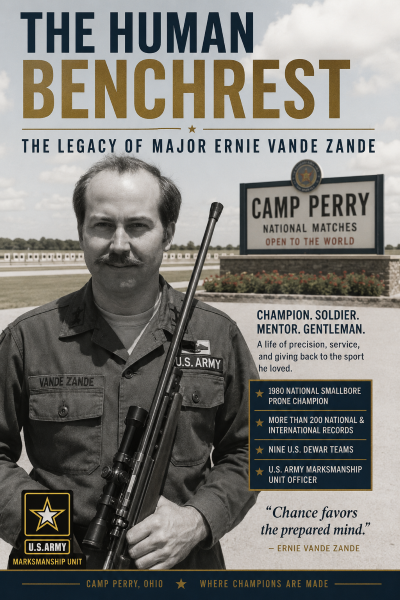
Ernie Vande Zande was more than a national champion and record-setter; he was the rare competitor who made everyone around him better. Known as “the Human Benchrest,” the Army major and Camp Perry champion combined world-class precision with a quiet willingness to help any shooter who genuinely wanted to improve. His classic article Sights, Wind and Mirage still teaches competitors how to read conditions decades after it was written. Smallbore lost more than a legend when Ernie passed in 2018—it lost a mentor, a gentleman, and one of the finest ambassadors the sport has ever known.
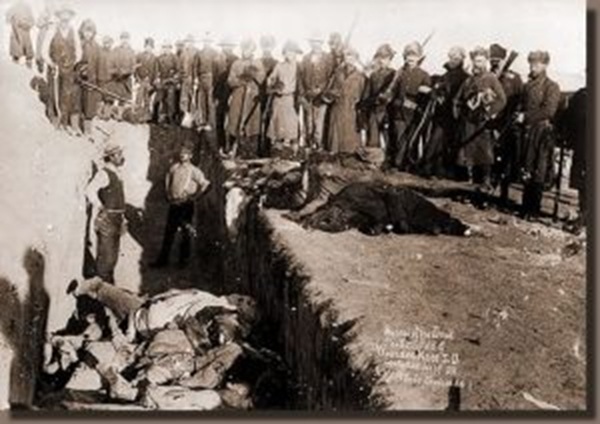
American Indians in their winter camp at Wounded Knee, were murdered on Dec. 29, 1891, by federal agents and members of the 7th Cavalry who had come to confiscate their firearms “for their own safety and protection.”

My grandfather fought in World War II. My father served in Vietnam. My wife and I both deployed to Iraq. Three generations answered the nation’s call, each believing that sacrifice served a greater purpose. But after Vietnam, 9/11, Iraq, Wall Street, and COVID, millions of Americans are asking a question more dangerous than any enemy abroad: Have we been lied to? That question marks the beginning of the American Awakening—a rediscovery that we are more than consumers and collections of atoms. We are moral and spiritual beings, and once a people remember that truth matters and rights come from God rather than government, they become very difficult to manipulate.
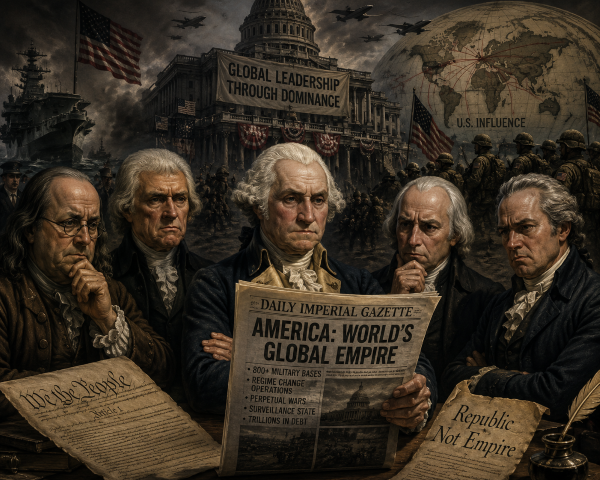
Empires don’t collapse in a blaze of cinematic glory—they erode, quietly, while insisting everything is fine. The United States still fields the most powerful military on Earth, still prints the world’s reserve currency, still lectures the planet on order and stability. But beneath the polished surface, the math is getting ugly, the cohesion is cracking, and the strategic margin is shrinking. This is what decline actually looks like—not defeat, but drift. Not surrender, but overextension wrapped in denial. The dangerous part isn’t that America is weakening; it’s that it hasn’t fully realized it yet.