The Forgotten Reset Beneath Lake Huron
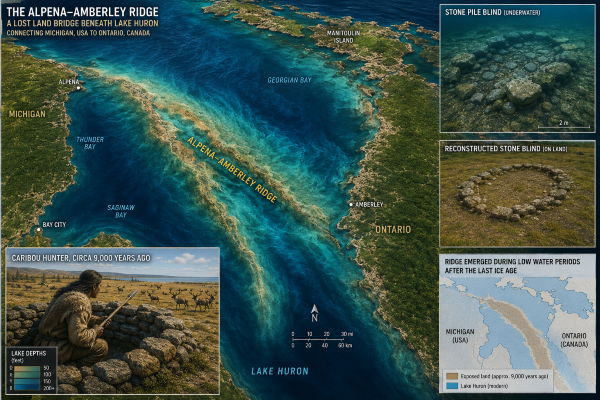
What if our ancestors really did survive a global catastrophe?

Beneath the waters of Lake Huron lies the Alpena–Amberley Ridge, a prehistoric hunting landscape that once connected Michigan and Ontario. Today it sits submerged and largely forgotten. To some researchers, it is evidence of sophisticated hunters tracking migrating caribou 9,000 years ago. To others, it raises a far bigger question: how much of humanity’s ancient story now lies underwater?

The Younger Dryas Impact Hypothesis remains controversial, but the idea is difficult to ignore. If a cosmic event helped trigger dramatic climate shifts, floods, and environmental upheaval near the end of the Ice Age, what would the world have looked like a few thousand years later? Perhaps not a world of lost super-civilizations, but one of survivors rebuilding, adapting, and passing down memories of a world forever changed.

The Alpena–Amberley Ridge doesn’t prove the theory. What it does prove is that entire landscapes, ecosystems, and chapters of human history can disappear beneath the waves. The real mystery may not be what we’ve found, but what remains hidden.
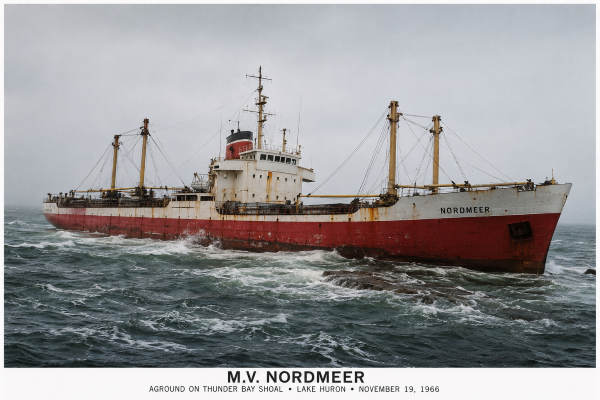
Nordmeer: Born in Germany, Claimed Shipwreck Alley – Lake Huron (Alpena)

For nearly sixty years, the Nordmeer has rested on the bottom of Lake Huron, a monument to both human craftsmanship and human error. Built in the German shipbuilding city of Flensburg and carrying nearly a thousand coils of steel, the freighter’s fate was sealed by a single wrong turn on a November night in 1966. I’ve been diving her since 1986, watching Lake Huron slowly dismantle what German shipbuilders once created. Today, her rusting hull, massive diesel engine, and twisted steel frames tell a story that stretches from Europe to Thunder Bay—a story of industry, survival, and the relentless power of the Great Lakes.

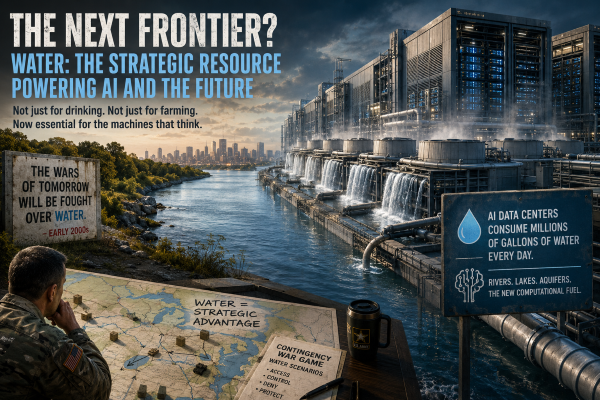
Water Wars Were Supposed to Be Here by Now. AI May Have Other Plans.

Twenty years ago, military planners and policy experts warned that the wars of the future would be fought over water. The wars never came—at least not in the way we expected. Today, however, a new competitor is entering the fight for one of humanity’s most precious resources: artificial intelligence. As massive data centers consume vast amounts of power and cooling water, rivers, lakes, and aquifers are becoming strategic assets once again. The future battle for water may not involve tanks and soldiers, but corporations, regulators, and communities struggling to determine who gets access to the fuel that powers the digital age. Perhaps the water warriors of the early 2000s weren’t wrong. They were simply ahead of their time.

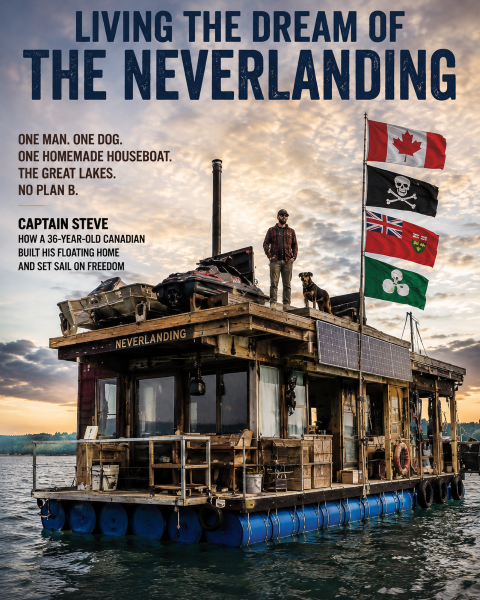
Living the Dream of the Neverlanding

Most people spend their lives dreaming about freedom while signing another payment, another contract, another obligation. Then along comes Captain Steve and the Neverlanding—a homemade houseboat built from lumber, blue barrels, grit, and a stubborn refusal to accept that life must be lived according to someone else’s blueprint. Drifting across the Great Lakes with his dog and a floating front porch, Steve accidentally became a symbol of something modern society desperately misses: adventure, self-reliance, and the courage to untie the dock lines. The Neverlanding isn’t just a boat—it’s a reminder that sometimes the richest life isn’t found in what you own, but in what you’re willing to leave behind.