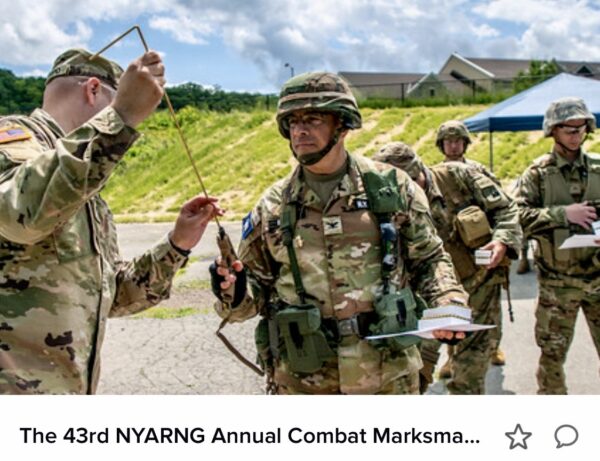
The Day the Military Stopped Believing in Marksmanship
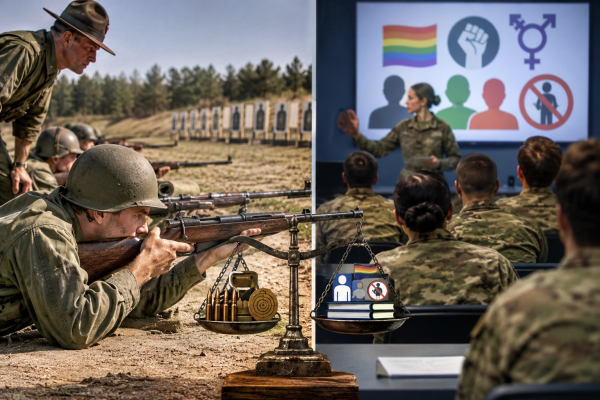
In 1956, the Army created the U.S. Army Marksmanship Unit. In 1958, General Curtis LeMay established the Air Force Marksmanship School and pushed competitive shooting across the service because America’s military leaders believed one simple truth: a warrior should master his weapon. Today, many of the skeet fields, rifle ranges, and MWR shooting facilities that once flourished on military bases have disappeared. We call it modernization. Previous generations might have called it forgetting the purpose of a military in the first place.

From Camp Perry to National Readiness: Why Military Shooting Teams Matter

For more than 120 years, America’s military marksmanship teams have done far more than chase medals. Every summer at Camp Perry’s Small Arms Firing School, they pass generations of hard-earned knowledge to ordinary citizens—teaching safe firearms handling, precision marksmanship, and personal responsibility. It’s a quiet mission rooted in federal law since 1903, built on a simple idea: a nation is stronger when its citizens are capable, disciplined, and prepared. The trophies are impressive, but the real legacy is American readiness.

The 10-to-4 Problem: What Rimfire Teaches That Centerfire Hides

At distances out to 100 yards, the differences between rimfire and centerfire aren’t subtle—they are foundational. A .22 LR match round leaves the muzzle at roughly 1050 feet per second, already flirting with the sound barrier and quickly settling into subsonic flight. Compare that to a typical centerfire round—say a .308—moving at nearly three times that speed, carrying significantly higher ballistic efficiency, and backed by a rigid, jacketed bullet designed to punch through the air rather than cooperate with it.

Sisu: The Legacy of Finland’s Warrior Heritage in Modern Hunting and Shooting

The Finnish people have long been known for their resilience, resourcefulness, and deep connection to the land. These qualities, encapsulated in the Finnish concept of “Sisu,” are not merely cultural traits; they are the product of centuries of survival in one of the world’s most challenging environments.