Jack O’Connor Would Have Loved the 6.5 Creedmoor
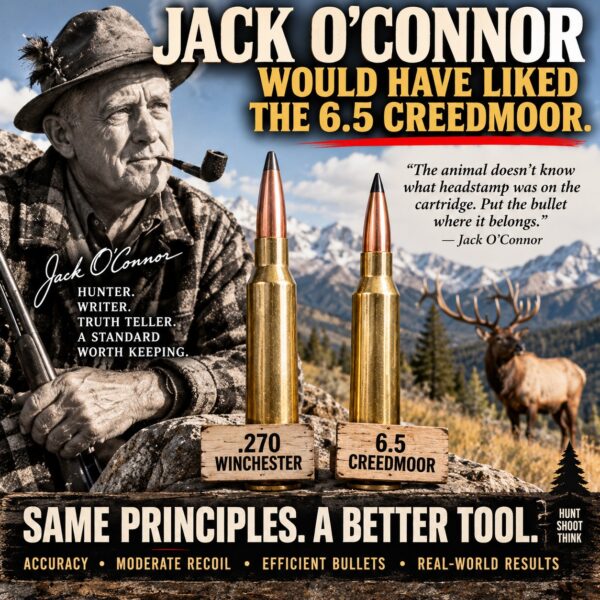
Jack O’Connor died in 1978, nearly 30 years before the 6.5 Creedmoor appeared, but judged by the standards he championed in The Hunting Rifle and decades of Outdoor Life writing, he probably would have loved it—even if it never displaced his beloved .270 Winchester. O’Connor valued accuracy, moderate recoil, flat-enough trajectory, high sectional density, efficient bullets, penetration, and above all the hunter’s ability to put a bullet precisely where it belonged. The Creedmoor checks virtually every box: a 140-grain 6.5mm bullet has excellent sectional density, modern high-BC bullets retain velocity remarkably well, recoil is lighter than the .270, and the cartridge is famously easy to shoot accurately. Where O’Connor would still favor the .270 is raw velocity and its flatter trajectory at ordinary hunting distances—especially important in his era, when hunters estimated range rather than pushing a button on a laser rangefinder. Ironically, O’Connor also admired cartridges such as the mild-mannered 7×57 Mauser and repeatedly argued that shot placement mattered more than horsepower. The funniest conclusion, then, is that the old-school hunters who dismiss the 6.5 Creedmoor as some newfangled fad might be surprised by their own patron saint: the Creedmoor is essentially an O’Connor hunting cartridge designed 30 years too late—accurate, efficient, mild to shoot, and powerful enough to kill what you’re hunting if you quit arguing about caliber and put the damned bullet where it belongs.
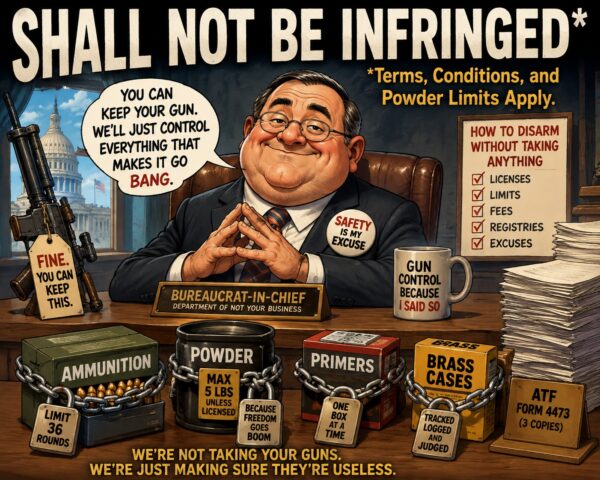
Sure, You Can Keep the Rifle. We’ll Just Regulate Everything That Makes It Work.

“Shall not be infringed” apparently comes with an asterisk. Sure, you can keep the rifle—we’ll just regulate the powder, primers, ammunition, and everything else required to make it go bang. Maryland’s five-pound smokeless-powder limit raises a much bigger constitutional question: Can government regulate around the Second Amendment by controlling what makes an arm functional?

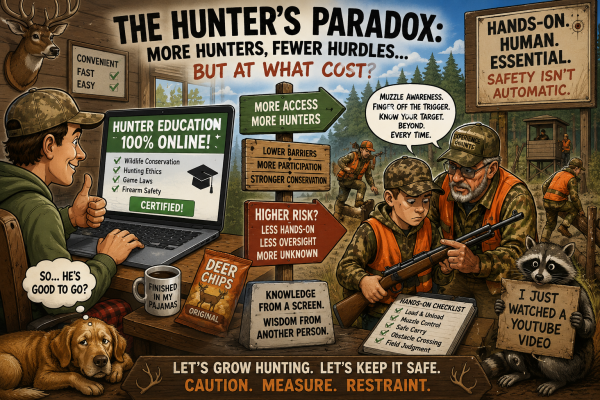
The Hunter’s Paradox: More Hunters, Fewer Hurdles… But at What Cost?

**The Hunter’s Paradox:** We want more hunters, so we remove barriers. More online classes. More convenience. More participation. But when the tool in your hands is capable of taking a life, is convenience always the right answer? As a Hunter Education instructor and retired Army officer, I believe knowledge can come from a computer—but safe gun handling must be passed from one human being to another. The future of hunting depends on growing our ranks without compromising the traditions and safety that built them.

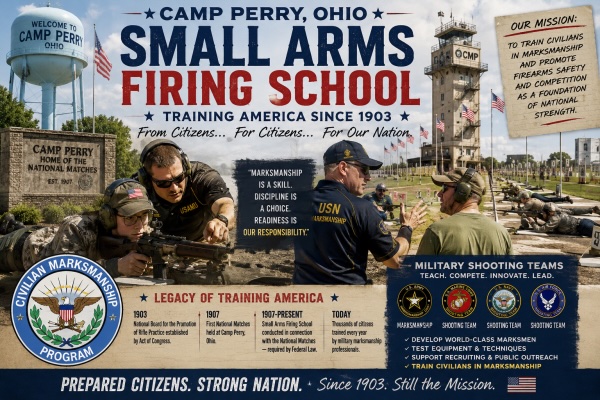
From Camp Perry to National Readiness: Why Military Shooting Teams Matter

For more than 120 years, America’s military marksmanship teams have done far more than chase medals. Every summer at Camp Perry’s Small Arms Firing School, they pass generations of hard-earned knowledge to ordinary citizens—teaching safe firearms handling, precision marksmanship, and personal responsibility. It’s a quiet mission rooted in federal law since 1903, built on a simple idea: a nation is stronger when its citizens are capable, disciplined, and prepared. The trophies are impressive, but the real legacy is American readiness.

Civil Defense Starts at the Range: The Forgotten Skill of a Free People

There’s a certain kind of battlefield respect that doesn’t need a movie trailer, a podcast, or a camouflage beard oil sponsor. It’s quiet. It’s ancient. It’s earned. And it belongs to the rifle marksman—the one who can hit what needs to be hit, when it needs to be hit, without turning the entire valley into a fireworks show.