Compulsive Precision Disorder: Why Long-Range Shooters Are Not Normal

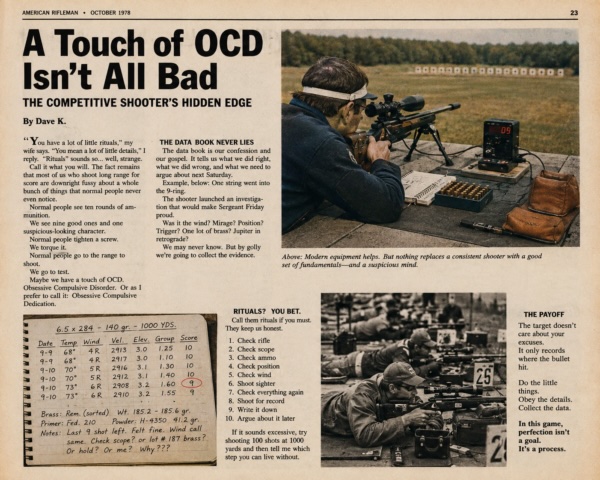
Compulsive Precision Disorder (CPD) – Spend enough time around long-range competitive marksmen and you’ll notice something curious. They all have a little… something. They measure powder to the kernel, torque screws to inch-pounds, record weather conditions like NOAA meteorologists, and can spend an hour investigating a single 9-ring hit like it’s the JFK assassination.

To the average person, this borders on insanity.

To a competitive marksman, it’s called Tuesday.

The funny part? Those obsessive personality traits that might seem excessive everywhere else are exactly what the sport rewards. The target doesn’t care about excuses—it only rewards consistency. Maybe that’s why engineers, machinists, scientists, and military veterans seem to thrive on the firing line. In one of the few places on Earth where perfectionism actually pays dividends, a little Compulsive Precision Disorder isn’t a bug…

Teddy Roosevelt Built a Nation of Riflemen. Then Democrats Tried to Kill It.

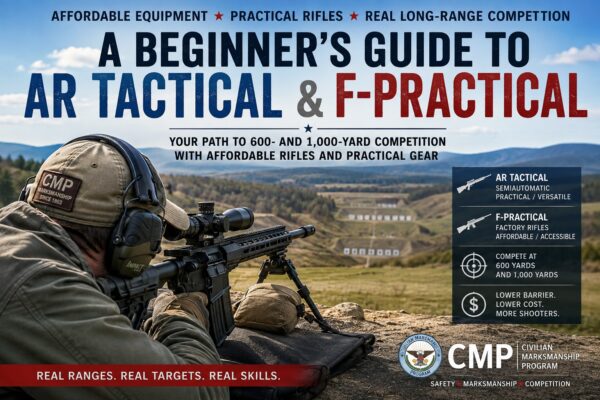
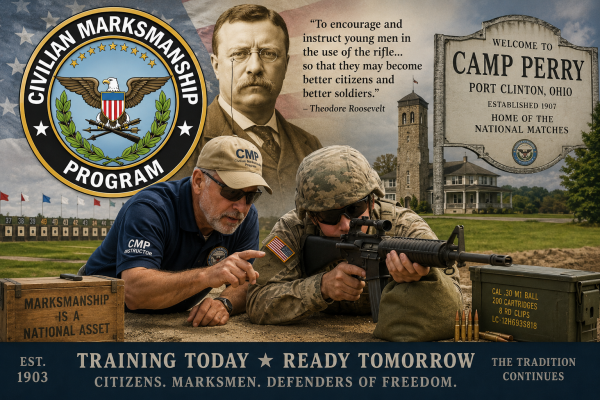
Theodore Roosevelt believed America was stronger when ordinary citizens knew how to shoot. For nearly a century, the federal government agreed—supporting the DCM, the National Matches, and even helping selected junior riflemen travel to Camp Perry to represent their states. Then came the 1990s, when Washington decided a program designed to create disciplined American marksmen was something that needed to be “terminated.” They killed the old DCM, but they failed to kill American marksmanship. The CMP survived—and the riflemen kept shooting.

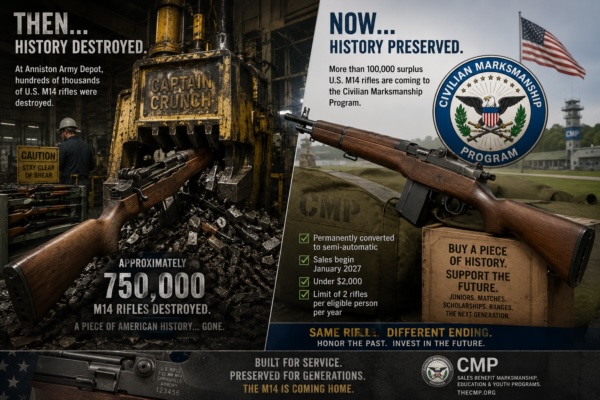
I’m sorry Honey, this M14 followed me home! Can I keep it?

Nearly 750,000 U.S. M14 rifles were destroyed after the Cold War, many meeting their end at Anniston Army Depot in the jaws of a hydraulic shear known as “Captain Crunch.” Now, history is taking a different path. Beginning in January 2027, the CMP expects to offer permanently converted semi-automatic M14s to qualified Americans for under $2,000. Every rifle sold preserves a piece of American military history while helping fund junior shooting programs, Camp Perry, scholarships, and the future of competitive marksmanship. Sometimes, the best way to honor history isn’t to put it in a museum—it’s to put it back on the firing line.

The CMP: America’s Quiet National-Security Insurance Policy

The Civilian Marksmanship Program is more than a shooting organization. It is a self-funded national-security asset that preserves firearms safety, competitive marksmanship, and a reserve of civilian expertise. During the Iraq War, CMP volunteers even traveled to military installations such as Fort Campbell to help the U.S. Army Marksmanship Unit train deploying soldiers as Squad Designated Marksmen. What looks like recreation on Saturday can become battlefield capability when the nation needs it.

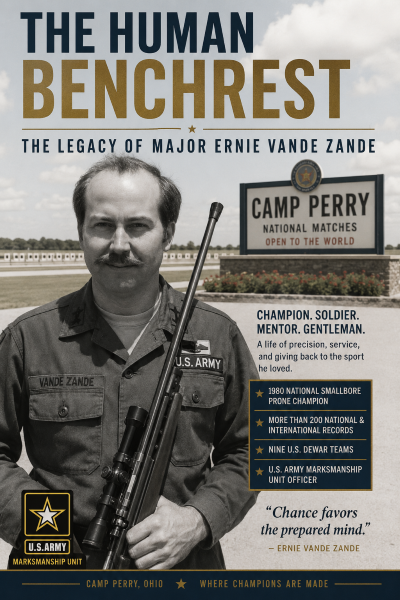
The Human Benchrest: The Enduring Legacy of MAJ Ernie Vande Zande

Ernie Vande Zande was more than a national champion and record-setter; he was the rare competitor who made everyone around him better. Known as “the Human Benchrest,” the Army major and Camp Perry champion combined world-class precision with a quiet willingness to help any shooter who genuinely wanted to improve. His classic article Sights, Wind and Mirage still teaches competitors how to read conditions decades after it was written. Smallbore lost more than a legend when Ernie passed in 2018—it lost a mentor, a gentleman, and one of the finest ambassadors the sport has ever known.

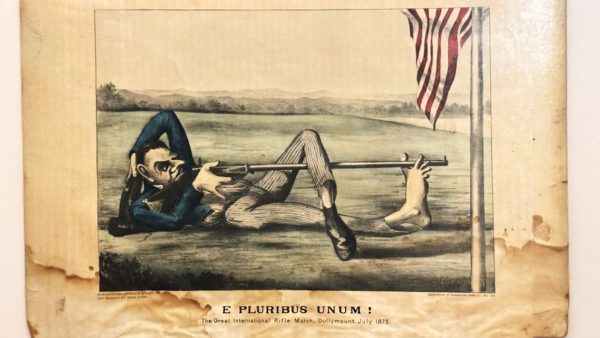
Smoke, Steel, and 1,000 Yards: The Great International Rifle Match at Dollymount

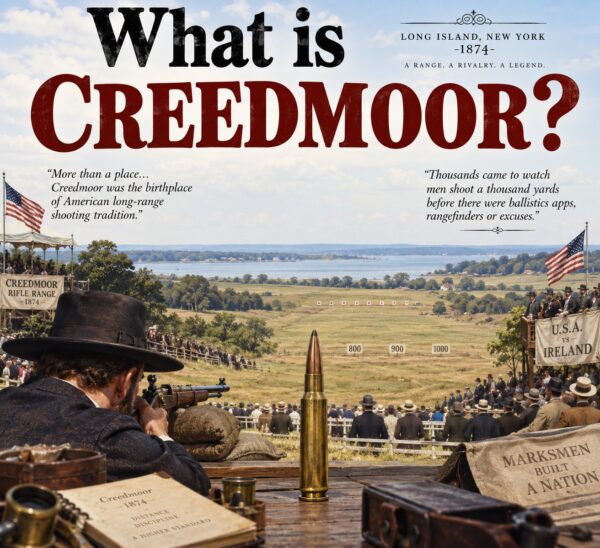
The year was 1875, and long before ESPN, endorsement deals, or even organized leagues as we know them, one of the most electric sporting events on earth unfolded on a windswept stretch of Irish coastline at Dollymount, just outside Dublin. This was the Great International Rifle Match—a transatlantic clash that, for a brief window in history, made precision rifle shooting a premier spectator sport.

The 10-to-4 Problem: What Rimfire Teaches That Centerfire Hides

At distances out to 100 yards, the differences between rimfire and centerfire aren’t subtle—they are foundational. A .22 LR match round leaves the muzzle at roughly 1050 feet per second, already flirting with the sound barrier and quickly settling into subsonic flight. Compare that to a typical centerfire round—say a .308—moving at nearly three times that speed, carrying significantly higher ballistic efficiency, and backed by a rigid, jacketed bullet designed to punch through the air rather than cooperate with it.

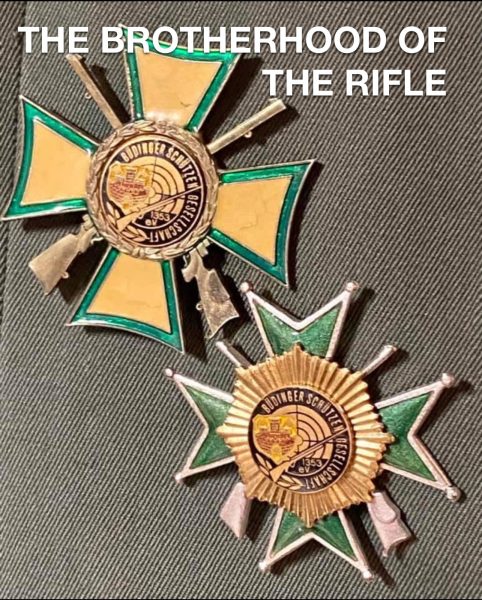
The Brotherhood of the Rifle: What Germany Got Right About Shooting Culture

Today, when German shooters don their old green sport jackets, they’re not just competitors. They’re descendants of the city guard. And when the Schützenkönig or Ritter (Knight) is crowned at the festival, it’s not merely a marksmanship title—it’s a symbolic knighting. It says, you have upheld the standard, you belong…