The Chain Of Command. It’s Not A Suggestion.
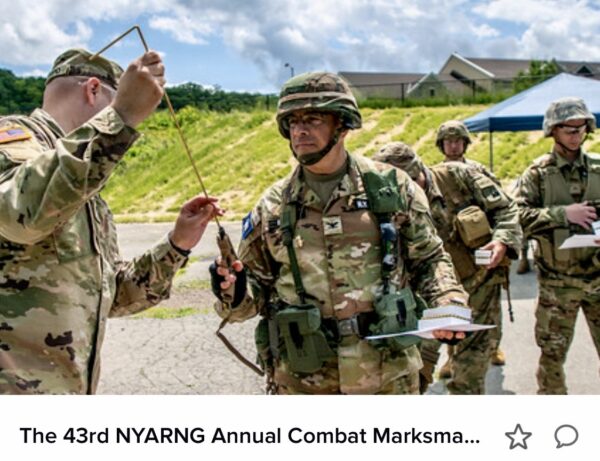
Officers cannot pick and choose the superiors they follow. Either execute to the best of your ability or get out.
Citizen Writers Fighting Censorship by Helping Americans Understand Issues Affecting the Republic.
Officers cannot pick and choose the superiors they follow. Either execute to the best of your ability or get out.
I’ll never forget the first real question my squad leader threw at me. “Which squad’s the best in this unit, Marshall?” SSG Arroyo barked.
How far would Globalists go to force the United States back into the Globalist fold?
War is hell, but post-war peacekeeping? Now that’s a business opportunity. As Ukraine inches toward an eventual ceasefire, one thing is crystal clear: the U.S. and NATO will be writing blank checks to maintain “stability” for years—maybe even decades.
As the war in Ukraine continues, speculation grows about what a post-war security landscape might look like, particularly if a ceasefire is reached. One of the most likely scenarios involves a NATO-led peacekeeping mission
Liberals keep talking themselves into a lather over imaginary threats to America. The latest lather was summed up best in the New Republic headline, “Trump Plans $92 Million Military Parade—Honoring Himself.
Poets and propagandists have long clung to the ancient Latin phrase: “Dulce et decorum est pro patria mori”—“It is sweet and proper to die for one’s country.” But by the time the industrial slaughterhouses of World War I had chewed through millions of lives, that “old lie,” as poet Wilfred Owen called it, rang hollow.
In an increasingly volatile world, the question isn’t just “Should the United States go to war?” but “When is war justified in service of our vital national interests?”
The overriding strategic goal of the Chinese Communist Party (and Chinese leader Xi Jinping in particular) is “to restore China to a position of glory and influence commensurate with its ancestral heritage.”
Last week, The Atlantic published an explosive report claiming that its editor-in-chief, Jeffrey Goldberg, was invited to a “Principals Committee (PC) Small Group” discussion on Signal, where Cabinet officials discussed plans to strike the Houthi rebels in Yemen. Sensitive details—including the iconic who, what, where, when, and how of military operations—were publicly disclosed.
At West Point, the motto is clear: Duty, Honor, Country. These are not just words; they represent a code of conduct, a commitment to truth, and a foundation for leadership.
The recent disclosure of a Signal thread by high level officials shows sloppiness, but not unauthorized disclosure of classified information.
It was the year 2010, and I was a Major in Iraq, knee-deep in PowerPoint slides and tasked with one of the great mysteries of the modern military-industrial complex: how many contractors were in the theater of operations? Simple question, right?
While generals got the glory, drones got the headlines, and politicians got the soundbites, one quiet giant stood tall (literally) throughout the Iraq and Afghanistan wars: the T-wall.
Few generals in history have commanded both the admiration of their enemies and the fear of their superiors quite like Erwin Rommel, the legendary “Desert Fox” of World War II. A master of mobile warfare, Rommel became Germany’s most celebrated general for his lightning-fast tactics in North Africa, where he routinely outmaneuvered larger Allied forces. …
Elwood P Dowd is one of the liberal commenters on my good friend William Teach’s The Pirate’s Cove. The distinguished Mr Dowd is a Democrat and true hater of President Trump, and every so often, he gets me rolling in my response. He wrote: If Trump abandons Ukraine to Putin, the Baltics are likely to …
Since its founding in 1802, West Point has upheld the Honor Code, requiring cadets to live by one of the simplest yet most demanding principles in military ethics: “A cadet will not lie, cheat, steal, or tolerate those who do.”
Firing some of our general officers is just a start. The rot goes far deeper than just a few. This article is the fifth of five parts, and examines a solution to having too many generals.
Firing some of our general officers is just a start. The rot goes far deeper than just a few. This article is the fourth of five parts, and examines the third of three destructive consequences of having too many generals.
Firing some of our general officers is just a start. The rot goes far deeper than just a few. This article is the third of five parts, and examines the second of three destructive consequences of having too many generals.