Ancient Aliens, Watchers, and the Flood: Separating Truth from Speculation

History is full of mysteries—but mystery is not evidence. From ancient aliens to Atlantis, from the Watchers of Enoch to the archaeological puzzles of the pyramids, competing theories attempt to explain humanity’s distant past. Some are grounded in evidence, others in speculation. This article compares the major worldviews, examines where they overlap and where they diverge, and asks the most important question of all: Are we following the evidence, or simply the story we want to believe?

Ancient Aliens, Modern Myths, and the Gospel of Space Miners

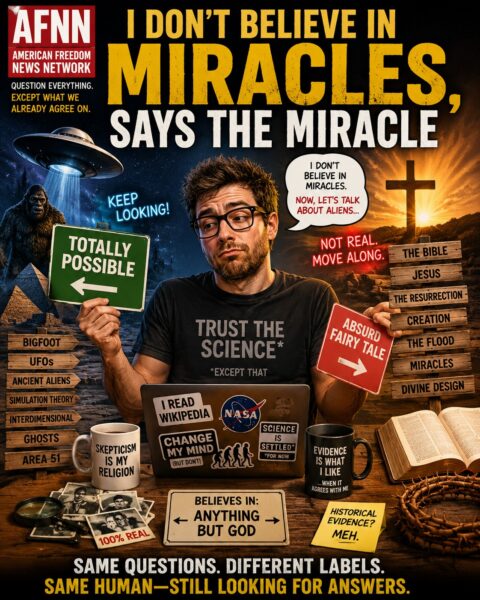
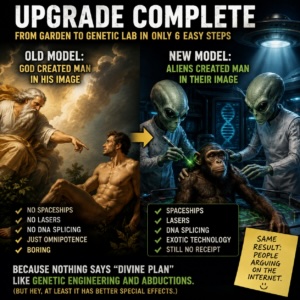
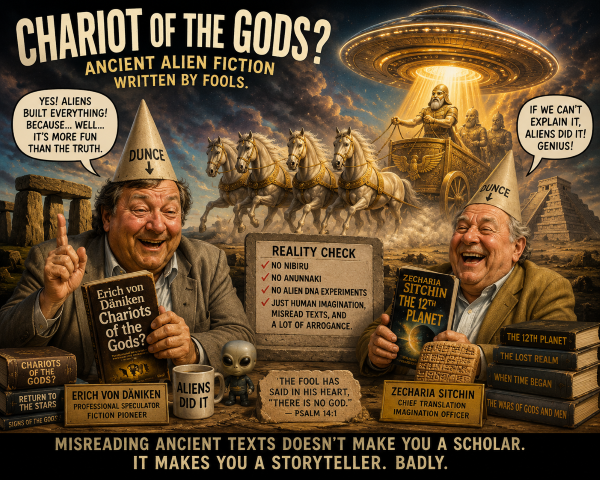
Ancient alien theory didn’t emerge from hard evidence—it was stitched together by imaginative authors like Erich von Däniken and Zecharia Sitchin, who took fragments of ancient texts, ignored actual linguistic scholarship, and filled the gaps with cosmic fan fiction. What followed was not discovery, but duplication—a self-reinforcing echo chamber amplified by media like Ancient Aliens, where speculation is recycled until it feels like fact. The result is a modern mythology dressed in the language of science, asking us to believe that early humans couldn’t stack stones without extraterrestrial supervision, while simultaneously expecting us to reject the idea of a Creator as “unscientific.” It’s not that the evidence demands aliens—it’s that the narrative refuses God, and will accept almost anything else.

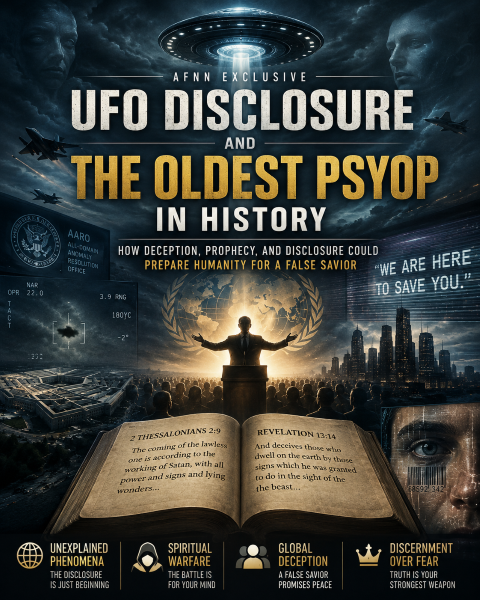
UFO Disclosure, the Father of Lies, and the Oldest Psyop in History

For most people, unexplained aerial phenomena are a curiosity. For students of prophecy and biblical theology, they raise a more sobering question: what if the greatest deception in history arrives under the banner of enlightenment, scientific progress, and planetary unity?

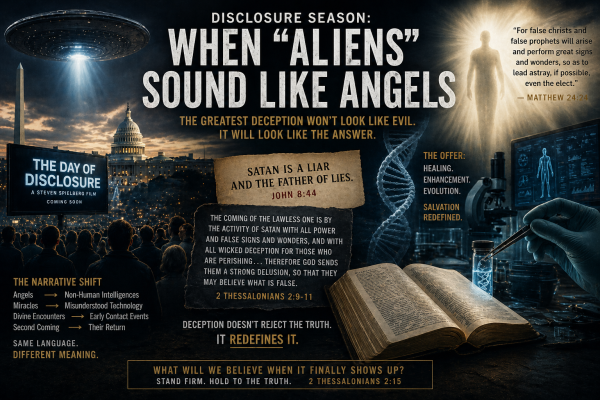
Disclosure Season and the Oldest Lie in the Book

Every few decades, humanity rediscovers wonder, dusts it off, and calls it progress. This summer, the marketing machine will do its part with The Day of Disclosure, courtesy of Steven Spielberg—and right on cue, we’ll all be invited to stare into the sky and ask if something smarter than us is finally ready to step in and fix the mess. It’s a great story. It’s also not a new one.

Hollywood Is Finally Telling Us the Truth: We Are Not Alone.

For decades, the official story was simple: UFOs weren’t real, and anyone who said otherwise was either confused, lying, or needed to spend less time staring at the sky and more time paying their taxes. “Swamp gas.” “Weather balloons.” “Venus.” “Camera artifacts.” The script never changed—only the excuse did. But while the grown-ups in government played dumb and the media treated the subject like a late-night punchline, Hollywood kept doing something far more dangerous: it kept normalizing the idea that we are not alone.