I Don’t Believe in Miracles, Says the Miracle

Modern man says he doesn’t believe in miracles while standing on a wet rock hurtling through space, made of stardust, possessing consciousness nobody can fully explain, pondering a universe nobody can explain why exists. God? Ridiculous. Ancient aliens? Now you have his attention. Maybe we didn’t stop believing—we just changed the vocabulary and became selectively skeptical about which mysteries are socially acceptable. Watch for AFNN next week as we ask the uncomfortable question: “I Don’t Believe in Miracles,” Says the Miracle.

The Greatest Generation Didn’t Have A Port Call Scheduled

The Greatest Generation didn’t have Wi-Fi, DoorDash, FaceTime, scheduled port calls—or an expected return date. They had a war to win. Today’s sailors aren’t the problem; they’re products of a culture that has become extraordinarily good at eliminating discomfort. The question isn’t whether young Americans are “soft.” It’s whether America still teaches resilience before history demands it the hard way.

The Pacific Ocean doesn’t have an HR department, and the enemy doesn’t care about your deployment schedule.

Flock You: The Fourth Amendment Would Like a Word

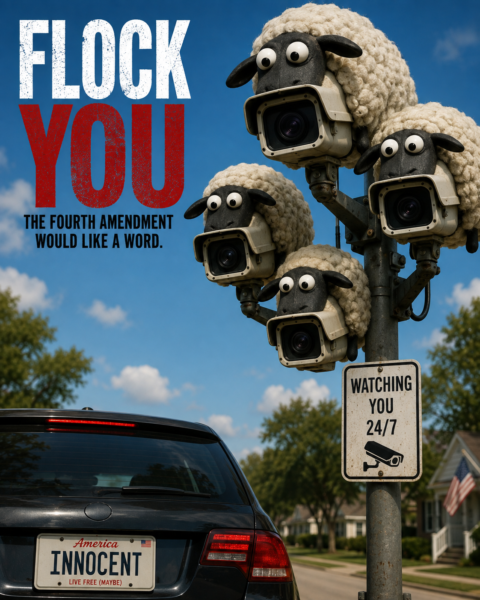
America has built a surveillance network King George III could only dream about. License-plate cameras may help catch criminals, but when government can potentially turn millions of innocent motorists into searchable dots on a map, the Fourth Amendment deserves a seat at the table. Catch the car thief. Find the missing child. But when the government wants to reconstruct where ordinary citizens have been, Americans should remember two beautiful words our Founders would appreciate: Flock you.

Feeding the Beast: And Lo, We Built It a Data Center

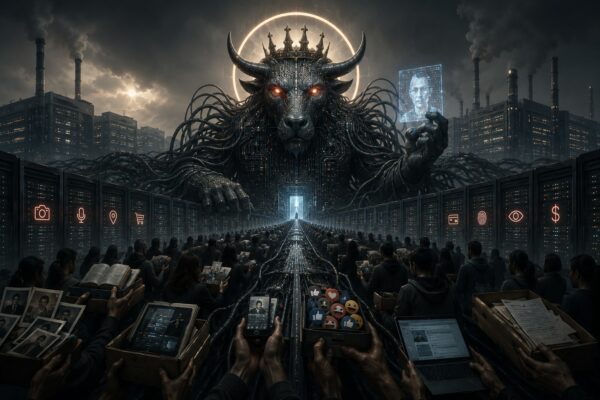
What if the Beast of Revelation didn’t rise from the sea—but arrived in a server rack? This fictional, extra-biblical excursion imagines AI as the Beast, data centers as its temples, and humanity enthusiastically feeding it electricity, water, privacy, knowledge, and eventually perhaps our autonomy. The disturbing part isn’t that the machine might conquer us. It’s that we may build it ourselves, connect everything to it, put it in our pockets—and stand in line for the upgrade.

The Carry a Sword Movement: Bring Back the Original Open Carry

America once produced men who wouldn’t leave the house without a sword hanging from their belt. Washington carried one. Patton designed one. West Point cadets still have them. Yet today, strap on a saber for a trip to Home Depot and suddenly you’re the weird guy. Maybe it’s time to bring back the original open carry. Swords are arms. Shall not be infringed. Support the right. Respect the right. Carry a sword.

When Government Rewards Evil: The Biblical Line Between Obedience and Resistance

Christians are frequently reminded that Romans 13 tells us to obey governing authorities. Fair enough. But what happens when government reverses its God-given assignment—punishing good, protecting evil, or commanding Christians to violate their conscience? Scripture actually answers that question, and the answer is considerably less comfortable than “just obey.”

Sword and Scimitar: The 1,400-Year History We Somehow Forgot to Mention

Raymond Ibrahim’s *Sword and Scimitar* commits a dangerous act in modern history: it starts at the beginning. Long before the First Crusade of 1095, Christian lands across the Middle East, North Africa, Spain, and Anatolia had already faced centuries of Islamic conquest and warfare. Through eight pivotal battles spanning more than a thousand years, Ibrahim restores the part of the timeline that somehow keeps falling behind history’s couch cushions. His argument is uncomfortable, provocative, and difficult to dismiss: the Crusades weren’t Chapter One of the conflict—they arrived hundreds of pages into the story. You can debate Ibrahim’s conclusions, but you can’t understand 1095 while pretending 636 never happened.

Snark: Just Eat the Bugs: Washington’s Brilliant Solution to the American Beef Problem

Perhaps we’ve been looking at America’s beef crisis all wrong. Beef is expensive. The cattle herd is historically small. Drought hammered ranchers. Feed got expensive. Equipment got expensive. Interest got expensive. Land got expensive. Mexican cattle imports were disrupted because a flesh-eating parasite decided to make a comeback. Obviously, the solution is simple. Eat bugs. …

Read more

If Colonel Townsend Whelen Had an iPhone

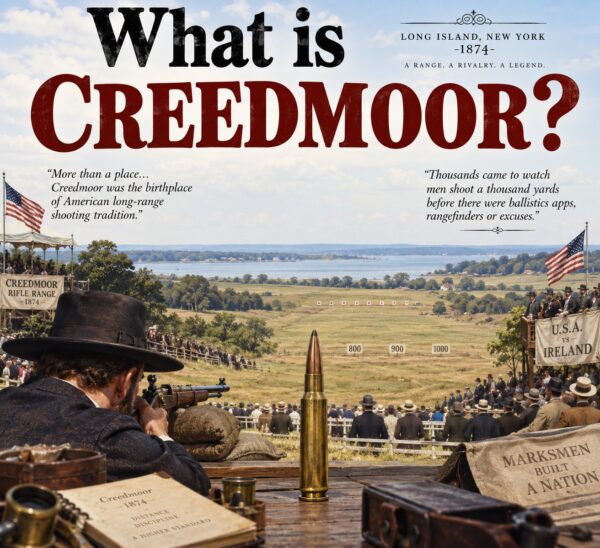
Colonel Townsend Whelen spent a lifetime proving that only accurate rifles are interesting. But imagine handing him an iPhone and asking ChatGPT for a 6.5 Creedmoor load. After staring at it for thirty seconds, he’d probably ask, “What the hell is Wi-Fi?” Then he’d type, “Best accuracy load. 140 Berger. H4350. Go.” After 41 years behind a rifle, I did exactly that—and one of the best first-round load developments of my career popped out. Luck? Maybe. Or maybe AI just read a hundred years of load manuals, match reports, and internet arguments in about half a second. Either way, it didn’t pull the trigger. It just saved a little barrel life. And these days, that’s worth its weight in powder.

Facebook Jail: We Did Our Time—Now History Is Doing the Talking

Remember when asking the wrong question could earn you a 30-day sentence in Facebook Jail? Millions of posts disappeared, accounts were suspended, and countless users earned their digital “street cred” for challenging the Official Truth™ of the day. Then, as the science evolved, some forbidden topics quietly became acceptable discussion. This isn’t just a look back at the COVID years—it’s a satirical reminder that when a handful of powerful platforms decide what’s permissible to say, every free society should ask the same uncomfortable question: **Who decides what the truth is tomorrow?**

If I Were Dr. Evil: I’d Skip the Shark Death Ray and Start Three Wars

If I were Dr. Evil, I wouldn’t build a death ray—I’d build three crises. Light up the Middle East, keep NATO and Russia occupied in Europe, then watch China eye Taiwan while America tries to put out three fires with one garden hose. The nightmare isn’t one enemy defeating America; it’s several adversaries realizing they don’t have to take turns.

North Korea Discovers Internet Porn

Imagine spending your entire life being told your country is the greatest civilization on Earth… then someone hands you a Wi-Fi password. According to a widely circulated—but unverified—report, North Korean troops may have discovered unrestricted internet access and promptly demonstrated why every dictatorship fears broadband more than bombs. Tanks can level buildings. The internet levels narratives. Somewhere, a political commissar is still trying to explain why the greatest threat to operational readiness wasn’t enemy artillery—it was the guest Wi-Fi passsord to PornHub.

Department of War: The Day the Batteries Died

Technology has made us faster, smarter, and more capable than any generation that came before us. But somewhere along the way, we forgot an uncomfortable truth: every technological advantage eventually becomes a dependency. The Romans understood it. Napoleon understood it. The Army wrote it down more than a century ago. Use the calculator. Use the GPS. Use the ballistic computer. But never forget the skills that allow you to function when the batteries die. A truly advanced military isn’t the one that fights brilliantly when everything works. It’s the one that can still fight when nothing does.

The Great Pentagon Camouflage War

The Great Pentagon Camouflage War may go down as one of the finest examples of what happens when bureaucracy collides head-on with the laws of physics. For thousands of years, armies understood a simple concept: if you’re fighting in the desert, wear desert colors. If you’re fighting in the woods, wear woodland colors. Then someone decided we could outsmart Mother Nature with a “Universal Camouflage Pattern” that would supposedly work everywhere. It turned out to work spectacularly well… provided the enemy attacked in a gravel pit. Afghanistan quickly exposed the fantasy, and after years of testing, billions in replacement equipment, and enough PowerPoint slides to camouflage the Pentagon itself, the Army arrived at the shocking scientific discovery that brown and green actually blend into brown and green. Sometimes the most expensive lesson in military history is learning that physics doesn’t salute generals.

The Great American Lawn: Our Dumb Little Kingdoms of Grass

For a nation founded by farmers, we sure spend a lot of time maintaining grass we can’t eat. The American lawn wasn’t born out of practicality—it was imported from European aristocrats as a symbol of wealth. Today, millions of us faithfully burn fuel, spread fertilizer, and surrender our Saturdays maintaining tiny suburban kingdoms that exist mostly to impress the neighbors. We rejected kings in 1776, then spent the next two centuries pretending to be them, one freshly mowed lawn at a time.

Snark Alert: When an Assault Weapon Isn’t an Assault Weapon

The anti-2nd Amendment left insists that all assault weapons be banned from private use. Their logic is that as instruments of war, their only valid use is in the hands of government employees to surrender to Afghan savages, or suppress civil resistance (per Joe Biden). Of course they’ll make an exception for Karmelo Anthony.

Michigan Needs a Mushroom License — And Deep Down, You Know It

Every spring in Michigan, the forests erupt into a full-scale fungal gold rush. Pickup trucks jam two-tracks. Facebook groups trade morel coordinates like cartel smugglers swapping contraband routes. Grown adults crawl through the woods in camouflage carrying mesh bags full of mushrooms worth more per pound than some cuts of steak. And through all of it, the State of Michigan collects exactly zero dollars from one of the largest seasonal harvest activities on public land.

Death Rays on a Budget: How the U.S. and Israel Turned Electricity into Air Defense

If you grew up on Austin Powers, you remember the joke. Dr. Evil didn’t want nukes. He didn’t want tanks. He wanted lasers. The audience laughed because lasers were cinematic nonsense. Fast forward to 2026 and Israel is fielding the Iron Beam, and the U.S. military has ship-mounted and vehicle-mounted high-energy laser systems actively burning small threats out of the sky. Turns out Dr. Evil was just early.