Why 2026 Might Break the Midterm Curse

What exactly is the midterm curse? Is it a certainty, or just one of a variety of factors? A strong case can be made that this election season is still very much in play.
Citizen Writers Fighting Censorship by Helping Americans Understand Issues Affecting the Republic.
What exactly is the midterm curse? Is it a certainty, or just one of a variety of factors? A strong case can be made that this election season is still very much in play.

From Finland’s rocky farms to the copper mines and forests of Michigan’s Upper Peninsula, Finnish immigrants brought more than strong backs and “SISU” to America. They brought faith, saunas, traditions—and fierce arguments over labor, capitalism and socialism that divided “Church Finns” and “Red Finns” more than a century ago. Their remarkable story of immigration, revolution, war and assimilation helped shape northern Michigan and reminds us that many of the political debates Americans wrestle with today are anything but new.

Where are the watchdogs? I have been asking myself that question for months. It is a story every American needs to hear, yet legacy media outlets have decided you don’t need to know.

Nigel Farage said Trump’s comments were not helpful. They were not meant to be.
You know what was really unhelpful? Refusal to let the U.S. use its bases on British soil for the opening offensive strikes against Iran. This included B-2s based at Diego Garcia as the British tried to veto the war.
The politicians may be against Trump, but the Irish love him.

There is universal agreement that the American Declaration of Independence by our Founding Fathers in 1776 was a gift to humanity of inestimable value. That document eloquently declared the inherent right of all people to life, liberty and the pursuit of happiness. Eleven years later, the Constitution of the United States of America was brought forth, the purpose of which was to create a governmental framework intended to fulfill and sustain the lofty and audacious ideals of that earlier declaration.
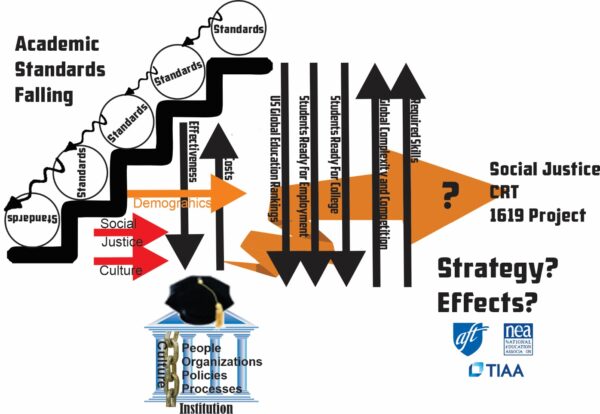
According to recent data from the National Assessment of Educational Progress, nearly a third of high school seniors cannot read well enough to extract basic details from a written page.
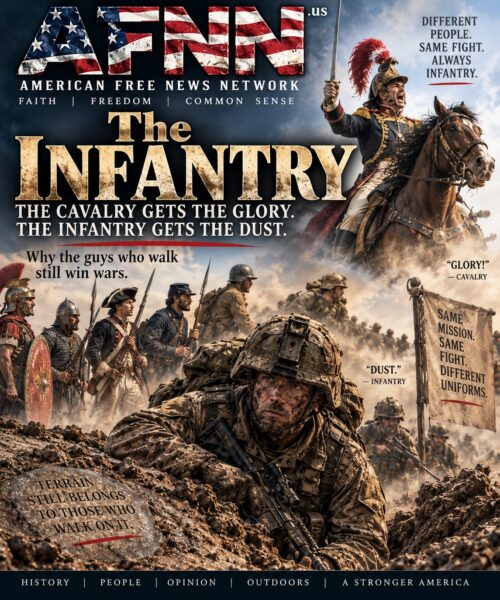
The cavalry gets the glory. The infantry gets the dust. For thousands of years, warfare has invented faster horses, bigger guns, tanks, aircraft, drones, and now cyber warriors—but eventually somebody still has to walk onto the objective with a rifle and take the ground. Call them ground pounders, earth pigs, grunts, soldiers, or Marines: they are the infantry. Not everyone should be one, and thank God for that. But every army needs them, because wars may be shaped by technology, artillery, armor, and airpower—but ground is still won by the poor bastard standing on it.
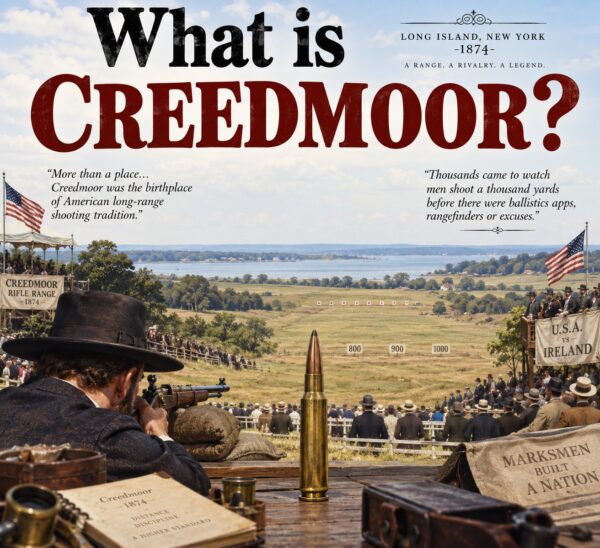
The 6.5 Creedmoor has been around for 19 years, and apparently that still hasn’t been enough time for some gun enthusiasts to learn what the word Creedmoor actually means.
Before you utter “6.5 Man Bun” again, try Google.

The Bureau of Alcohol, Tobacco, Firearms, and Explosives (BATFE) has morphed into a rogue agency that tramples on Americans’ rights and undermines the very principles of privacy and freedom.
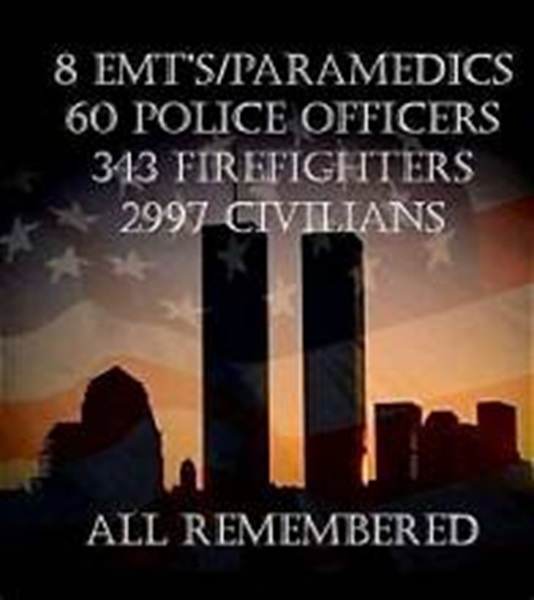
Americans have short memories. Very short.
It’s only been 25 years since Muslim terrorists launched the deadliest attack on American soil in 250 years, yet many Americans (especially Muslim-Americans) seem oblivious to that event and instead are eager to denigrate our nation as a toxic cauldron of white supremacy and Islamophobia.
Meanwhile, they push for Sharia Law and encourage women to wear the Hijab, Chador, Khimar, Niqab, etc. That tells me that those Muslims believe women should not be free to dress as they wish, and that clearly contradicts American culture and values.
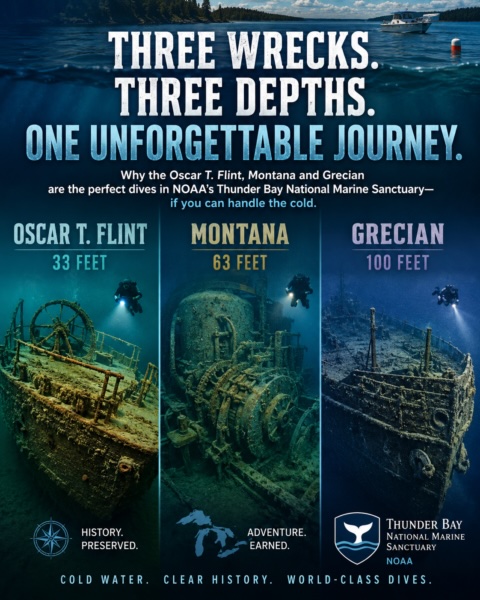
There are places where the water is warm, the reefs are colorful, and every dive feels familiar. Then there’s Thunder Bay. Hidden beneath the cold, crystal-clear waters of Lake Huron lies one of North America’s greatest collections of preserved shipwrecks, where history is measured not in museums, but in feet of depth. From the beginner-friendly “Oscar T. Flint” at 33 feet, to the towering machinery of the “Montana” at 63 feet, and finally the legendary “Grecian” resting around 100 feet below the surface, few places offer such a perfect progression for recreational divers. The only catch? You have to embrace the cold—but those who do are rewarded with an underwater time capsule unlike anywhere else in the world.

Twenty-five years after the attacks of September 11, America faces a dangerous temptation: forgetting (NYC Mayor, anybody?). Time softens memories, new generations inherit stories instead of scars, and political divisions crowd out shared history. Yet the lessons of 9/11 remain essential because they remind us that freedom carries costs, courage deserves honor, and national unity is possible even during unimaginable tragedy.

Twenty-five years after 9/11, Americans still have questions—and apparently asking them remains more dangerous to polite society than leaving them unanswered. We know intelligence agencies had information about future hijackers, critical information wasn’t effectively shared, early accounts of the military response proved inaccurate, Saudi-connected individuals assisted two hijackers, and Building 7 became the first known tall building to completely collapse primarily from uncontrolled ordinary-content fires. None of that proves an inside job. It proves something much simpler: “trust us” isn’t an acceptable substitute for history. Open the remaining files, follow the evidence wherever it leads, destroy the stupid conspiracy theories with facts—and answer the legitimate questions. After 25 years, Americans have earned something better than a press release.
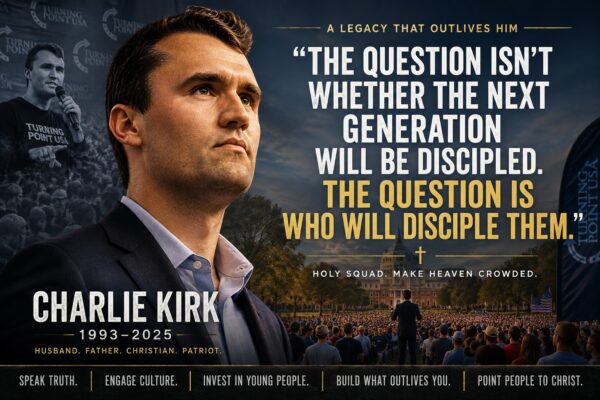
Charlie Kirk had thirteen adult years between founding Turning Point USA at 18 and his death at 31. Thirteen years to build something that would outlive him. But perhaps his most important message wasn’t ultimately political—it was pointing young people toward faith, family, purpose, and Christ.
The next generation will be discipled. The question is who will disciple them.
As we approach the first anniversary of Charlie Kirk’s death, perhaps the best way to honor his legacy isn’t simply to remember him. It’s to continue the mission.
Our clocks are still running. Don’t waste them.
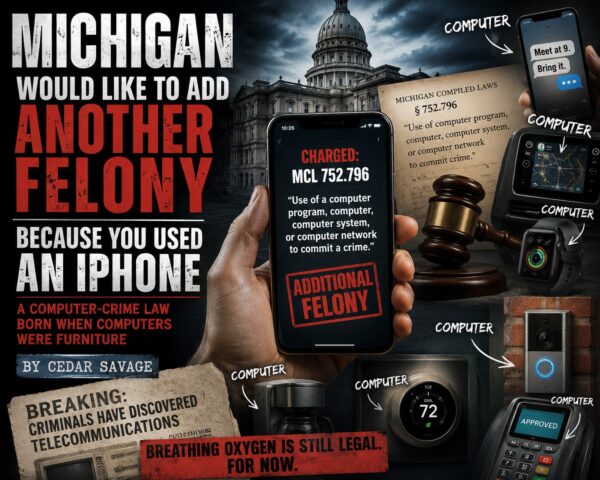
I learned something while sitting on a Michigan jury that sent me down one hell of a rabbit hole: Michigan can separately criminalize using a computer to commit a crime. In 2026, when your phone, truck, watch, bank, doorbell and possibly your toaster are computers, that starts sounding suspiciously like an enhancement for breathing oxygen while committing a crime.
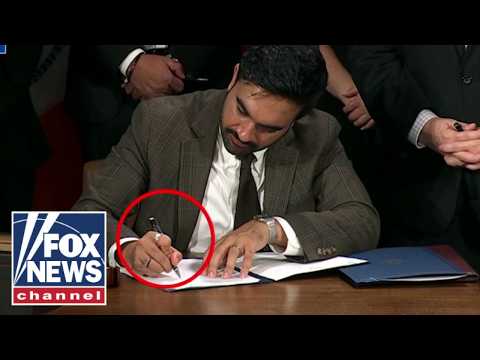
Fox News contributor Paul Mauro discusses New York City Mayor Zohran Mamdani signing an executive order for a day of remembrance for the 9/11 attacks and handing the pen used to sign it to a former al Qaeda defense lawyer on ‘The Will Cain Show.’

Hoover Institution senior fellow Victor Davis Hanson discusses the similarities between President Donald Trump and former President Ronald Reagan on ‘Life, Liberty & Levin.’
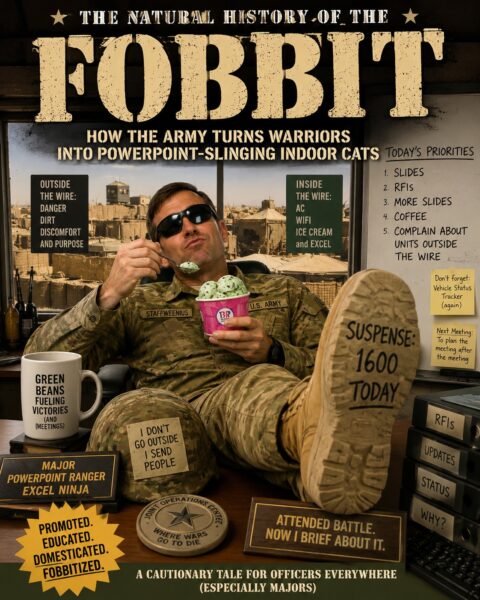
The Army has a remarkable ability to take a perfectly functional warrior, promote him a few times, hand him three computer monitors, and turn him into a PowerPoint-slinging indoor cat. Thus begins the evolution of the FOBbit: that mysterious creature who once went outside the wire but now survives on RFIs, synchronization meetings, Green Beans coffee, and Baskin-Robbins. The real horror comes when you finally look down at your ice cream, look at your clean uniform, hit “Send” on another 1600 suspense, and realize the terrible truth: Oh, $h!tt! I’m the FOBbit.
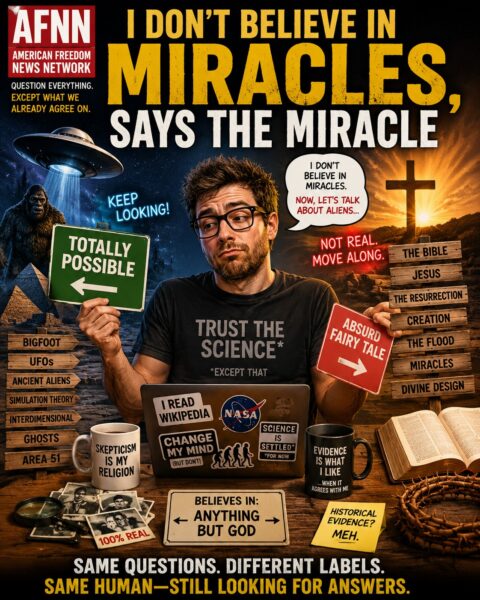
Modern man says he doesn’t believe in miracles while standing on a wet rock hurtling through space, made of stardust, possessing consciousness nobody can fully explain, pondering a universe nobody can explain why exists. God? Ridiculous. Ancient aliens? Now you have his attention. Maybe we didn’t stop believing—we just changed the vocabulary and became selectively skeptical about which mysteries are socially acceptable. Watch for AFNN next week as we ask the uncomfortable question: “I Don’t Believe in Miracles,” Says the Miracle.
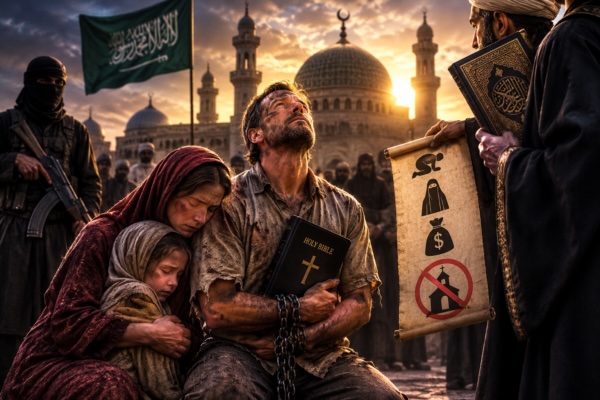
Paying an unfair tax is one thing. Wearing clothes you wouldn’t otherwise wear is another. But what happens when government finally asks the question Christians have faced since Rome: Will you obey us when obeying us means disobeying Christ? That’s where Romans 13 meets Acts 5:29—and Christianity stops being a bumper sticker.