American Exceptionalism Lives On

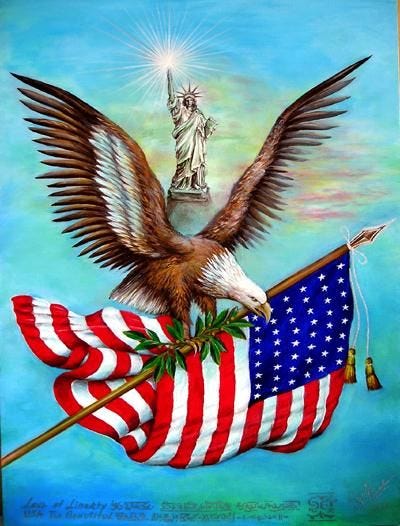
This post about America’s upcoming 250th anniversary of our nationhood is not about the past—as glorious as that may be—but rather this is about America’s future. The future is so bright, gotta wear shades.

Citizen Writers Fighting Censorship by Helping Americans Understand Issues Affecting the Republic.
This post about America’s upcoming 250th anniversary of our nationhood is not about the past—as glorious as that may be—but rather this is about America’s future. The future is so bright, gotta wear shades.
In the realm of military innovation, Swiss engineering once gave birth to an awe-inspiring marvel: the world’s largest rifle that could be fired by a single soldier.
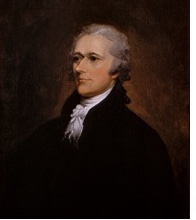
In Federalist 8 Hamilton discusses how war between the various states would be worse for the individual states than it would be between Europe’s various countries.
Supreme Court Justice Clarence Thomas delivered an insightful and important speech at the University of Texas recently that I wish every American could have heard.
John Jay still writing as Publius, jumps back into the fray with Federalist 3 arguing that a single country, and a single constitution, would be safer for the citizens than to remain individual states.
Today, we Americans are marching to a new ‘Path to Glory” for our country much as our founders and ancestors had to do. Today, we must continue to be Americans First citizens and rise above partisan politics and political parties. We must face the future solving our problems and plans looking through a reality prism not a political one and seek to restore this great country, our Republic and the Constitution. The goal ahead is to select common-sense leaders who understand our challenges and have the vision to lead us to a secure America so all can be in the pursuit of happiness and a thankful life.
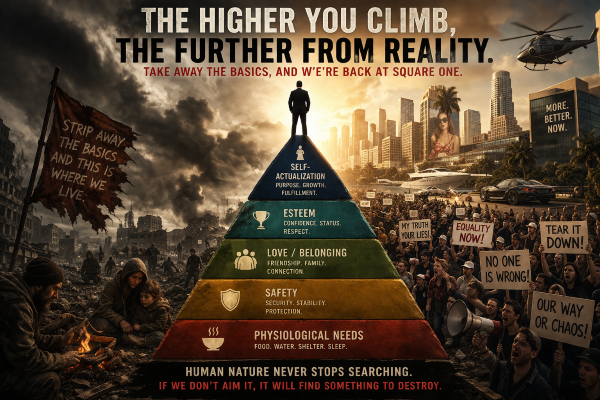
There’s a lie we like to tell ourselves somewhere between a full fridge and a stable Wi-Fi signal: once things get good enough, we’ll finally calm down. No more chaos. No more fighting. No more drama. Just peace, progress, and maybe a backyard smoker that never runs out of propane.
The Federalist Papers were written under the pseudonym “Publius,” whose authors had him acting the part of a founder of the Roman Republic. I do not think that was an accident.
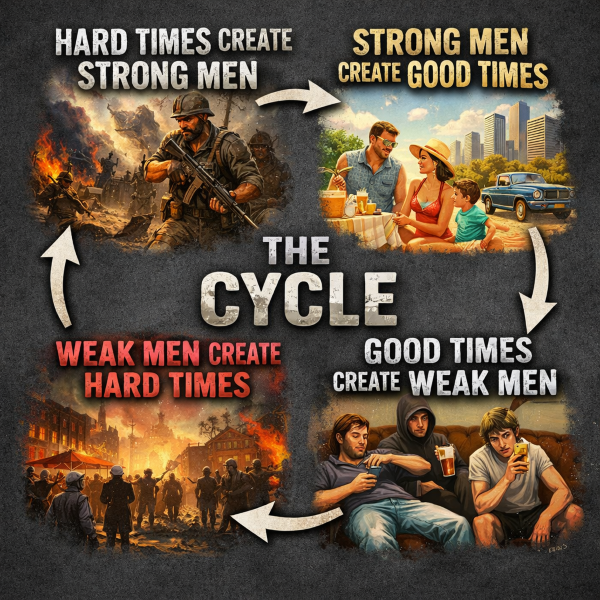
The now-famous line popularized by G. Michael Hopf—“Hard times create strong men. Strong men create good times. Good times create weak men. Weak men create hard times”—isn’t just internet wisdom wrapped in a motivational poster. It’s a stripped-down field manual for understanding why civilizations rise, peak, wobble, and then fall flat on their face.
Let us dive a bit deeper into Aristotle’s view of politics and how it differed from his teacher Plato. Previously we saw how Aristotle disagreed with his teacher Plato that only a philosopher king could properly rule. Aristotle believed that humans were inherently flawed and that reality required just laws to be supreme in order to …
Several months ago, I sent a note to Caroline Hendrie, Executive Director of the Society of Professional Journalists (SPJ), the 117-year-old organization that focuses on journalism ethics, defending the First Amendment, and providing professional development for both legacy and independent journalists. I have been a member of SPJ for more than 50 years, since I …
Aristotle believed that the guiding principle of a constitution should be “justice”. He would have defined that word as meaning the common good and the “happiness” of the community at large.
There was a time—not that long ago—when a man who couldn’t tie a knot was considered about as useful as a screen door on a submarine. Today, we’ve got people carrying $1,200 smartphones, satellite GPS, and enough titanium gadgets clipped to their belt to look like a walking REI catalog… and they can’t tie a loop that won’t slip under load.
One of Plato’s students was Aristotle. After spending time as the tutor to Alexander the Great (before he was “the Great”) Aristotle formed his own school called the Lyceum.
We generally think of Athens as the birthplace of modern democracy. It was in fact, far more directly democratic than the United States is today.
Those of us who live in this mismanaged, Democrat-ruled dung-show are keenly aware that Gov. “Hair Gel” has already relentlessly trashed the “Golden State.”
As I was responsible yesterday for your overconsumption of wine, perhaps I can offer amends today. Remember that in the discussion of the nature of a chair, Plato hypothesized that the form of a chair existed separately from the existence of any particular chair or of the craftsman who make them. That form did not depend on space or …
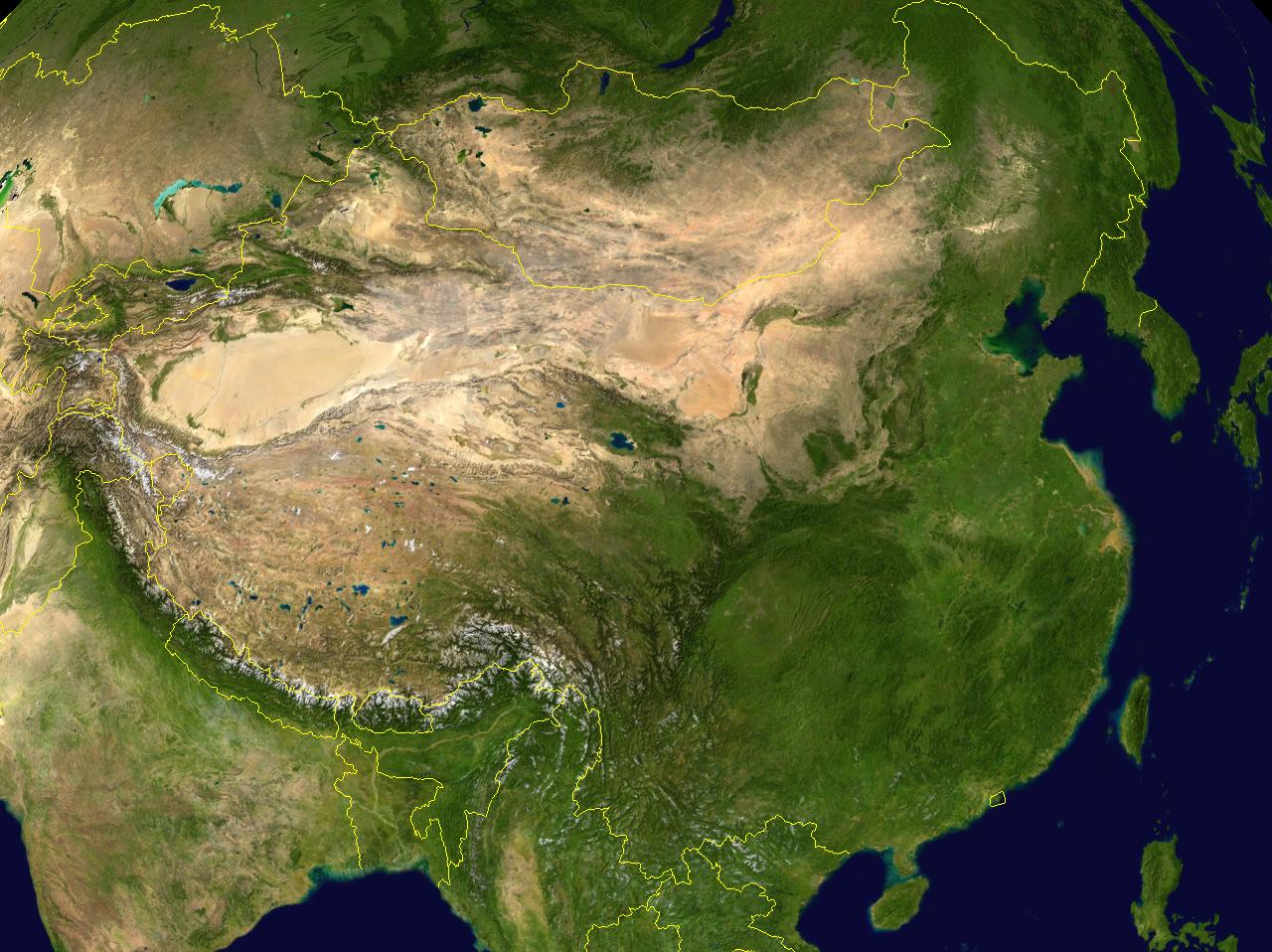
Following Mao’s death in 1976, China entered a new phase of development under Deng Xiaoping’s leadership. Deng’s reforms, known as “Socialism with Chinese Characteristics,” emphasized economic liberalization, market-oriented policies, and opening up to the global economy. The era of reform and opening unleashed rapid economic growth, modernization, and urbanization, transforming China into an economic powerhouse.
Mao Zedong’s leadership from 1949 until his death in 1976 reshaped China’s political, social, and economic landscape in profound ways. Central to Mao’s vision was the concept of the People’s Democratic Dictatorship, a term he used to describe a communist political system based on Marxist-Leninist principles adapted to Chinese conditions. Mao believed that a dictatorship of the proletariat, led by the Communist Party, was necessary to combat capitalist forces, achieve social equality, and transition to socialism.