The Modern Plato

As I was responsible yesterday for your overconsumption of wine, perhaps I can offer amends today.  Remember that in the discussion of the nature of a chair, Plato hypothesized that the form of a chair existed separately from the existence of any particular chair or of the craftsman who make them.  That form did not depend on space or …

Read more

History of China and the People’s Democratic Dictatorship: Successive Leaders and China’s Future Vision, Part 3

Following Mao’s death in 1976, China entered a new phase of development under Deng Xiaoping’s leadership. Deng’s reforms, known as “Socialism with Chinese Characteristics,” emphasized economic liberalization, market-oriented policies, and opening up to the global economy. The era of reform and opening unleashed rapid economic growth, modernization, and urbanization, transforming China into an economic powerhouse.

History of China and the People’s Democratic Dictatorship: Mao Zedong’s Era, Part 2

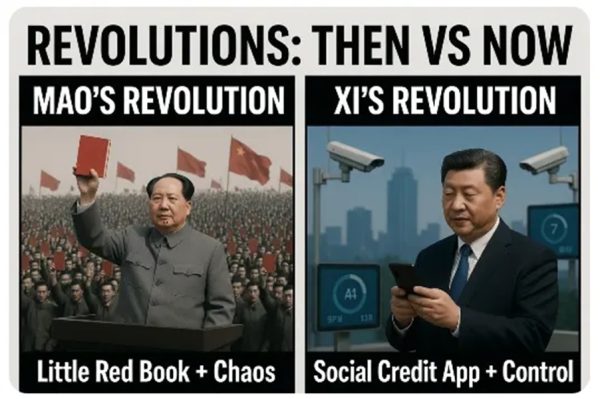
Mao Zedong’s leadership from 1949 until his death in 1976 reshaped China’s political, social, and economic landscape in profound ways. Central to Mao’s vision was the concept of the People’s Democratic Dictatorship, a term he used to describe a communist political system based on Marxist-Leninist principles adapted to Chinese conditions. Mao believed that a dictatorship of the proletariat, led by the Communist Party, was necessary to combat capitalist forces, achieve social equality, and transition to socialism.

History of China and the People’s Democratic Dictatorship: Pre-Mao Era, Part I

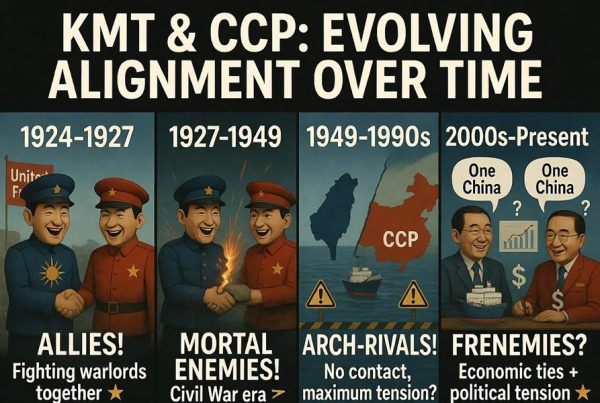
China’s history before Mao Zedong’s leadership was characterized by centuries of imperial rule, followed by attempts at modernization and political transformation. The Qing Dynasty, ruling from the mid-17th century until 1912, faced internal rebellions, foreign invasions, and economic challenges that weakened its authority. By the early 20th century, calls for reform and revolution grew louder, culminating in the Xinhai Revolution of 1911 and the overthrow of the Qing Dynasty.

Night Witches and the Art of Terror: How Improvised Bombers Haunted the Wehrmacht After Dark

In 1941, the Soviet Union was being dismantled at industrial speed. Entire armies vanished. Cities fell. Aircraft factories were evacuated east while German armor drove forward. There was no time for elegance. The Red Army needed pilots, aircraft, and pressure on the enemy—immediately. So they did something profoundly unromantic and brutally practical: they took civilians who could fly and turned them into combat airmen.

The Infamous Zapruder Film And The Issue Of Its Veracity: Why Did The Government Employ Intelligence Resources In A Secret Squirrel Operation To Evaluate The Film? Part 6

By the summer of 1963 Vice President Johnson-LBJ-was carrying a lot of baggage and was somewhat on the outs with the administration. Open rumors abounded that were not being denied by the JFK administration that alternatives were being considered for LBJ on the JFK ticket, should he be investigated by congress for either the Billy Sol Estes or Bobby Baker investigations, or both.

From Freedom Convoy to Financial Control: The Rise of Instant Compliance

If you want a glimpse of how modern pressure can scale fast, look north to the winter of 2022 and the protests known as the Freedom Convoy. What began as a cross-country movement of truckers opposing cross-border vaccine requirements turned into a broader protest against mandates and restrictions. The response from the Canadian government under Justin Trudeau was decisive: emergency powers were invoked, certain financial accounts connected to the protests were frozen, and law enforcement moved to clear blockades. Supporters called it necessary to restore order; critics saw it as a warning shot—how quickly financial access and mobility can be restricted in a modern, digitally connected system.

The Real Virus: How Fear, Stress, and Certainty Changed Us

You didn’t need a history degree to recognize what was happening during the pandemic—you just needed to pay attention to how quickly ordinary people changed under pressure. Not all at once, not everywhere, but enough to notice a pattern. Stress, fear, and anxiety didn’t just shape policy; they reshaped behavior. And in many cases, they …

Read more

Smoke, Steel, and 1,000 Yards: The Great International Rifle Match at Dollymount

The year was 1875, and long before ESPN, endorsement deals, or even organized leagues as we know them, one of the most electric sporting events on earth unfolded on a windswept stretch of Irish coastline at Dollymount, just outside Dublin. This was the Great International Rifle Match—a transatlantic clash that, for a brief window in history, made precision rifle shooting a premier spectator sport.

Business with Iran: Intelligence Report by George Mcclellan

The Islamic Republic of Iran launched a religious war against us almost fifty years ago (1979), and we still don’t believe it. Before his overthrow, the Shah of oil-rich Iran, Mohammad Reza Pahlavi, was implementing modernization, Western ideals, and industrialization policies. A revolution occurred because the strict Islamists called the Shah’s government too restrictive, like Democrats are doing here today, causing the Shah’s government to quickly fall into the hands of the strict Islamic ideologues. It is regretted today!

Going Against The Grain: Why Democrats Are Dangerous

The Democrat Party is no longer a legitimate political party, and it hasn’t been since at least Obama.

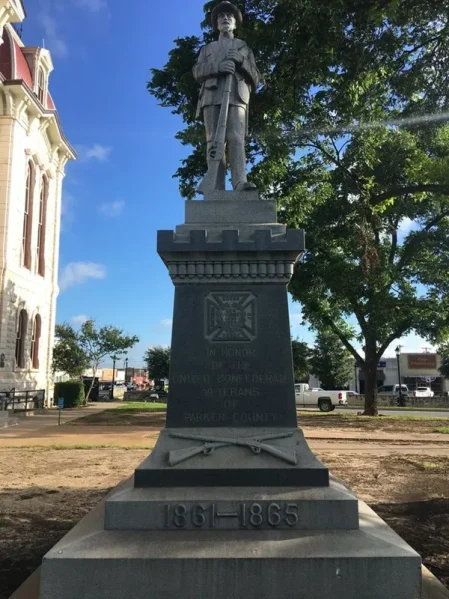
Since after the Civil War, or more accurately, the War Between the States, the Democrat Party has slowly evolved into a treasonous opposition. Their ‘dreams’ for the nation had departed from what the founders had in mind.

Mayday, Mayday: The Return of the American Strike Fantasy

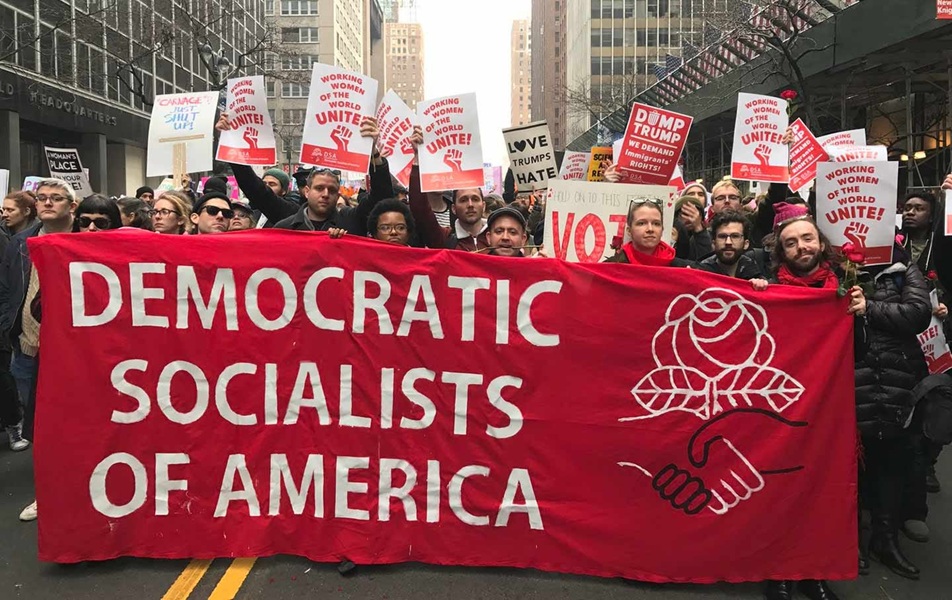
The roots go back to the late 19th century, when American labor was less “9 to 5” and more “sunup to collapse.” The rallying cry was simple: eight hours for work, eight for rest, eight for life. In 1886, that demand erupted into nationwide strikes, culminating in the infamous Haymarket Affair in Chicago. A bomb, gunfire, dead police, dead civilians, and a trial that still sparks debate today. It was messy, chaotic, and deeply human—exactly the kind of event that leaves a permanent scar on history.

Today’s No Kings, Pro-Iran Quislings: A Reminder of America’s Vietnam War Turncoats

I thought I had seen the last of traitorous Americans cursing our soldiers or calling for them to be killed when the last American combat troops were pulled out of Vietnam following the 1973 Paris Peace Treaty. After the disgusting display by anti-American, pro-Iran thugs in Philadelphia and the perfidious “No Kings” protestors last weekend, it appears I was wrong.

From Opium to Algorithms: How China Turned Humiliation into Dominance

In the early 19th century, Britain had a problem. China produced what the world wanted—tea, silk, porcelain—and demanded payment in silver. The British Empire was bleeding hard currency. Rather than accept the imbalance, Britain engineered a solution: opium. Grown in British India and smuggled into China, the drug created dependency at scale. Millions became addicted. Silver began flowing back out of China.

The Infamous Zapruder Film And The Issue Of Its Veracity: Why Did The Government Employ Intelligence Resources In A Secret Squirrel Operation To Evaluate The Film? Part 4

Tom Wilson’s work may be the only credible, clinical, scientific, nothing but the facts evidence of what went down that day in Dealy Plaza. His effort touches nearly every aspect of and undoes many of the faux facts that others rely upon to construct the lone gunman BS. His journey of discovery through the assassination photonic evidence is remarkable. Perhaps more astounding is how conclusive such evidence can be in the right hands.

The Infamous Zapruder Film And The Issue Of Its Veracity: Why Did The Government Employ Intelligence Resources In A Secret Squirrel Operation To Evaluate The Film? Part 3

Consider the Warren Commission being advised by former CIA Director Allen Dulles, with then current CIA Director John McCone at the ready if needed. Two leading figures of the time, prominent government civilian servants at the helm of our government: and yet nobody knew about the Zapruder Film analysis at NPIC for decades.