Hormuz: The Reality TV War and China’s Unfortunate Front-Row Seat

Modern war has acquired an odd new feature. It now comes with graphics, dramatic music, and a nightly highlight reel. Precision bombs streak across the screen. Drones glide in cinematic slow motion. Social media fills with grainy infrared footage of things exploding in the desert while commentators nod gravely and say phrases like “escalation dynamics” and “rules-based order.”

The Drone Revolution: Warfare’s Latest Game of Technological Ping-Pong

The basic idea of unmanned warfare actually dates back more than a century. During World War I, armies experimented with remotely controlled aircraft and explosive “aerial torpedoes.” They were crude and unreliable, but the concept was already there: send a machine instead of a pilot into harm’s way. Through the Cold War the idea matured into reconnaissance drones used primarily for surveillance. The United States began using early UAVs over Vietnam and later refined the concept in the 1990s and early 2000s.

How do I define victory? When we see women like this again in Teheran.

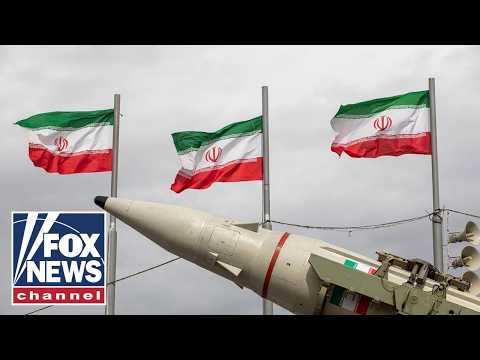
Commander-in-Chief Donald Trump updated America on Operation Epic Fury in Iran. No. 47 said, “Their army is gone. Their navy is gone. Their communications are gone. Their leaders are gone. Two sets of their leaders are gone—they’re down to their third set. Their Air Force is wiped out entirely.” Well, trust but verify, so I …

Read more

Hormuz: 21 Miles of History Proving Geography Still Rules the Modern World

The modern world likes to believe it has outgrown geography. Satellites circle the planet, data moves at the speed of light, and weapons can strike targets from continents away. Military theorists speak confidently about cyber war, artificial intelligence, and fifth-generation conflict conducted across digital networks and orbital platforms. Yet despite all this technological sophistication, the global economy still depends on an astonishingly simple fact of physical geography: about twenty-one miles of ocean between Iran and Oman control roughly a quarter of the world’s oil and enormous quantities of energy-related commodities such as petrochemical feedstocks and fertilizer inputs.

The Lone Wolf Factory: How the Internet Became the World’s Largest Radicalization Machine

Today the world’s largest radicalization engine runs twenty-four hours a day, recruiting globally with the efficiency of an Amazon warehouse. You don’t need a secret meeting. You don’t need a physical training camp. You need Wi-Fi and a keyboard. Congratulations — you now have access to what might be called the Lone Wolf Factory, where the raw materials are grievance, identity crisis, and algorithmic amplification.

The Day the Soviets Built the King of Boom

In October of 1961 the Cold War was already a tense, paranoid chess match played with nuclear weapons instead of pawns. The United States and the Soviet Union were staring each other down across oceans, missile silos, and enough megatonnage to turn the planet into a glowing charcoal briquette. But Soviet Premier Nikita Khrushchev decided the world needed a reminder of just how big the Soviet hammer could be. So the Kremlin did what any superpower with a bruised ego might do. They built the largest nuclear bomb in human history and lit it off over the Arctic.

Clausewitz, Jomini, and DIME-FIL: Why a 200-Year-Old War Theory Still Explains the Iran War

Start with Clausewitz. His most famous line remains the most brutally accurate description of war ever written: war is the continuation of politics by other means. In other words, wars are not random explosions of violence. Nations fight because they want political outcomes—territory, influence, regime survival, deterrence, or control of strategic regions.

Death Rays on a Budget: How the U.S. and Israel Turned Electricity into Air Defense

If you grew up on Austin Powers, you remember the joke. Dr. Evil didn’t want nukes. He didn’t want tanks. He wanted lasers. The audience laughed because lasers were cinematic nonsense. Fast forward to 2026 and Israel is fielding the Iron Beam, and the U.S. military has ship-mounted and vehicle-mounted high-energy laser systems actively burning small threats out of the sky. Turns out Dr. Evil was just early.

Iran: The Revolution That Ate Its Own Children – A Brief History

When Americans think about Iran, the story usually begins in 1979—angry crowds, burning flags, and a stern cleric named Ayatollah Khomeini taking control of the country. But that snapshot hides something important. Iran—historically Persia—is one of the world’s oldest civilizations. Its history stretches back thousands of years, and the country that emerged after 1979 is not the inevitable outcome of Persian history. In many ways, it was a political accident born from revolution, miscalculation, and a brutal consolidation of power.

The Roosevelt Problem: What Teddy Said About Muslim Conquests That Would End a Political Career Today

If Theodore Roosevelt were transported into modern America and handed a microphone, the man wouldn’t survive a single news cycle. Not because he was shy, confused, or prone to carefully worded diplomatic statements. Quite the opposite. Roosevelt had a remarkable ability to say exactly what he thought about history, religion, and civilization without the slightest concern for whether it might offend a future diversity committee.

The War Powers Resolution of 1973 and Iran

Representative Thomas Massie (R-KY 4th District) and Senator Rand Paul (R-KY) are Republicans, but they are also two of the very few libertarians (not Libertarians) elected to Congress. Both have long opposed wars, and are definitely not neocons, and both sponsored concurrent resolutions to force President Trump to pull back military forces from any conflict …

Read more

When Veteran YouTube Geopolitical Talking Heads Start Acting Like Internet Trolls

Now let’s be clear about something. Veterans arguing about foreign policy is not the problem. In fact, it’s healthy. People who have worn the uniform should absolutely debate how American power is used. The military has always produced strong opinions—usually accompanied by horrible coffee and worse briefing slides. But what used to separate professional disagreement from internet drama was something the officer corps once valued deeply: discipline.

The Kurds – The Enemy of My Enemy Is My Friend (Until Tuesday)

For many Americans, the story is simple. Saddam Hussein gassed the Kurds in the 1980s—most infamously at Halabja. They suffered horribly. When the United States eventually removed Saddam from power in 2003, the Kurds were portrayed as natural allies: brave fighters, pro-Western, reliable partners in a messy region.

Red China is the big loser in Iran; Red China’s military equipment is as reliable as Acme’s. Meep-meep

A side benefit of the Operation Epic Fury is testing the war materiel of the Russian and Red Chinese military. With little exception, they are failing again as they did in the extraction of Maduro from Venezuela

Blood, Guts, and Winning Wars: Why Patton Still Makes Modern Leaders Uncomfortable

Patton’s most famous line, delivered to the Third Army in 1944, captured his philosophy better than any manual ever written: “No bastard ever won a war by dying for his country. He won it by making the other poor dumb bastard die for his country.” That was not just colorful language. It was a direct rejection of the romantic nonsense that had gotten an entire generation slaughtered in World War I. Patton had seen that war. He had been wounded in it. He understood that modern industrial warfare was not a stage for heroic poetry. It was a contest of logistics, speed, firepower, and will. His job was not to produce martyrs. His job was to produce victory.