Welcome to Smallbore Prone: America’s Hidden Gem of Precision Shooting

If you’re looking for a discipline that’s challenging, relaxing, affordable, and steeped in Americana, look no further. Smallbore prone is calling your name.
Citizen Writers Fighting Censorship by Helping Americans Understand Issues Affecting the Republic.
 David T. Cloft
If you’re looking for a discipline that’s challenging, relaxing, affordable, and steeped in Americana, look no further. Smallbore prone is calling your name.

As America approaches its 250th birthday next July 4th, there will be fireworks, parades, and patriotic declarations of freedom. But while we’re busy celebrating, we ought to pause and ask: What kind of nation have we become?

General William Tecumseh Sherman’s infamous “March to the Sea” during the Civil War is a prime example of this delicate balance between what can be called “tactical humanity” and “strategic humanity.”

In the age of convenience and waste, it’s easy to overlook the hidden treasures in our kitchens. Bacon grease, a simple byproduct of cooking bacon, was once revered by our ancestors for its versatility and value.

We’re living in an age where statements once considered common sense are now controversial. To say that men and women are biologically distinct, or that children shouldn’t be exposed to sexually charged material, or that free speech applies to everyone — these used to be unifying ideas. Today, they’re met with outrage, cancellation, or accusations of hate. What changed?

In 1976, Michigan became the first state in the nation to tell litterbugs to put their money where their mouth was—literally. With the passage of the Beverage Container Act, Michiganders slapped a 10-cent deposit on soda and beer containers.

In the great sweep of human history, few topics seem as unrelated as earwax and Noah’s Ark—yet modern genetics might say otherwise. Beneath your eardrum lies a curious clue that traces not only your ancestry, but possibly a post-Flood reboot of civilization itself.

We want an American rock band that’s still performing. No more overproduced, auto-tuned pop acts. No more weird choreographed nonsense with people dressed as futuristic space demons. Just pure, unfiltered rock ‘n’ roll.
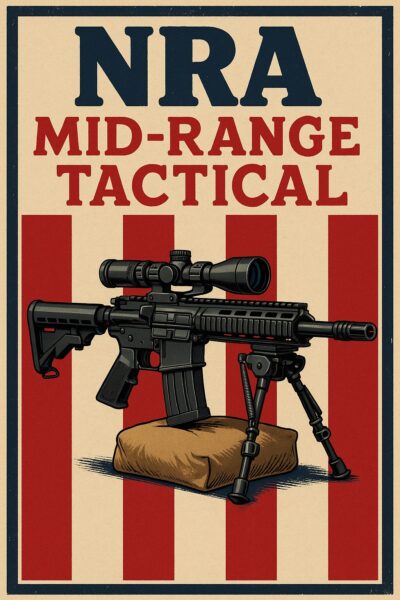
Whether you’re a veteran, hunter, law enforcement officer, or just someone with an AR and a desire to challenge yourself, this new sport may be the bridge between backyard plinking and competitive marksmanship you didn’t know you needed.

The 2024 film “Civil War,” directed by Alex Garland, offers a dystopian glimpse into a near-future America torn apart by internal conflict. Through the eyes of a group of journalists, the movie explores the rapid psychological transformation that occurs when citizens are thrust into violent opposition against their former friends and neighbors.

The United Kingdom, long a beacon of stability and cultural heritage, is now facing what some are calling the 5th British Civil War—a conflict not of armies and battlefields, but of clashing cultures and identities.

In the final part of this series, we’ll explore how the SSN metastasized into the backbone of modern identity. We’ll look at how it crept into private industry, how data brokers and governments exploit it, and how the “Mark” has evolved
In this part, we turn to the early years of the SSN itself, the numbers that were forbidden, and the unlikely rebellion that began not with violence, but with a strange, silent act of civil disobedience: using a fake number on purpose.
Part 1 We Gave Up Our Names for Numbers: The Quiet Birth of the System That Owns You Looking back from the age of digital surveillance and algorithmic oversight, perhaps the greatest act of control wasn’t when the government began reading our emails—but when it gave each of us a number and took away our …

In Galatians 4:4, the apostle Paul makes a profound statement: Jesus came at the exact moment God had determined in eternity past. This wasn’t arbitrary.

Ah, the United States Army. Always on the cutting edge of 1980s technology. In the aftermath of 9/11, our leaders had a choice: modernize the Army’s ground combat systems or spend the next two decades playing Whac-A-Mole in the Middle East.

The Tower of Babel story in the Bible, found in the Book of Genesis, holds profound symbolism that resonates even in contemporary contexts, particularly concerning the rise of artificial intelligence (AI).

During World War II, the Nazi regime resorted to extreme measures to keep their soldiers fighting under increasingly dire conditions.

Once upon a time in the sun-drenched hills of southern France, a group of spiritual minimalists called the Cathars decided to challenge the Catholic Church.

Ruth Benedict, a prominent anthropologist of the 20th century, introduced the concepts of “cultural configurations” and “patterns of culture” in the 1930s.