Are Military Branches Beyond Army and Navy, Even Constitutional?

The emergence of other branches like the Air Force, Marine Corps, and Space Force raises an intriguing question: Are these newer military branches truly constitutional?
Citizen Writers Fighting Censorship by Helping Americans Understand Issues Affecting the Republic.
 David T. Cloft
The emergence of other branches like the Air Force, Marine Corps, and Space Force raises an intriguing question: Are these newer military branches truly constitutional?

Welcome to the era of the Government-Sponsored Love Lottery, where your happily ever after is just a government algorithm away.

The Iran-Contra Affair, a tumultuous chapter in U.S. history, unraveled a complex web of clandestine operations, ethical quandaries, and geopolitical contradictions, shedding light on the profound influence of the military-industrial complex in shaping U.S. foreign policy.

Enacted in the aftermath of the tragic events of September 11, 2001, the USA PATRIOT Act stands as a pivotal example of how seemingly well-intentioned legislation can inadvertently threaten constitutional rights.

In a world where celebrity worship is as common as Monday morning traffic jams, it’s no surprise that marketers have hopped on the celebrity endorsement bandwagon.

In this modern era, we find ourselves living amidst a culture where the soft-minded and the perpetually offended are as common as snowflakes in a blizzard.

The one conspiracy theory that continues to captivate the public imagination, is the idea that the CIA was involved in the assassination of John F. Kennedy.

In the shadowy world of intelligence agencies, two giants once reigned supreme: the Central Intelligence Agency (CIA) of the United States and the KGB (Committee for State Security) of the Soviet Union.

Throughout history, the timeless debates among philosophers have continued to influence human thought and ideology.

The Apostle Paul, whose transformation from a persecutor of Christians to a dedicated servant of God offers a powerful example of resilience and redemption.

In a century, say in 2123, we’ll find ourselves resting alongside our loved ones, while strangers occupy the homes we toiled to build, owning everything we cherished.

The evolving landscape of American society raises questions about the changing dynamics between faith, government, and personal values.

In the age of rapid technological advancement, the intersection of artificial intelligence (AI) and human intellect has become a subject of increasing fascination.

The abrupt change in the Army’s approach to vaccination mandates, is a case of, Too Little, Too Late, to help current recruitment difficulties
The Central Intelligence Agency (CIA), established with an original intent of safeguarding national security, has transformed into a complex and clandestine force in international affairs.

In today’s world, the discourse surrounding climate change has taken on aspects of a fervent belief system that some have compared to a new global religion.

In “The Gulag Archipelago,” the iconic literary work by Russian writer and dissident Alexander Solzhenitsyn, the author masterfully uncovers the devastating influence of falsehoods within the context of the Soviet labor camp system, famously known as the “Gulag.”

In 1492, Christopher Columbus embarked on a voyage that would profoundly impact world history, driven by the need to find an alternative route to Asia due to the Ottoman Empire’s (Islamic State’s) control of the Silk Road.

In 2023 we will have donated $12 billion taxpayer dollars to United Nations. One way to help our own debt, is to reevaluate our funding for them.
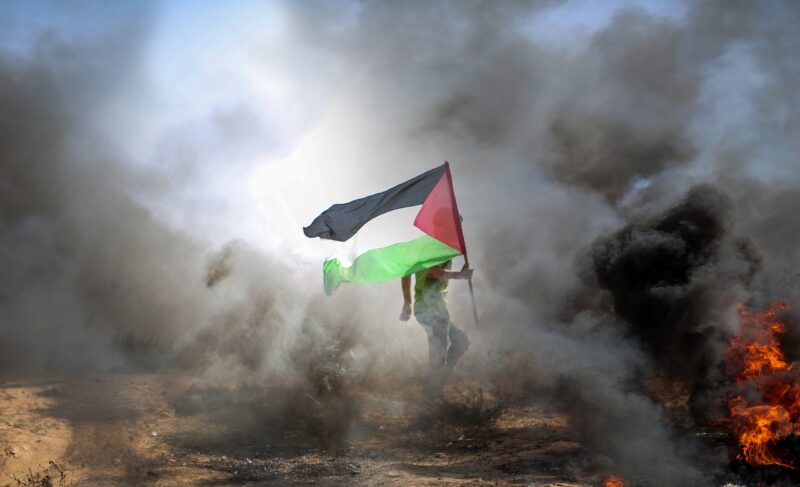
Extremism knows no religious boundaries, and it can manifest in various forms, causing harm and perpetuating misconceptions about entire faith communities.