Dear Heaven

Dear God,
It’s me again. Actually, I don’t know what you want me to call you. For all I know, you might prefer to be called something Hebrew, Latin, or maybe you don’t want to be called anything at all.
Citizen Writers Fighting Censorship by Helping Americans Understand Issues Affecting the Republic.
Dear God,
It’s me again. Actually, I don’t know what you want me to call you. For all I know, you might prefer to be called something Hebrew, Latin, or maybe you don’t want to be called anything at all.

Let me tell you about a young lady named Alisha. Alisha is 20 years old. She grew up in a typical American family. She was not a victim of sexual or other abuse at home; her parents were quite normal and average. In fact, her childhood years were basically pretty unremarkable, pretty normal, pretty average.
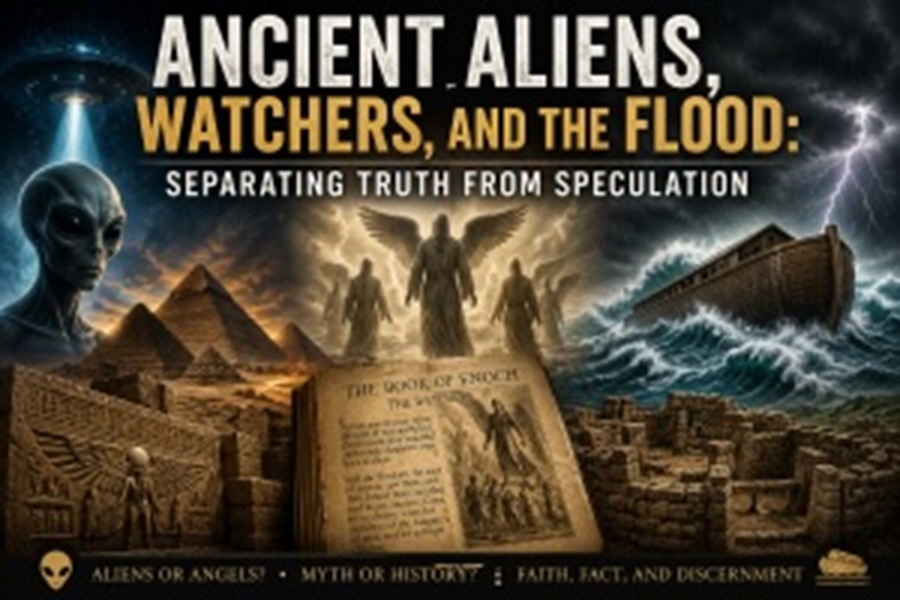
History is full of mysteries—but mystery is not evidence. From ancient aliens to Atlantis, from the Watchers of Enoch to the archaeological puzzles of the pyramids, competing theories attempt to explain humanity’s distant past. Some are grounded in evidence, others in speculation. This article compares the major worldviews, examines where they overlap and where they diverge, and asks the most important question of all: Are we following the evidence, or simply the story we want to believe?

Although “Piss Christ” never reached the Supreme Court, the controversy helped lead to the 1998 case National Endowment for the Arts v. Finley. The Court ruled that while artists have broad First Amendment rights to create controversial work, they do not have a constitutional right to taxpayer funding. The lasting debate wasn’t whether Serrano could make the photograph—it was whether the public should have to help pay for it.

‘The Faulkner Focus’ host Harris Faulkner and Larry Kudlow discuss the role faith plays in overcoming life’s challenges on ‘Kudlow.’

There are a lot of topics I could discuss today. I have files filled with articles, research and information that I could expound upon. With a 24/7 news feed, I’m constantly immersed in information from around the world. I draw from many sources, double check the information to verify it, filter it all through the lens of Scripture, ask the Lord to guide me as I sit down to write, and then share my thoughts with you, my readers and radio listeners.
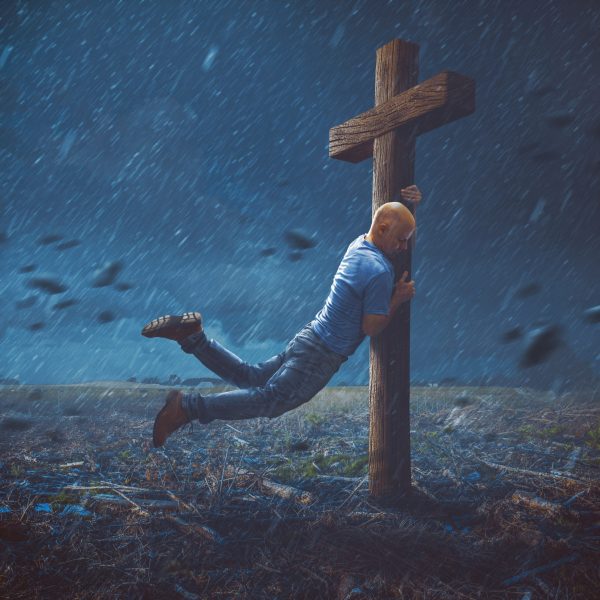
When frustrations, disappointments, and sorrows arise, believers can cultivate the habit of turning first to prayer by intentionally placing reminders of God’s presence before their eyes and choosing, again and again, to cling to Christ.

Angels aren’t real. They can’t be. It just doesn’t make sense. How can a rational human with a working brain believe in invisible celestial creatures who all resemble Michael Landon?
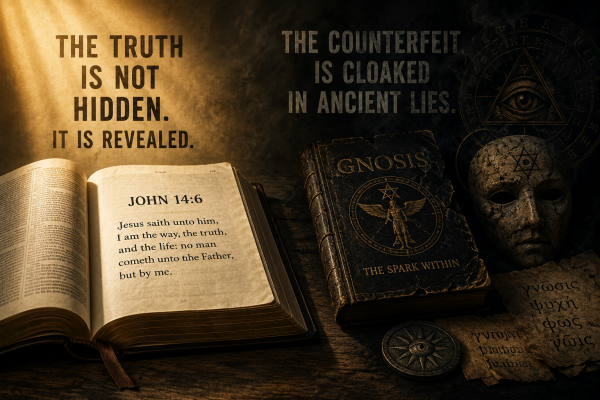
Every generation claims it has finally uncovered the “real” Jesus. Strip away two thousand years of Christian teaching, mix in a little philosophy, sprinkle in some secret knowledge, and suddenly Christ becomes something entirely different. The tragedy is that the oldest counterfeit never disappears—it simply changes its vocabulary. The apostles warned that false gospels would come. They weren’t predicting the distant future; they were describing their own day. Two thousand years later, the same deception persists. The names have changed, but the message remains the same: replace the Savior with a teacher, repentance with self-discovery, and grace with the promise that the answer has been inside you all along. Counterfeits don’t succeed because they’re obviously false—they succeed because they look just enough like the truth to deceive those who never compare them to Scripture.
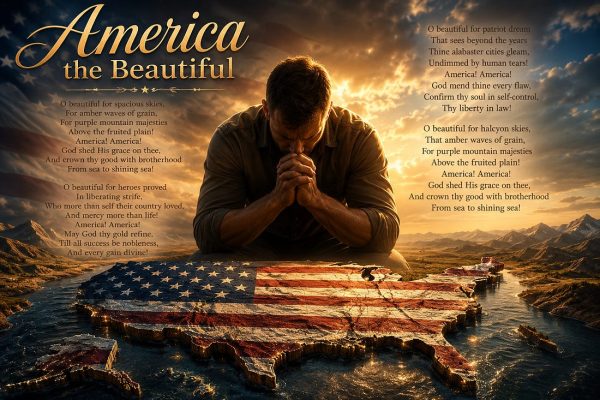
Few songs capture the heart of America as beautifully as America the Beautiful. Written by Katharine Lee Bates, the hymn is not merely a celebration of the nation’s landscape, heritage, and history—it is a petition that America would be, and remain, a nation marked by virtue, courage, justice, sacrifice, and divine blessing. As we reflect on each stanza, let us turn its words into prayer.
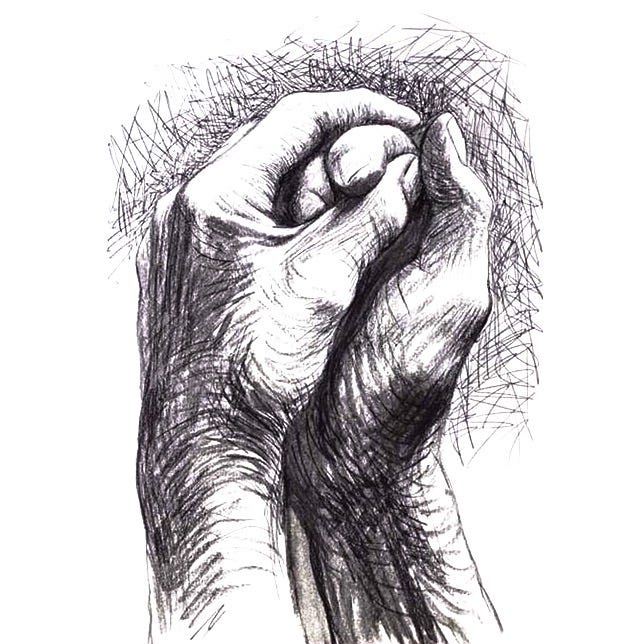
I SAT IN THE OLD WOMAN’S living room. It was a gaudy block home. The walls were outdated pastel colors, á la 1986. She was smoking menthols.
She knows she shouldn’t smoke, her daughter wants her to quit. Eventually, the old woman says she will.
“Quitting smoking ain’t hard,” she said. “I’ve done it hundreds of times.”
America is entering an uncharted, revolutionary time. We are no longer the America of our founders or even the America that existed twenty years ago.
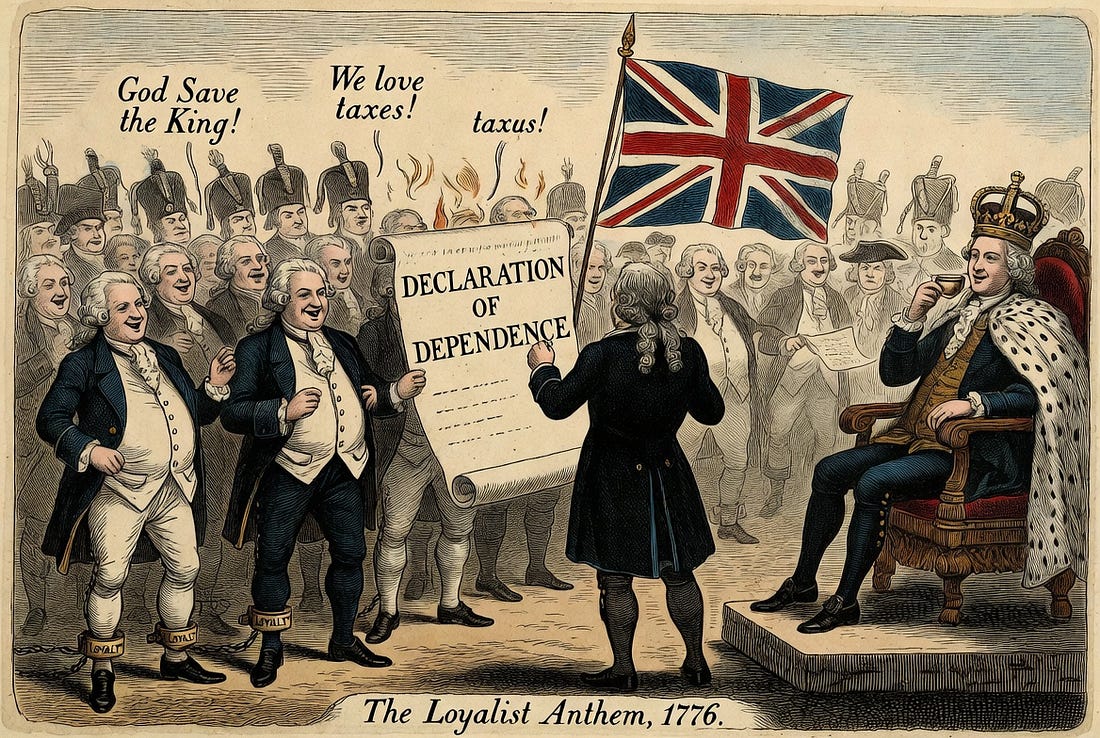
On Saturday, the nation celebrates its 250th anniversary in this Year of the Bicentennial+50. The Continental Congress declared independence on July 2, 1776. Two days later, they debated and edited the Declaration of Independence. On July 8, 1776, Colonel John Nixon publicly read the Declaration aloud in Philadelphia’s State House yard (now Independence Square). This was accompanied by bell ringing (including the Liberty Bell), cheers, and some military displays.
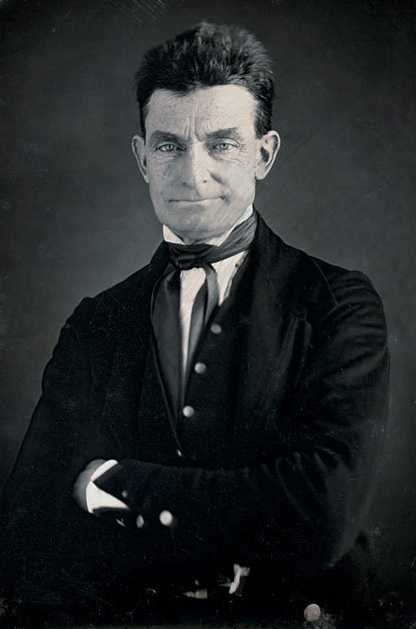
The Republican Party was birthed by Abolitionists who refused to compromise on slavery. They left the Northern Whigs who always compromised. Today, career politician Establishment Republicans always compromise or collaborate cheerfully. Their votes and budgets make a lie of their campaigns as “Republicans” and “Conservatives”. Career politicians made those labels utterly meaningless. Conversely, the Democrats …

Strange weather we’ve been having lately. When I say “lately,” I could go back decades, but I’ll stick to just the past five years or so. Do you recall the winter storm that hit the central and southern US, including Texas and northern Mexico in February of 2021? It was called “Winter Storm Uri,” and at least 240 people died because of it. A strong Arctic air mass plunged deep into the southern US. More than 9 million people lost power while facing record-breaking cold, snow and ice.

As America marks 250 years of history, Christians can celebrate God’s blessings and our nation’s remarkable achievements while honestly confessing our failures and seeking renewed faithfulness to Christ.
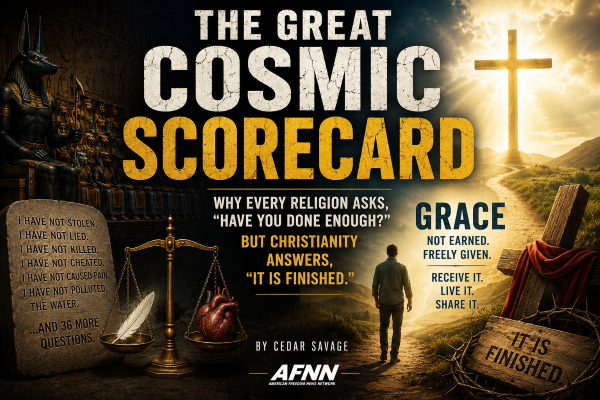
Every civilization seems to invent a cosmic scorecard. The ancient Egyptians had the 42 Assessors of Ma’at. Modern culture has social media, political tribes, and endless virtue signaling. The question never changes: Have you done enough?
Christianity’s answer is radically different. It doesn’t tell us to try harder, climb higher, or balance the scales. It tells us the scales can never be balanced by human effort alone. Grace—God’s unearned favor—is the answer to a problem humanity has wrestled with for thousands of years. The Gospel is not the story of people reaching up to God, but of God reaching down to people. That’s why Christians call it good news.
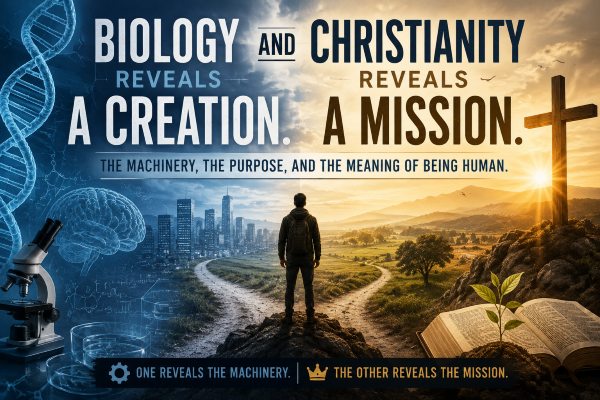
For generations, we’ve been told science and Christianity are locked in a war for the soul of humanity. But what if they’re describing the same reality from different angles? Biology reveals a species unlike any other—one that plants trees for future generations, builds civilizations, and passes wisdom across centuries. Christianity offers an explanation: humans were created in the image of God and entrusted with a mission of stewardship. In a world drowning in information but starving for purpose, perhaps the question isn’t whether science or faith is right. Perhaps the question is why humans alone seem driven to leave the world better than they found it.
I will admit that it’s truly baffling to me that the northeast, the most politically liberal area of our country, is also our most heavily Catholic region, yet our good friends on the left love to spend their time bashing Catholics. It kind of makes me wonder just how actually Catholic they are. Our 46th …