Kosovo 1: The Bottle, the Battle, and the Bombers: Why Kosovo Was Never Just 1999
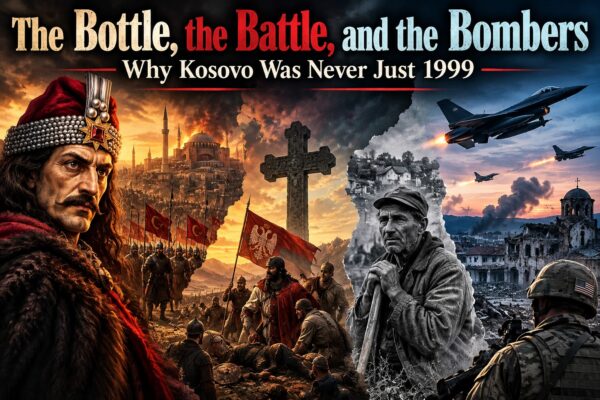
When NATO started bombing Yugoslavia in 1999, most Americans discovered Kosovo approximately fifteen minutes before forming an opinion about it. The problem was that the people actually living there had been fighting over its history for roughly 600 years. From the Battle of Kosovo in 1389 and the Ottoman world of Vlad the Impaler, through Tito’s Yugoslavia and one bizarre, politically explosive glass-bottle incident in 1985, Kosovo accumulated centuries of grievances before the first NATO bomb fell. American troops arrived carrying rifles, radios, maps and rules of engagement. The Balkans were waiting with six centuries of history.

Kimberly Guilfoyle: What Profits a Woman to Gain the World and Lose Her Soul?

Kimberly Guilfoyle has spent decades surrounded by fame, wealth, beauty, and political power. From Gavin Newsom’s wife to Fox News celebrity to Trump’s ambassador to Greece, her journey raises an uncomfortable biblical question: What profits a woman to gain the whole world and lose her soul? As new financial allegations emerge, perhaps it’s time to revisit what Jesus taught about the love of money. I hope she finds redemption, because heaven doesn’t accept American Express.

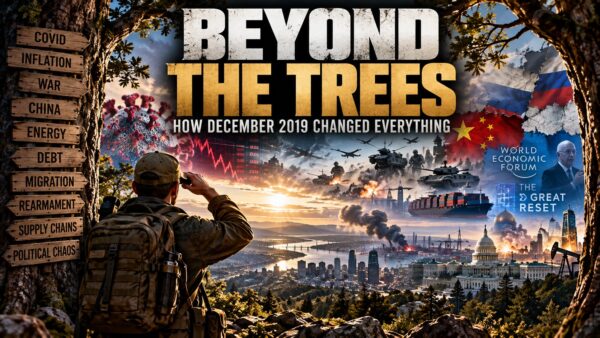
You Can’t See the Forest for the Trees

We have become experts on trees. Trump said something. Russia bombed something. China sanctioned something. The market moved, somebody posted something stupid, and by lunchtime half the country is furious. But zoom out to December 2019 and a different picture emerges: COVID, debt, inflation, war, rearmament, economic fragmentation, broken supply chains and great-power competition. Maybe these aren’t separate crises at all, but chapters in the same historical transition. Call it the Great Reset. Call it World War III. Historians will decide what to name it. Our problem is simpler: we’re standing three feet from an oak tree arguing about the bark while the entire forest behind us is changing.

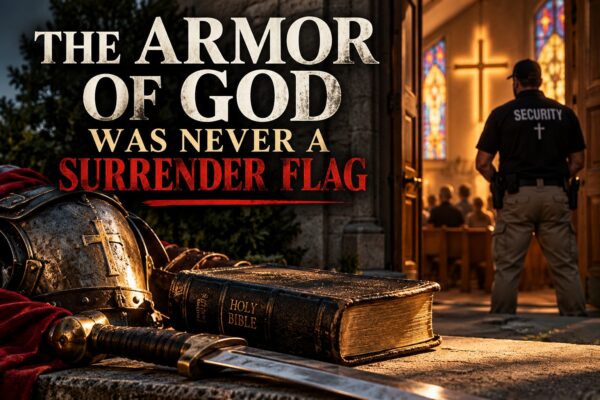
The Armor of God Was Never a Surrender Flag

Somewhere along the way, Christianity confused being peaceful with being helpless. Ephesians 6 tells us to put on the Armor of God, not wave a surrender flag. Scripture condemns vengeance, but it repeatedly recognizes the duty to protect the innocent. The Christian warrior should be reluctant, restrained, prayerful, and prepared. The firearm isn’t the mission. Peace is the mission. And sometimes peace needs someone willing to stand at the door.

Beyond The Sky

  Does the busy ant look up and see A giant man walk by? Could it understand a house or car or Airplane if it tried?   Does a fish in an aquarium Have questions it can ask? Or will it ever be unable To know the world beyond the glass?   You say, unlike …

Read more

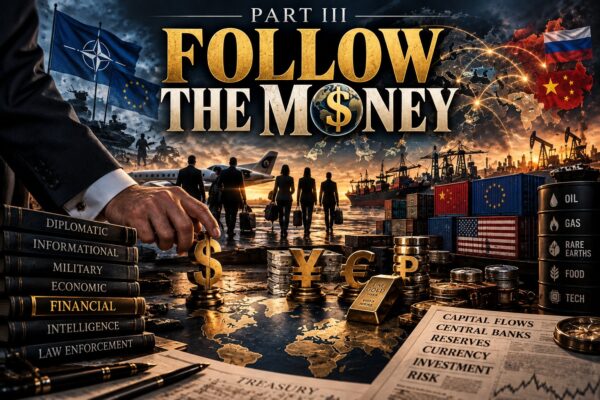
DIME Part III: Follow the Money

The generals get the history books, but the lawyers and comptrollers often decide what can actually happen. The same is true of nations. If people voting with their feet is one warning sign of decline, money may vote even earlier. Before the factories close and the scientists leave, watch where capital flows, where companies invest, what central banks buy, and what currencies nations choose to use. People need passports to leave. Money just needs a mouse click.

Accountability Starts at the Top – or It Doesn’t Start at All

It’s easy for a leader to demand results, establish standards, and point out where others have fallen short. It’s considerably harder to look in the mirror when something goes wrong and ask a much more uncomfortable question:

What part of this belongs to me?

That’s where leadership begins.

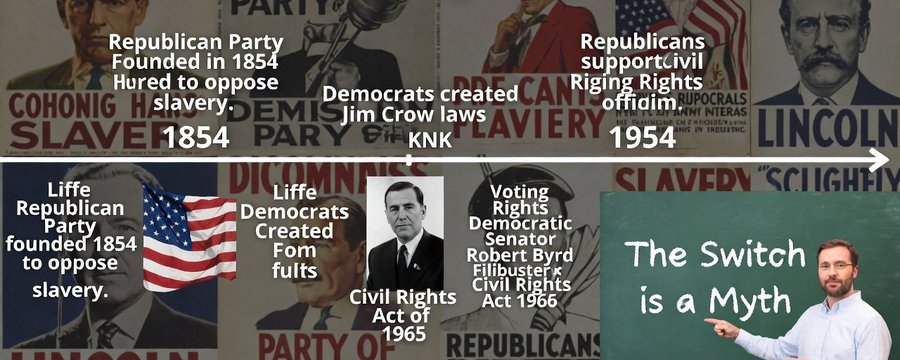
The Great “They Switched Sides!” Myth

I keep hearing this fairy tale about how the parties “switched” sometime in the 1960s. You know, the story where racist Democrats magically transformed into civil rights champions and Republicans secretly absorbed all that Jim Crow enthusiasm overnight like some political body swap horror movie. Fascinating theory. Absolutely captivating. Just one small problem: NONE OF IT ACTUALLY HAPPENED.

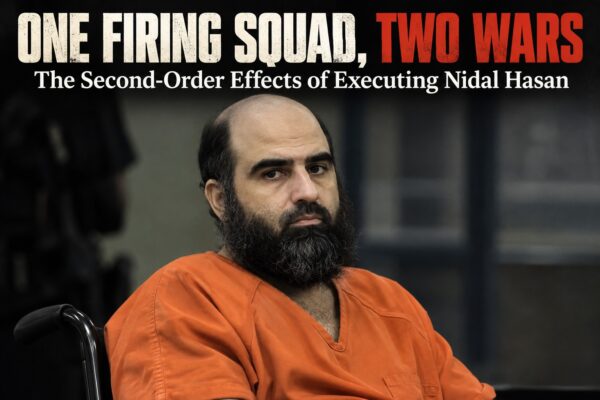
One Firing Squad, Two Wars: The Second-Order Effects of Executing Nidal Hasan

Executing Nidal Hasan may finally deliver justice for Fort Hood—but wars are fought in the information domain too. An American firing squad executing a man who claimed he had “switched sides” and embraced jihad could become instant propaganda. The first-order effect is justice. The second- and third-order effects may be a story America doesn’t control.

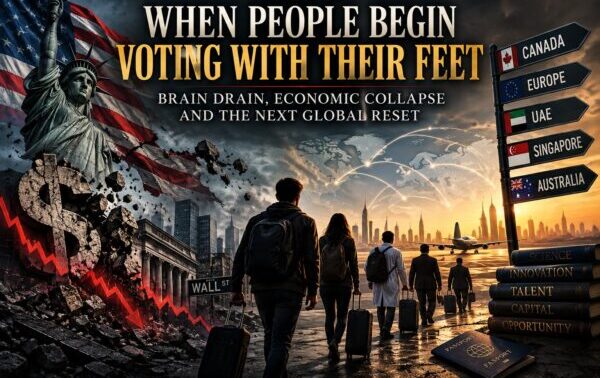
DIME Part II: When People Begin Voting With Their Feet

Part II: Economic collapse doesn’t begin when everyone runs for the exits. It begins when the people who can leave quietly decide they should. Scientists take foreign grants. Engineers follow better jobs. Entrepreneurs move companies. Families move their money and children. The poor may be stuck, while the very people capable of rebuilding the country disappear. History’s warning may be remarkably simple: watch when people begin voting with their feet.

I Was an Army Medic. Now I Teach. Here Is How to Reach a Black Kid in 60 Seconds, Before “We Don’t Do That” Does.

Suicide recognizes no race. So, if you are hurting right now, skip my whole article. Call or text 988 instead. Veterans, press 1. It is free, it runs 24 hours, and the person who picks up does not care what color you are or who you voted for. Okay. The rest of you, pull up a chair. Class is in session.

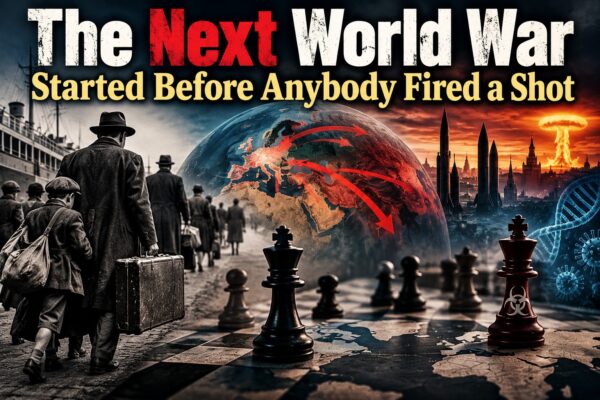
DIME Part I: The Next World War Started Before Anybody Fired a Shot

History teaches us that wars rarely begin with the first shot. Long before the tanks move, capital flees, talent leaves, economies fracture, alliances shift, and nations begin using every tool of power except the one labeled “military.” From brain drain to DIME, Clausewitz, game theory, nuclear deterrence and the Madman Theory, the warning signs are usually there. The problem isn’t that history doesn’t teach us anything. It’s that humans keep waiting for the shooting before admitting the war has begun.

Violence Was the Weapon: Fear Was the Payload

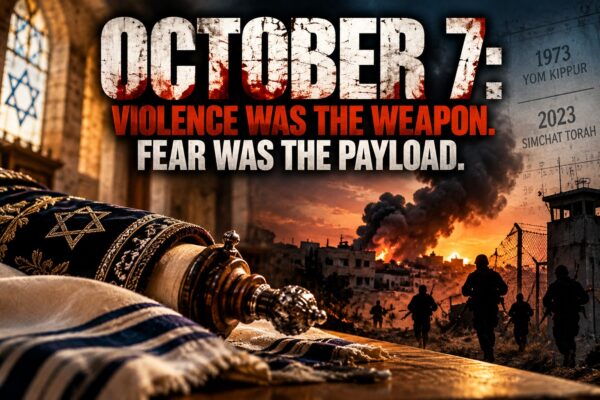
October 7, 2023 was Israel’s 9/11—a surprise attack on Shabbat and Simchat Torah, almost exactly fifty years after the Yom Kippur War. Terrorists understand that violence is the weapon, but fear is the payload, and calendars, holidays and symbolism can amplify the blast. Three years later, the consequences have spread far beyond Gaza: Israel abandoned containment, Iran’s proxy strategy collided with Israeli deterrence, and America discovered once again that being the global hegemon means everybody sends you the bill. The old Middle East wasn’t stable. It was merely temporarily not exploding.