Your Great-Grandfather Would Think You’re Rich

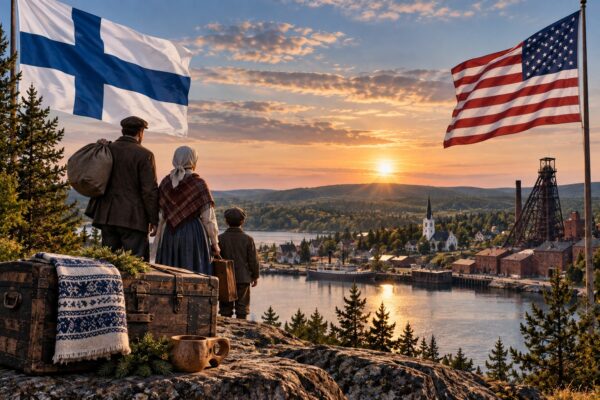
America is about to turn 250 years old, yet many of us live with less gratitude than our great-grandparents who had far less. The average American enjoys comforts that kings, presidents, and industrial tycoons could only dream of—instant communication, modern medicine, air conditioning, safe food, and access to nearly all human knowledge from a device in their pocket. Yet we often act as though we are the most deprived generation in history. This article examines the extraordinary inheritance we’ve received from those who built America, the dangers of historical amnesia, and why our descendants may care less about our complaints than what we chose to build, preserve, and pass on. Before we criticize the nation our forefathers handed us, perhaps we should ask a more uncomfortable question: Are we proving worthy of the gift they left behind?

Communist China Has Hollowed Out the UN: Decades of successful CCP subterfuge

The United Nations was chartered in 1945 as a creation of American strategic vision – a Pax Americana scaffolding dressed in multilateral language that was intended to be a cornerstone of the American-made international order shaped after World War II. That calculus has been fundamentally altered over time. The institution has been methodically infiltrated, staffed, and redirected by the Chinese Communist Party over the past 25+ years, transforming the UN from a tool America shaped into a platform Beijing increasingly controls – and paid for in large part by the American taxpayer.

The Human Operating System: Why We Can’t Stop Fighting

What if the greatest battlefield of the 21st century isn’t a nation, a border, or a data center—but the human mind itself?

Every one of us runs on programming: beliefs, identity, experiences, fears, and loyalties that shape how we see the world. Today, those operating systems are colliding. Social media, political tribes, and algorithm-driven outrage have turned neighbors into enemies and disagreement into warfare. The question is no longer whether we’re being programmed. The question is who is writing the code—and whether we’re still capable of distinguishing truth from manipulation.
In an age of constant outrage, perhaps the most radical act is to pursue truth, beauty, and love over tribal loyalty.

The AI Civil War Nobody Saw Coming

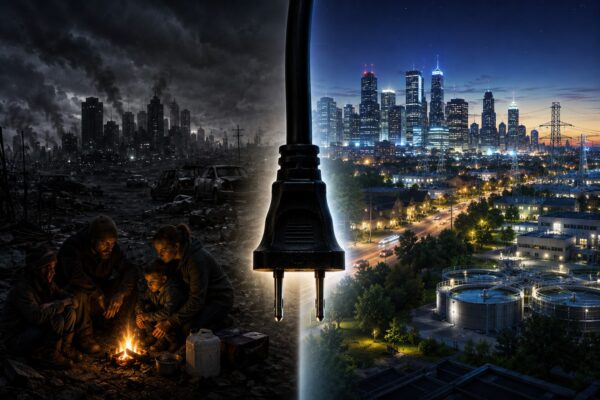
America’s next great divide may not be red versus blue. It may be the people who benefit from artificial intelligence versus the people forced to host its infrastructure. Across rural America, communities are being asked to accept massive data centers, increased power demands, and growing water consumption in the name of national security and the AI race with China. Meanwhile, the economic benefits often flow elsewhere. As politicians, tech companies, and investors promise prosperity and strategic advantage, local residents are left asking a simple question: who gets the rewards, and who carries the burden? The emerging battle over data centers is about far more than technology—it’s about trust, fairness, and whether rural America is a partner in the future or merely the place where the future gets built.

The Potomac and the “Weightless” Cloud

The Potomac River’s designation as America’s most endangered river isn’t really a story about one river. It’s a warning about an entire civilization rushing headlong into a technological revolution without fully understanding the consequences. More than 300 data centers already operate within the Potomac watershed, with hundreds more proposed to support the explosive growth of artificial intelligence and cloud computing. The same digital infrastructure powering our modern lives is quietly consuming vast amounts of electricity and billions of gallons of water. The cloud was never weightless. It was always connected to power plants, cooling towers, transmission lines, and rivers. The question isn’t whether technology will continue advancing. The question is whether we’ll recognize the second and third-order consequences before they become tomorrow’s crisis.

Ten Days Before the Bulge: A Letter from Colonel Leander L. Doan

December 6, 1944. Somewhere in Germany. Colonel Leander L. Doan sat down and wrote a letter home. He spoke casually of fighting Panzer Lehr and the Adolf Hitler SS Panzer Division, being wounded, surrounded for 36 hours, and watching the men beside him die. Yet there was no bravado, only the quiet matter-of-fact tone of a combat commander doing his duty. What makes the letter extraordinary is that it was written just ten days before the Battle of the Bulge erupted. Doan had survived Normandy, the breakout across France, and the Siegfried Line, but neither he nor his family knew that some of the war’s hardest fighting still lay ahead. Preserved for more than eighty years, this remarkable letter offers a rare glimpse into the mind of a future Major General standing between two of the most consequential campaigns of World War II.

Beauty and the beastly: Obama used architecture to depress Americans. Trump uses it to lift people higher.

Three important things happened in 1953: Eisenhower began his peaceful and prosperous presidency, I was born, and the Keep America Beautiful campaign began.

The American Can Company and Owens-Illinois Glass Company got it rolling with the simple idea of not living like pigs who litter the streets, the parks and other things. Don’t be a litterbug! they said. And we stopped being litterbugs.

Well, most of us.