The Exception, Not the Rule: Why the American Revolution Was an Anomaly
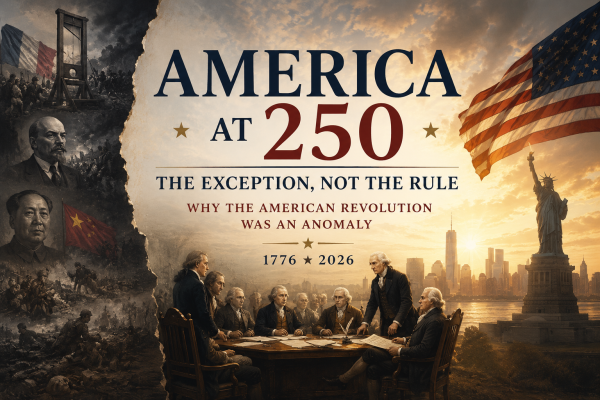
Most revolutions begin with promises of freedom and end with new forms of power. The French Revolution produced the Terror and Napoleon. The Russian Revolution produced Lenin and Stalin. The Chinese Revolution produced Mao and mass famine. History’s pattern is clear: tearing down institutions is far easier than building stable replacements. The American Revolution was different. The Founders inherited functioning local governments, a tradition of self-rule, and a deep understanding of human nature. Rather than trusting power, they divided it. Rather than creating permanent revolution, they created a constitutional republic capable of reform without collapse. As America approaches its 250th birthday, the greatest lesson of 1776 may not be that revolution is glorious, but that the true miracle was what came after—the creation of a nation where change could occur without needing another revolution.

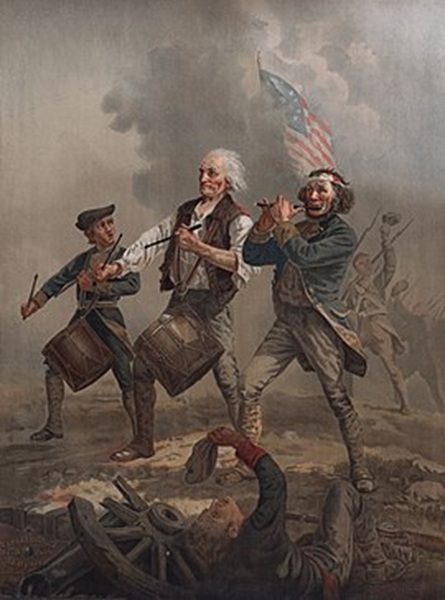
Thoughts about America, the Flag, and Patriotism as we Approach America’s 250th Birthday (Part Two)

Here’s a question for you: Can a nation so bitterly divided reunite and enjoy its 250th birthday this July 4th? Is patriotism in America dead—a quaint relic of another time when Americans (both Democrat and Republican) were proud of their country?

Maybe It’s Time to Retire the Reflecting Pool

For more than a century, Americans have spent millions of dollars fighting nature at the Lincoln Memorial Reflecting Pool. Built in 1922 as a grand architectural feature, the pool transformed a former Potomac floodplain into a shallow, artificial body of water that has suffered recurring algae blooms, leaks, sediment buildup, and costly repairs ever since. The latest maintenance controversy isn’t a new problem—it’s simply the latest chapter in a hundred-year struggle to maintain a giant pond where nature never intended one to exist. Instead of pouring more taxpayer dollars into perpetual repairs, perhaps it’s time to ask a different question: what if we reclaimed the 15 acres occupied by the Reflecting Pool and returned that space to the public? Expanded lawns, shaded gathering areas, memorial gardens, event space, and recreational areas could serve millions of visitors far better than a body of water that most people can only walk around and photograph. Sometimes the best way to solve a century-old engineering problem is not to engineer harder—it’s to admit the original idea has outlived its usefulness.

Islam Out!

America at 250 years experienced epochal transitions from a Frontier to Agricultural to Industrial to (first-iteration) Post-Industrial society, from colonies to nation-state to world power and empire to super-power to global uber-super-power, economic crises, wars, and its terrible civil war of national definition in the War Between the States. Concurrently, each century had a paramount issue of national definition.

The Myths We Teach Ourselves About Slavery

Slavery was a moral evil, but that doesn’t mean every story we’ve inherited about it is historically accurate. Most Southern households did not own slaves. A common soldier couldn’t afford one. Former slave owners were generally not compensated after emancipation. Industrialization didn’t make slavery obsolete—it often made it more profitable. The Civil War itself was far more complex than the slogans we use to describe it. History deserves better than mythology. We can condemn slavery without reservation while still insisting on facts over folklore, because understanding the past honestly is the only way to understand the present clearly.

Thoughts about America and the American Flag as we approach our 250th Birthday (Part One)

I have often heard the phrase: “Democrats hate our country.” Somehow, it always seemed a bit too imprecise and all-encompassing to condemn an entire political party for having such an unpatriotic conviction. After all, my parents and most of my family were Democrats, and I know they loved their country. I personally know other Democrats …

Read more

What’s Going On With The Seemingly Sudden Emergence of Scary Data Centers That Threaten To Run Your County Water Supply Dry, Overwhelm Your Power Banks And Drive Your Utilities Through The Roof? Part 2

These two big government muscle movements encompassing the neutering or watering down of citizen’s rights reflected in the PATRIOT Act combined with the influx of DERF–color less money—represented too much of a lessening of the best practice government oversight functions which we are still paying for today in terms of the expansive growth of government post 9-11. Which continued relatively unabated until DOGE sliced some 250K or so government positions.

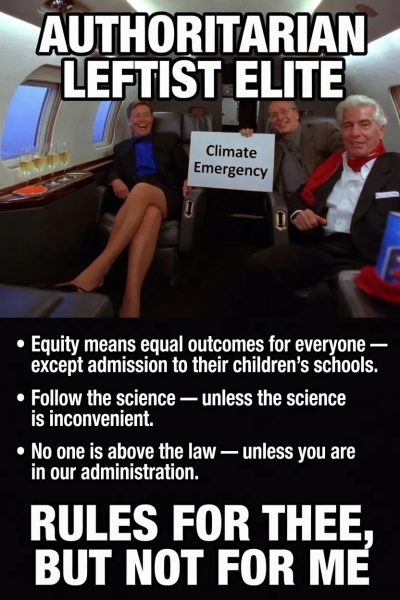
A Conservative Audit of the Left’s Ruling Assumptions: The mirror they refuse to look into

There is a particular kind of intellectual dishonesty that does not know it is dishonest. It wraps itself in the language of compassion, hides its power hunger behind slogans of liberation, and mistakes its own cultural preferences for universal moral law. American progressivism, in its current form as embodied by the Democrat Party, has become a nearly perfect specimen of this condition.

What Is Going On With The Seemingly Sudden Emergence Of Scary Data Centers That Threaten To Run Your County Water Supply Dry, Overwhelm Your Power Banks And Drive Your Utilities Through The Roof?

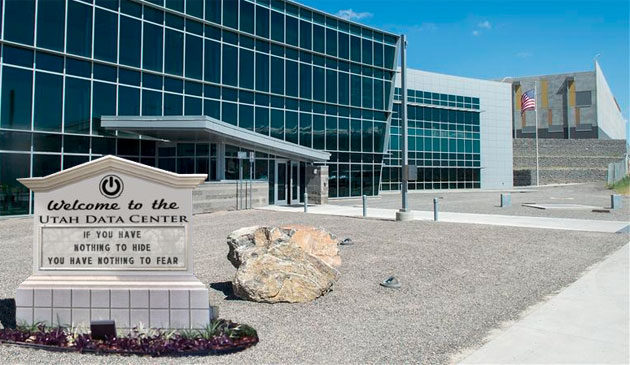
NSA Director GEN Keith Alexander’s philosophy increasingly based on the belief that you “can’t analyze data you do not have,” which led to a massive NSA Data Center project in Utah some 5 or so years later code named Bumblehive that enabled massive storage capability on a scale never approached before that only increased the already somewhat paranoid and conspiracy focused public to think the worst: many of whom would be proven right.