



Biology Reveals a Creation

For generations, we’ve been told science and Christianity are locked in a war for the soul of humanity. But what if they’re describing the same reality from different angles? Biology reveals a species unlike any other—one that plants trees for future generations, builds civilizations, and passes wisdom across centuries. Christianity offers an explanation: humans were created in the image of God and entrusted with a mission of stewardship. In a world drowning in information but starving for purpose, perhaps the question isn’t whether science or faith is right. Perhaps the question is why humans alone seem driven to leave the world better than they found it.

Your Great-Grandfather Would Think You’re Rich

America is about to turn 250 years old, yet many of us live with less gratitude than our great-grandparents who had far less. The average American enjoys comforts that kings, presidents, and industrial tycoons could only dream of—instant communication, modern medicine, air conditioning, safe food, and access to nearly all human knowledge from a device in their pocket. Yet we often act as though we are the most deprived generation in history. This article examines the extraordinary inheritance we’ve received from those who built America, the dangers of historical amnesia, and why our descendants may care less about our complaints than what we chose to build, preserve, and pass on. Before we criticize the nation our forefathers handed us, perhaps we should ask a more uncomfortable question: Are we proving worthy of the gift they left behind?

The Human Operating System: Why We Can’t Stop Fighting

What if the greatest battlefield of the 21st century isn’t a nation, a border, or a data center—but the human mind itself?

Every one of us runs on programming: beliefs, identity, experiences, fears, and loyalties that shape how we see the world. Today, those operating systems are colliding. Social media, political tribes, and algorithm-driven outrage have turned neighbors into enemies and disagreement into warfare. The question is no longer whether we’re being programmed. The question is who is writing the code—and whether we’re still capable of distinguishing truth from manipulation.
In an age of constant outrage, perhaps the most radical act is to pursue truth, beauty, and love over tribal loyalty.

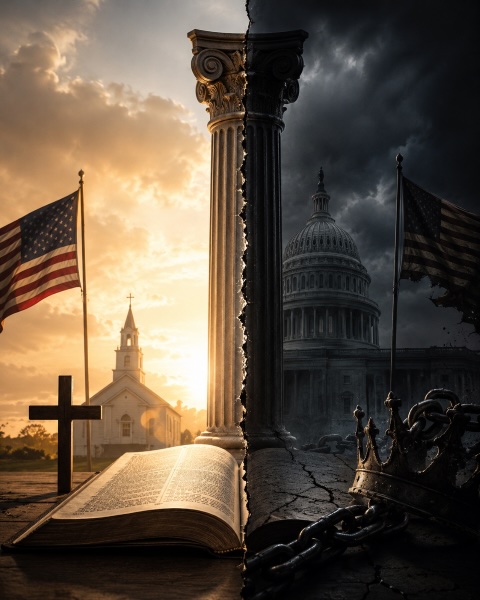
Bible First: Testing the Conservative Right by Scripture

This lesson is not written to tell anyone how to vote.

It is written to remind Christians that our first loyalty is not to a political party, a social movement, a news network, a favorite politician, or a cultural tribe.

The Death of the Republic

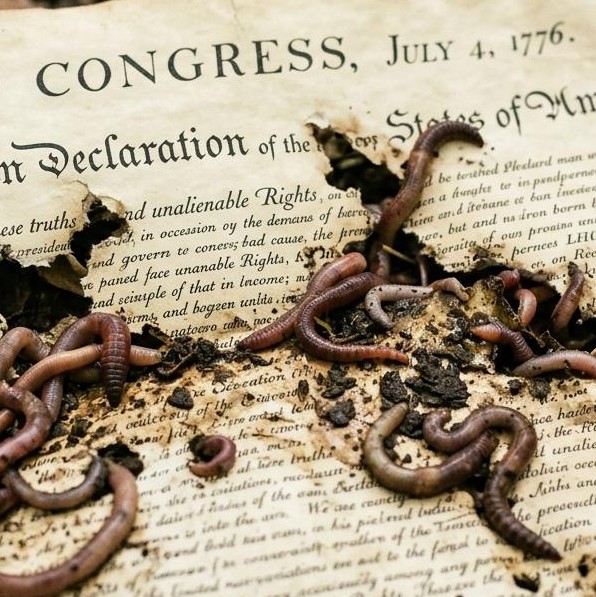
A constitutional republic depends not only on honest elections, but on public confidence that elections are honest. When that trust disappears, every law, every court decision, and every elected official begins to lose legitimacy. The greatest threat to America’s future may not be violence or foreign enemies, but the slow erosion of faith in the electoral process itself. Without legal, transparent, and trustworthy elections, there can be no democracy—and no republic worth preserving.

The AI Civil War Nobody Saw Coming

America’s next great divide may not be red versus blue. It may be the people who benefit from artificial intelligence versus the people forced to host its infrastructure. Across rural America, communities are being asked to accept massive data centers, increased power demands, and growing water consumption in the name of national security and the AI race with China. Meanwhile, the economic benefits often flow elsewhere. As politicians, tech companies, and investors promise prosperity and strategic advantage, local residents are left asking a simple question: who gets the rewards, and who carries the burden? The emerging battle over data centers is about far more than technology—it’s about trust, fairness, and whether rural America is a partner in the future or merely the place where the future gets built.

Switzerland Didn’t Forget What a Citizen Is

What if one of the freest, safest, and most stable nations on Earth built its national defense around ordinary citizens instead of distant institutions? Switzerland’s centuries-old militia tradition treats marksmanship, military service, and civic responsibility as parts of citizenship, not relics of the past. While much of the West increasingly views citizens as liabilities to be managed, the Swiss continue to trust their people with serious responsibilities. The result is a culture where freedom is paired with duty, rights are balanced by obligations, and the citizen remains at the center of the republic. Perhaps the most surprising lesson from Switzerland isn’t about rifles at all—it’s about trust.

Can Socialists Actually Learn Anything?

I raised, in our after-Mass Bible study group — contrary to some Protestant claims, Catholics actually do read the Bible! — a theological question: can God, who is omniscient, learn? My question was inspired by this: God, being all powerful, cannot be hurt, but by taking human form, Jesus suffered the agony of the crucifixion, …

Read more

Which Democrat Harpy Will Rule Los Angeles?

As ballots in California’s “jungle primary” continue to dribble in, it appears that incumbent Los Angeles Mayor Karen Bass and L.A. City Council member Nithya Raman will be battling it out in November for mayor of the City of Angels. Why Bass and Raman? Blame California’s ludicrous jungle primary, in which the two top vote-getters, …

Read more

More Memorials Done Than Memories To Come

West Point

My USMA Class of 1972 had it’s annual Mini-Reunion this week in Louisville, KY. Every five years we have the official one at West Point. We’ve gone to different spots around the U.S.A. since 2013, with only one Covid Krazy blip. I started the Memorial Service as part of our time together in Williamsburg VA …

Read more

So, You Want to Make America Great Again?

I’ve been to quite a few Donald Trump rallies as he’s campaigned for president.  Every one was huge, with tens of thousands of people in attendance.  In every case, there were lines of people so long, that the venues couldn’t hold all those that wanted to be there.  The rallies were enormous because the majority of Americans are desperate for some good news, an optimistic message, a little hope for a return to the good, old fashioned American dream.  And “Make America Great Again,” with an emphasis on rebuilding the foundations of our country’s glory days, resonated with so many.

Oregon’s Coming Expensive Lesson

For decades, hunters and fishermen have quietly funded conservation while everyone else took credit. In Oregon alone, sportsmen contribute nearly a billion dollars annually to the economy and generate tens of millions more through Pittman-Robertson excise taxes that fund wildlife habitat, hunter education, and conservation programs. Yet lawmakers continue treating these same people as a problem rather than partners. Perhaps Oregon should proceed and learn the lesson firsthand. Numbers don’t care about politics. When the funding shrinks, the jobs disappear, and conservation budgets start hurting, the state may discover who was paying the bills all along.