From Garand to AR-15: When Service Rifles Stopped Belonging to the Nation and Started Belonging to Lawyers

When the M1 went ashore in Normandy, no one wondered who owned the blueprints. When the M16 went to Vietnam, arguments over chrome lining, ammunition specifications, and intellectual property simmered behind the scenes. The rifle itself became entangled in acquisition disputes and contract language. Even improvements—like later A2 modifications—unfolded within a world shaped by lawyers as much as logisticians.

Since 1942, the United States Has Been Going to War Illegally — and Everyone Pretends That’s Fine

Enter the War Powers Resolution — Congress’s attempt to look relevant after Vietnam without actually reclaiming its authority. The War Powers Resolution is often defended as a guardrail. In reality, it’s a constitutional fig leaf stapled to a surrender note.

The Clipboard Strikes Back: Why Washington Wants You to Confess Your AI

Over the past two years, federal agencies have quietly moved from curiosity about artificial intelligence to formal requirements to identify, inventory, and govern its use. If an AI system influences decisions, analysis, or operations—especially if that system is commercial, third-party, or not owned by the government—someone is now expected to document it. Contractors are learning this lesson the fastest. If AI touches a deliverable, an auditor somewhere wants to know about it.

The Battlefield Moved, Humans Didn’t: Why a 1930s Historian Still Understands Modern War Better Than We Do

Nearly a hundred years ago, Sir Herbert Butterfield sat down and committed the unforgivable sin of telling historians, strategists, and polite academics something they still hate hearing today: war is not a clean system. It is not a spreadsheet problem. It is not solved by better charts, prettier maps, or a PowerPoint deck with the right color palette. War—every war—boils down to frightened human beings trying to reconcile self-preservation, honor, faith, and meaning while other frightened human beings try to kill them.

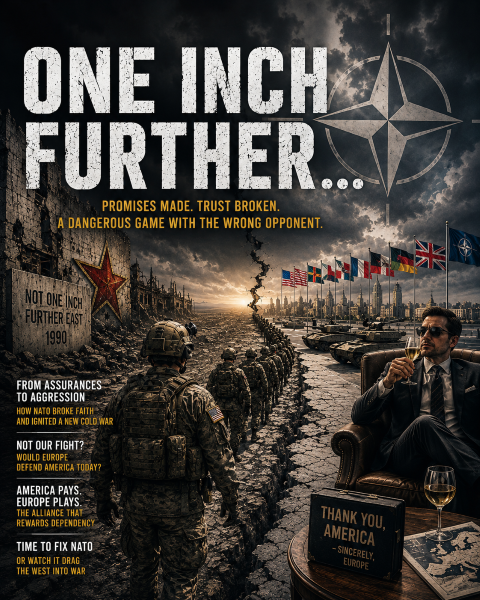
Four Fires, One Ally With a Hose: Why NATO Has to Grow Up So America Can Survive

At the Munich Security Conference, Secretary of State Marco Rubio did something unusual in modern diplomacy: he told the truth politely. He reaffirmed America’s commitment to Europe, praised NATO, spoke warmly about shared history and civilization—and then, in effect, slid a note across the table that read: You’re going to have to handle more of your own business.

The Day the Fighting Cocks Died: How West Point Traded the Warrior Ethos for Political Safety

That was 1967. Vietnam was raging. Cadets were not being groomed for cable news panels or Senate confirmation hearings. They were being prepared for jungles, rice paddies, ambushes, and body counts. Humor, especially gallows humor, wasn’t a problem to be solved—it was a survival mechanism. The name “Fighting Cocks” wasn’t vulgar to them; it was irreverent, aggressive, and just juvenile enough to signal that these were young men who understood they were not being trained for polite society. They were being trained for war.

Concrete Mushrooms, Mandatory Fitness, and Manufactured Fear: Albania’s Paranoid Inheritance

Concrete mushrooms were everywhere.

They sat in fields, along roads, on hillsides, near villages, even edging farmland—small, dome-shaped bunkers of reinforced concrete, half-buried and impossible to ignore. At first, they looked defensive. After a while, they felt like something else entirely: fear made permanent.

While America Has a Nervous Breakdown, China Is Measuring the Curtains

History has a sense of humor, and it’s rarely kind. As the United States barrels headlong into a Fourth Turning crisis—complete with generational rage, institutional distrust, ritualized protest, economic anxiety, and ideological self-harm—China isn’t protesting anything. It’s watching. Quietly. Patiently. With a spreadsheet.

Penguins, Treaties, and Radar Dishes: The Quiet Militarization of Antarctica

There’s a comforting little bedtime story we tell ourselves about Antarctica. Nobody owns it. Nobody fights over it. Scientists in parkas share data and hot cocoa while penguins waddle around like tiny tuxedo diplomats. It’s the one place on Earth where humanity supposedly agreed to stop acting like humanity.

Civil Defense Starts at the Range: The Forgotten Skill of a Free People

There’s a certain kind of battlefield respect that doesn’t need a movie trailer, a podcast, or a camouflage beard oil sponsor. It’s quiet. It’s ancient. It’s earned. And it belongs to the rifle marksman—the one who can hit what needs to be hit, when it needs to be hit, without turning the entire valley into a fireworks show.

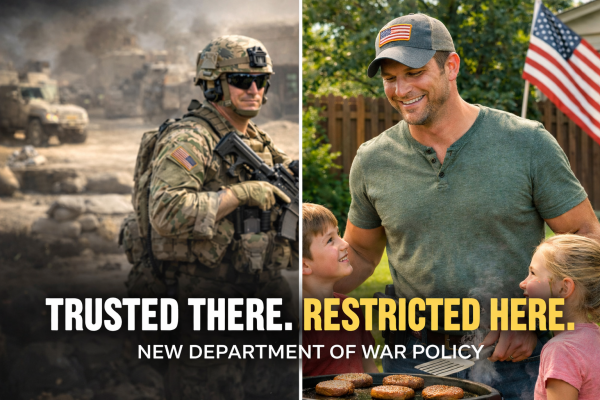
Department of War: The1947 Worst Rebrand in U.S. History (From Hero to Zero)

“Defense” sounds noble. It sounds like you’re protecting your kids. It sounds like you’re holding the line. It sounds like Mom, apple pie, and a golden retriever that would never bite anybody unless it absolutely had to.

Simo Häyhä: The White Death and His Mastery of Northern Warfare

Whether or not President Trump is able to acquire Greenland, there is the possibility of a conflict between China-Russia on one side, and the U.S. on the other, in order to control scarce resources. Today, Dave Cloft examines what that might look like from the eyes of a Winter Warfare Legend.

The Unclassified Atomic City Under the Ice in Greenland – Why We Already Own It…

In the 1950’s, long before Arctic warfare became trendy again now in 2026 —before the think tanks rediscovered parkas and PowerPoint slides—the United States quietly built an entire nuclear city under the ice in Greenland. Not a base. Not a bunker. A city. With hallways, living quarters, electricity, plumbing, a chapel, and—because this is America—a big nuclear reactor.

Renaming Greenland – Trumpland: The Arctic Now Belongs to the Hegemon

Let’s stop pretending this is a seminar where everyone raises their hand and waits to be called on. The United States is the global hegemon. That’s not bravado; it’s the rebuilt operating system. When America “consults,” it’s being polite. When America decides, the rest of the world updates its talking points.