How do I define victory? When we see women like this again in Teheran.

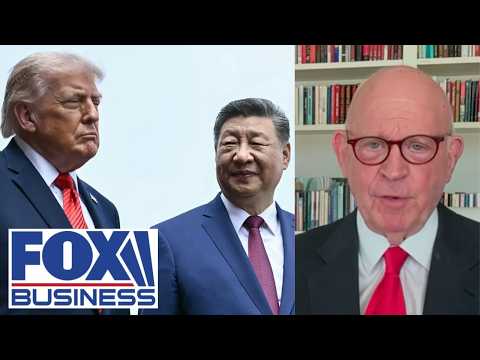
Commander-in-Chief Donald Trump updated America on Operation Epic Fury in Iran. No. 47 said, “Their army is gone. Their navy is gone. Their communications are gone. Their leaders are gone. Two sets of their leaders are gone—they’re down to their third set. Their Air Force is wiped out entirely.” Well, trust but verify, so I …

Read more

Juvenile Impatience – Are We There Yet?

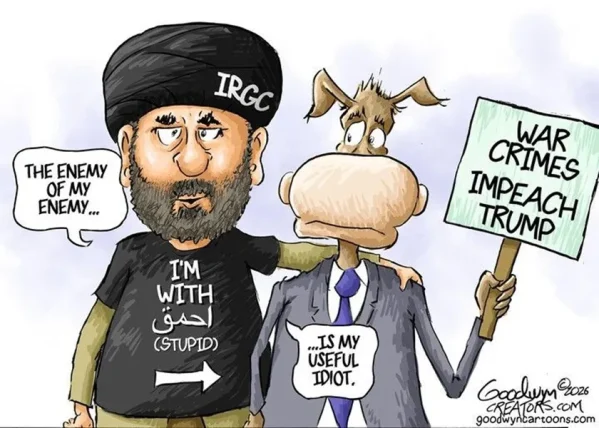
We are just over a week into the Iran operation, and the media, political analysts, social media pundits, and Democrats are all desperate to amass an audience by selling national tragedy. In the meantime, the world is celebrating the end of a cruel regime and praying for better days.

Seventeen Pages and the Price of Legitimacy: Restoring Election Confidence Before 2028

In recent election cycles, public trust in the electoral process has measurably declined. Surveys from multiple institutions show that large portions of the electorate—across party lines—harbor doubts about integrity, administration, or transparency. That reality, by itself, is destabilizing. It does not require proof of systemic fraud to create risk. It only requires sustained disbelief.

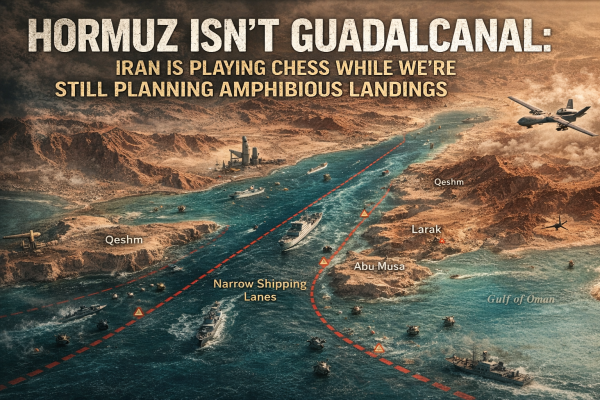
The Persian Spring (Will It Bloom or Wilt?); A top-level analysis of strategic possibilities regarding the fallout of Epic Fury. High risk, high reward.

There are several things to highlight when it comes to the situation in Iran and Israel right now. These talking points are designed to highlight some of the likely global effects worth being aware of, to track how they unfold in real time, and to anticipate the future.

Red China is the big loser in Iran; Red China’s military equipment is as reliable as Acme’s. Meep-meep

A side benefit of the Operation Epic Fury is testing the war materiel of the Russian and Red Chinese military. With little exception, they are failing again as they did in the extraction of Maduro from Venezuela

What We’re Seeing Today Didn’t Start Yesterday — It Started the Night Obama Won

The first big shift was philosophical. After the wars in Iraq and Afghanistan, the Obama administration openly argued that America needed to move away from large, unilateral military commitments. The 2010 National Security Strategy said U.S. leadership could not be defined by war alone and emphasized partnerships, international institutions, and diplomacy over long-term occupation. That sounds reasonable on paper, and after two exhausting wars, a lot of Americans agreed. But it also marked a clear departure from the post-Cold War mindset where the United States acted as the unquestioned global enforcer. Instead of “we lead, others follow,” the tone became “we lead, but only if everyone signs off first.”

We’re Great at Regime Change… It’s the Aftermath We Keep Screwing Up

Every time the United States gets involved in a foreign conflict, the opening act is usually impressive. Precision strikes, shock-and-awe, special operations raids, satellites, drones, cyber, carrier groups—the whole high-tech orchestra. When it comes to breaking things, the U.S. military is the undisputed heavyweight champion of the world. Regimes fall, palaces empty, statues get pulled down, and cable news runs dramatic graphics about “the end of an era.”

Introduction to Business 101: Golf with THE Chuck, A Tribute to Enduring American Grit The Deployment Freedom Cigar, Whataburger & War Edition February 27th, March 1, 2026

There are weekends when business gets discussed in boardrooms. And then there are weekends when business gets discussed over brisk Texas wind, a Whataburger wrapper, and a properly cut Deployment Freedom Cigar. This was one of those weekends.