When Deployment Felt Like Relief: The Pre-9/11 Army We Pretend to Forget

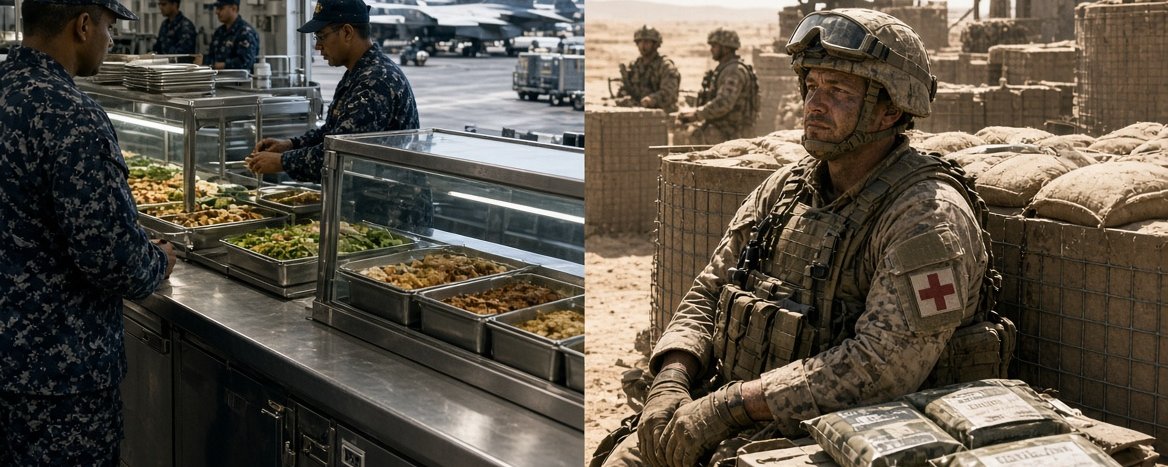
Büdingen, Germany, late ’90s. The barracks were “historic,” which was Army-speak for old, fragile, and nobody wants to pay to fix it. The plumbing was past its expiration date—backups, leaks, that constant low-grade stench that never quite left your clothes. And that’s where we put our enlisted soldiers. The pitch from leadership bordered on parody: “You’re living in a historic building—Adolf Hitler once gave a speech here. See the photo!” That didn’t land. Not even close.

The Flying Persian MoPed of War: Why the Shahed-136 Is Everyone’s Problem

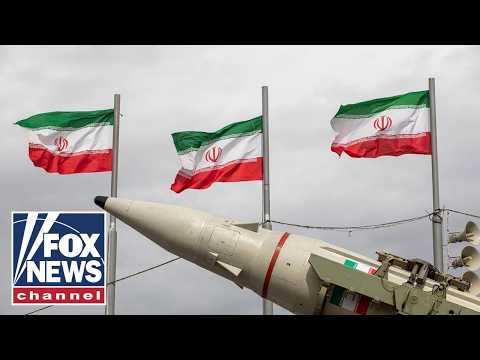
The Shahed-136 is not a masterpiece of engineering. It’s not stealthy, not fast, not elegant, and certainly not impressive in the way a fifth-generation fighter is. It sounds like a weed whacker with anger issues. It flies like a lawn dart with a GPS addiction. And yet—this ugly little flying triangle has exposed a brutal truth about modern warfare: You don’t need to be advanced to be effective. You just need to be cheap, numerous, and good enough.

Teeth Sharpening: Telling the Stories of Grown Men Through Children’s Books

"No, David!" by David Shannon cover illustration.

Can a 5-year-old with sharpened teeth tell the story of grown men? If you give him a talented author and illustrator, 30 pages and 60 words, why, yes. Yes, he can. David Shannon wrote “No, David!” nearly three decades ago. He based it on a book he made and illustrated as a child. The only words in it were “no” and “David.” Who can’t relate?

Cognitive Warfare: The Fight You’re Already In (Whether You Know It or Not)

NATO didn’t invent cognitive warfare, but they did something important: they named it. And once you name something, you can’t pretend it isn’t there. Their definition isn’t wrapped in science fiction or Hollywood nonsense. It’s blunt. Cognitive warfare is about influencing or disrupting how people think in order to shape what they do. Not just soldiers, not just leaders—everyone. Entire populations. Allies, adversaries, and increasingly, your own backyard.

Iran’s allies flee; Adversaries fear the domino effect of another Trump victory

After 25 days of Operation Epic Fury, adversaries are making moves that show they want no part of an Iran that it is losing. Even Iran’s biggest supporter—Russia—is saying no mas. Now that Iran cannot provide Putin’s army with drones, he doesn’t need them.

Iran and the Forgotten Cognitive Front

There are two fronts in every war – one kinetic, one cognitive. The kinetic front is obvious, the cognitive not so. We will succeed on the kinetic front in the Iran war in the next few weeks, but what happens on the cognitive front will be the determining factor of success or failure. With a fifth column subverting us from within, we must address the cognitive war taking place globally and domestically, as they are one and the same.

How do I define victory? When we see women like this again in Teheran.

Commander-in-Chief Donald Trump updated America on Operation Epic Fury in Iran. No. 47 said, “Their army is gone. Their navy is gone. Their communications are gone. Their leaders are gone. Two sets of their leaders are gone—they’re down to their third set. Their Air Force is wiped out entirely.” Well, trust but verify, so I …

Read more

The Surveillance State and the Tyrannical Bird

The Founders built a system based on an assumption that now sounds almost quaint: government power would be limited by reality. Communication was slow. Information was scarce. The federal government had trouble collecting taxes, let alone tracking the daily movements of its citizens. If the government wanted to watch someone in 1790, it needed a horse, a spy, and probably a tavern receipt.

Juvenile Impatience – Are We There Yet?

We are just over a week into the Iran operation, and the media, political analysts, social media pundits, and Democrats are all desperate to amass an audience by selling national tragedy. In the meantime, the world is celebrating the end of a cruel regime and praying for better days.

The Day the Soviets Built the King of Boom

In October of 1961 the Cold War was already a tense, paranoid chess match played with nuclear weapons instead of pawns. The United States and the Soviet Union were staring each other down across oceans, missile silos, and enough megatonnage to turn the planet into a glowing charcoal briquette. But Soviet Premier Nikita Khrushchev decided the world needed a reminder of just how big the Soviet hammer could be. So the Kremlin did what any superpower with a bruised ego might do. They built the largest nuclear bomb in human history and lit it off over the Arctic.

Safety Above Freedom: How Good Intentions Built the Modern Nanny State

These phrases are the verbal equivalent of pulling the fire alarm in an argument. Once someone says them, anyone who disagrees immediately looks like a monster. After all, who wants to be the guy standing up and saying, “Actually, I prefer freedom even if it’s risky”? That’s not exactly a great campaign slogan. But history shows that these exact phrases — the language of safety, fairness, and collective good — are often the first step in breaking down systems built on individual responsibility and replacing them with systems built on control.

Clausewitz, Jomini, and DIME-FIL: Why a 200-Year-Old War Theory Still Explains the Iran War

Start with Clausewitz. His most famous line remains the most brutally accurate description of war ever written: war is the continuation of politics by other means. In other words, wars are not random explosions of violence. Nations fight because they want political outcomes—territory, influence, regime survival, deterrence, or control of strategic regions.