The Room Full of Adolescence: A Few Bars of Human Connection

I was in a hotel with a few hundred Mennonites.

I walked into the hotel at noon. At first, I was confused inasmuch as the lobby was full of cape dresses, plain suits, and broad-brimmed hats. Some of the older men had beards, some were clean-shaven. The women wore head coverings.

I thought maybe I’d taken a wrong turn on the interstate.

Nice Toy, Sharp Edges: Iran and the World’s First AI War

We’ve got a new toy. It’s sleek, fast, doesn’t get tired, doesn’t argue, and it can chew through more data in a minute than a staff section could in a week. We bolted it onto the most capable military on earth and told it to help us find targets. Then we dropped it into a live fight in one of the most complex battlespaces on the planet and acted surprised when the results were… mixed. Welcome to the world’s first real AI war.

POLITICAL FLASHPOINT: States push back on AI as White House rolls out plan

‘The Big Money Show’ panelists discuss states weighing a pause on data center buildouts as the White House unveils its artificial intelligence framework. #fox #media #breakingnews #us #usa #new #news #breaking #foxbusiness #politics #political #politicalnews #government #ai #technology #artificialintelligence #data #datacenter #states #whitehouse #economy #business #innovation #regulation #policy #tech #future #industry Subscribe to Fox Business: …

Read more

The Surveillance State and the Tyrannical Bird

The Founders built a system based on an assumption that now sounds almost quaint: government power would be limited by reality. Communication was slow. Information was scarce. The federal government had trouble collecting taxes, let alone tracking the daily movements of its citizens. If the government wanted to watch someone in 1790, it needed a horse, a spy, and probably a tavern receipt.

The Control Grid Is Green: How 15-Minute Cities and Programmable Money Reshape Freedom

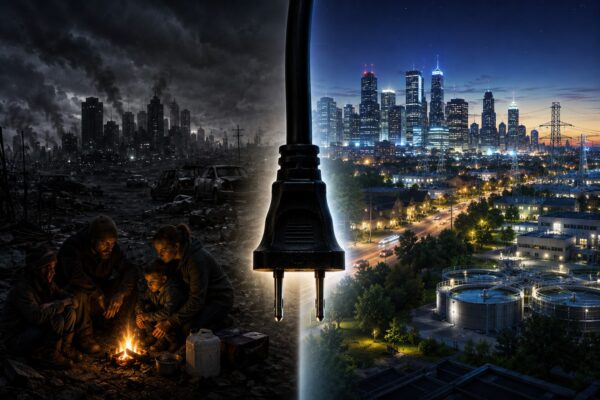
George Orwell didn’t imagine tyranny arriving with solar panels and fiber optic cable. He imagined telescreens and ration cards. But swap telescreens for smart meters and ration cards for CBDCs, and suddenly 1984 doesn’t look retro — it looks beta-tested.

Not Random, Not Accidental: Chuck Missler and the Case for an Engineered Reality

When Missler said we may be living in something like a simulation, he meant that physical reality functions like a user interface. We experience the front end. The underlying code — the laws, constants, and constraints — operate beneath our direct perception. Just as you don’t see the binary code behind your screen but interact with its output, we interact with a physical world governed by informational architecture we didn’t write.

The Clipboard Strikes Back: Why Washington Wants You to Confess Your AI

Over the past two years, federal agencies have quietly moved from curiosity about artificial intelligence to formal requirements to identify, inventory, and govern its use. If an AI system influences decisions, analysis, or operations—especially if that system is commercial, third-party, or not owned by the government—someone is now expected to document it. Contractors are learning this lesson the fastest. If AI touches a deliverable, an auditor somewhere wants to know about it.