The Clipboard Strikes Back: Why Washington Wants You to Confess Your AI

Over the past two years, federal agencies have quietly moved from curiosity about artificial intelligence to formal requirements to identify, inventory, and govern its use. If an AI system influences decisions, analysis, or operations—especially if that system is commercial, third-party, or not owned by the government—someone is now expected to document it. Contractors are learning this lesson the fastest. If AI touches a deliverable, an auditor somewhere wants to know about it.

Stolen Valor Wears Medals — Stolen Charity Wears a Flag and a Suit

There’s stolen valor — the guy at the bar wearing medals he never earned, hoping nobody asks what unit he was in. Then there’s stolen charity — the polished executive in a tailored suit wearing patriotism like a lapel pin while cashing checks “for the troops.” One lies about serving. The other lies about serving those who served. Both are frauds. Only one gets invited to donor banquets.

This Is What Country People Do!

From Miller’s Creek Fire and Rescue: This morning (Monday, February 16, 2026) just before 10 AM MCFR received a request for assistants in reference to a cow that was down and could not get up. Unit 8 and Squad 8 responded with 3 firefghters trained in large animal rescue and several other firefighters assisted. Crews …

Read more

Babel with a Budget: Why Big Systems Always Eat Themselves

So we keep building Towers of Babel—just with better branding, larger budgets, and more acronyms. Corporations, governments, military bureaucracies, international institutions—all convinced that if we just add one more layer, one more committee, one more compliance office, the tower will finally reach heaven.

Flayed by History: The Balkans, Broken Empires, and the Lie That Assimilation Doesn’t Matter

That’s the part modern commentators miss when they wave away Balkan violence as “ancient hatreds.” These weren’t abstract grudges. They were lived systems. For centuries, the region was ruled by empires that never integrated their subjects into a shared civic identity. Catholic Croats looked west to Rome and Vienna. Orthodox Serbs looked east to Constantinople and Moscow. Muslim communities were tied to Ottoman structures. Religion wasn’t just belief; it was citizenship, law, and survival. Identity was not optional. It was inherited like debt.

You’re Already in the War — You Just Missed the Declaration

The wars of the future—and increasingly, the wars of the present—will not announce themselves with bombs and bullets. They will arrive as confusion, contradiction, outrage, and exhaustion. You won’t know when they start. You won’t know who started them. You won’t even agree with your neighbors on whether they’re happening at all.

How Christian Virtue Became a Moral Trap

The modern moral argument surrounding immigration often leans heavily on Christian language while quietly discarding Christian wisdom. Appeals to compassion are constant; appeals to discernment are conspicuously absent. The result is a moral bait-and-switch: Christians are told that disagreement with expansive, consequence-free policies is equivalent to cruelty, fear, or hatred—despite Scripture never making such a claim.

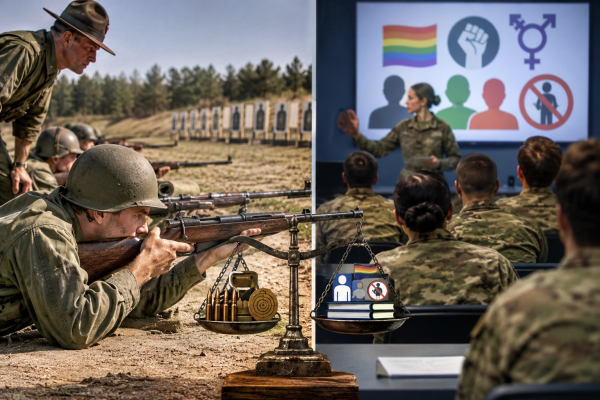
The Day the Fighting Cocks Died: How West Point Traded the Warrior Ethos for Political Safety

That was 1967. Vietnam was raging. Cadets were not being groomed for cable news panels or Senate confirmation hearings. They were being prepared for jungles, rice paddies, ambushes, and body counts. Humor, especially gallows humor, wasn’t a problem to be solved—it was a survival mechanism. The name “Fighting Cocks” wasn’t vulgar to them; it was irreverent, aggressive, and just juvenile enough to signal that these were young men who understood they were not being trained for polite society. They were being trained for war.

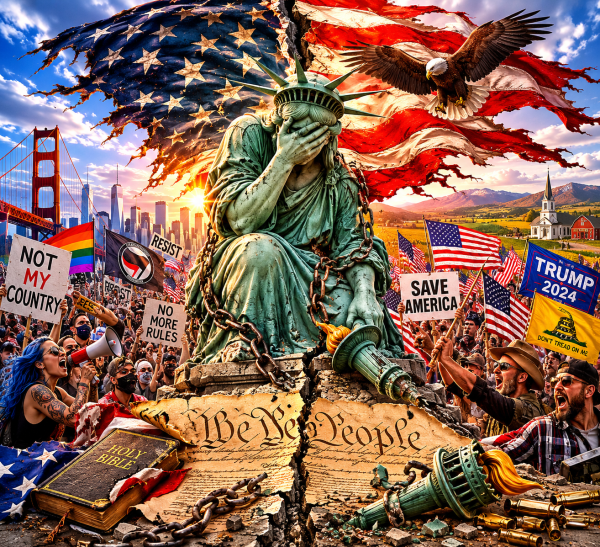
The Deplorable’s Guide to Moral Anger and National Self-Destruction

Moral anger is where the process begins. Unlike ordinary anger, which arises from frustration or injury, moral anger feels virtuous. It carries the intoxicating belief that one’s emotional response is proof of righteousness. When politics is framed as a moral emergency, anger stops being something to manage and becomes something to display. Neurologically, this matters. Moral anger activates threat responses and suppresses reflective thought, which is why it feels urgent, clarifying, and necessary—even when it is wildly oversimplified. Once people believe that being angry is the same as being good, reason no longer stands a chance.