


Iran and the Forgotten Cognitive Front

There are two fronts in every war – one kinetic, one cognitive. The kinetic front is obvious, the cognitive not so. We will succeed on the kinetic front in the Iran war in the next few weeks, but what happens on the cognitive front will be the determining factor of success or failure. With a fifth column subverting us from within, we must address the cognitive war taking place globally and domestically, as they are one and the same.

How do I define victory? When we see women like this again in Teheran.

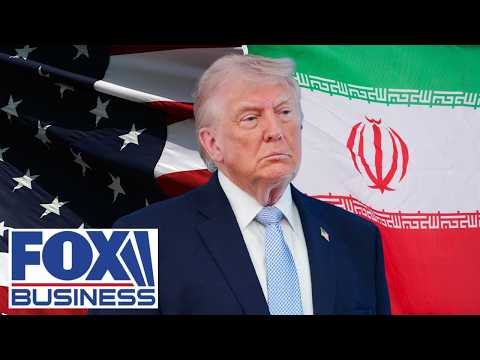
Commander-in-Chief Donald Trump updated America on Operation Epic Fury in Iran. No. 47 said, “Their army is gone. Their navy is gone. Their communications are gone. Their leaders are gone. Two sets of their leaders are gone—they’re down to their third set. Their Air Force is wiped out entirely.” Well, trust but verify, so I …

Read more

The Surveillance State and the Tyrannical Bird

The Founders built a system based on an assumption that now sounds almost quaint: government power would be limited by reality. Communication was slow. Information was scarce. The federal government had trouble collecting taxes, let alone tracking the daily movements of its citizens. If the government wanted to watch someone in 1790, it needed a horse, a spy, and probably a tavern receipt.

Juvenile Impatience – Are We There Yet?

We are just over a week into the Iran operation, and the media, political analysts, social media pundits, and Democrats are all desperate to amass an audience by selling national tragedy. In the meantime, the world is celebrating the end of a cruel regime and praying for better days.

The Day the Soviets Built the King of Boom

In October of 1961 the Cold War was already a tense, paranoid chess match played with nuclear weapons instead of pawns. The United States and the Soviet Union were staring each other down across oceans, missile silos, and enough megatonnage to turn the planet into a glowing charcoal briquette. But Soviet Premier Nikita Khrushchev decided the world needed a reminder of just how big the Soviet hammer could be. So the Kremlin did what any superpower with a bruised ego might do. They built the largest nuclear bomb in human history and lit it off over the Arctic.

Safety Above Freedom: How Good Intentions Built the Modern Nanny State

These phrases are the verbal equivalent of pulling the fire alarm in an argument. Once someone says them, anyone who disagrees immediately looks like a monster. After all, who wants to be the guy standing up and saying, “Actually, I prefer freedom even if it’s risky”? That’s not exactly a great campaign slogan. But history shows that these exact phrases — the language of safety, fairness, and collective good — are often the first step in breaking down systems built on individual responsibility and replacing them with systems built on control.

Clausewitz, Jomini, and DIME-FIL: Why a 200-Year-Old War Theory Still Explains the Iran War

Start with Clausewitz. His most famous line remains the most brutally accurate description of war ever written: war is the continuation of politics by other means. In other words, wars are not random explosions of violence. Nations fight because they want political outcomes—territory, influence, regime survival, deterrence, or control of strategic regions.

Death Rays on a Budget: How the U.S. and Israel Turned Electricity into Air Defense

If you grew up on Austin Powers, you remember the joke. Dr. Evil didn’t want nukes. He didn’t want tanks. He wanted lasers. The audience laughed because lasers were cinematic nonsense. Fast forward to 2026 and Israel is fielding the Iron Beam, and the U.S. military has ship-mounted and vehicle-mounted high-energy laser systems actively burning small threats out of the sky. Turns out Dr. Evil was just early.

Unoffendable and the Warrior: Reconciling Patton with the Sermon on the Mount

When my church announced that our next Bible study would be based on “Unoffendable” by Brant Hansen, I’ll admit it — I was irritated (slightly offended). The title alone sounded like something designed to sand the edges off men. “Unoffendable” feels like the spiritual equivalent of bubble wrap. And if you’ve spent decades in uniform, leading soldiers, planning operations, and living inside a culture where decisiveness matters and hesitation kills, your instinct is to bristle.

Atlas Rebooted: When the Department of War Decides Your Company Belongs to the State

In Atlas Shrugged, the government doesn’t seize Rearden Metal with bayonets. It does something far more modern. It surrounds it with emergency language, regulatory edicts, patriotic necessity, and administrative suffocation until saying “no” becomes illegal in everything but name. The state never shouts, “We are stealing this.” It simply declares the product too important to be privately controlled.

When Veteran YouTube Geopolitical Talking Heads Start Acting Like Internet Trolls

Now let’s be clear about something. Veterans arguing about foreign policy is not the problem. In fact, it’s healthy. People who have worn the uniform should absolutely debate how American power is used. The military has always produced strong opinions—usually accompanied by horrible coffee and worse briefing slides. But what used to separate professional disagreement from internet drama was something the officer corps once valued deeply: discipline.

The Dollar Isn’t Backed by Gold — It’s Backed by DIME and a Carrier Strike Group

Let’s retire the fairy tales.

The U.S. dollar is not backed by gold. It’s not backed by “faith.” It’s not backed by vibes. It’s backed by power — specifically the kind of power that sails in carrier strike groups, negotiates trade deals, controls sea lanes, writes sanctions law, insures shipping, and can ruin your economy before your stock market even opens.