AR Tactical: Can Your Rifle Even Reach 600 Yards?
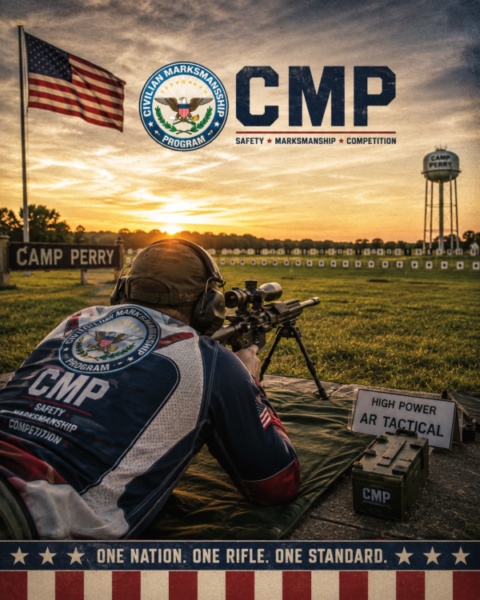
Think you’re a rifleman? There’s only one way to find out. AR Tactical is one of the fastest-growing rifle sports in America, challenging everyday shooters to stretch their skills to 600 yards with practical rifles and real-world marksmanship. Along the way, even experienced competitors discover that old habits don’t always translate—and that’s part of the fun. The question is simple: Will your rifle even reach 600 yards?
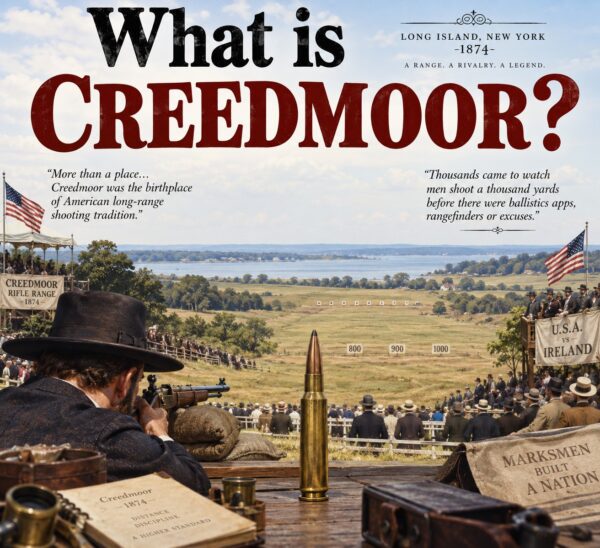
Before You Mock the 6.5 Creedmoor, Learn What “Creedmoor” Means

The 6.5 Creedmoor has been around for 19 years, and apparently that still hasn’t been enough time for some gun enthusiasts to learn what the word Creedmoor actually means.

Before you utter “6.5 Man Bun” again, try Google.

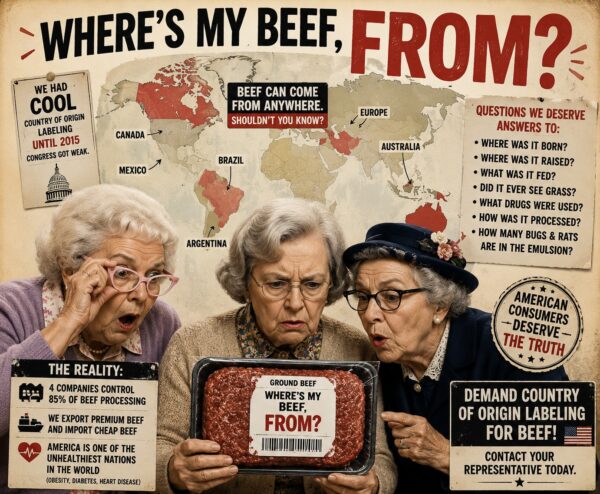
WHERE’S MY BEEF FROM?!

Remember the old Wendy’s commercial: “Where’s the beef?” In 2026, maybe the better question is: “Where’s my beef FROM?” America once required Country of Origin Labeling for beef—until Congress blinked in 2015. Now, while we export premium American beef and import foreign beef for our food supply, consumers deserve a simple answer about what they’re putting on the grill. Teddy Roosevelt took on the Beef Trust. Maybe it’s time to channel a little Bull Moose again.

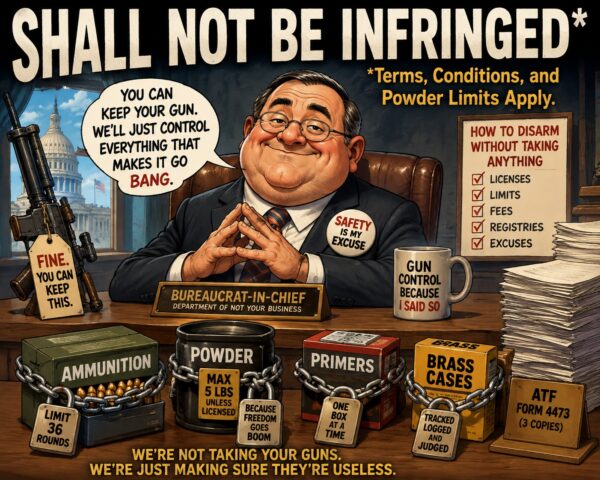
Sure, You Can Keep the Rifle. We’ll Just Regulate Everything That Makes It Work.

“Shall not be infringed” apparently comes with an asterisk. Sure, you can keep the rifle—we’ll just regulate the powder, primers, ammunition, and everything else required to make it go bang. Maryland’s five-pound smokeless-powder limit raises a much bigger constitutional question: Can government regulate around the Second Amendment by controlling what makes an arm functional?

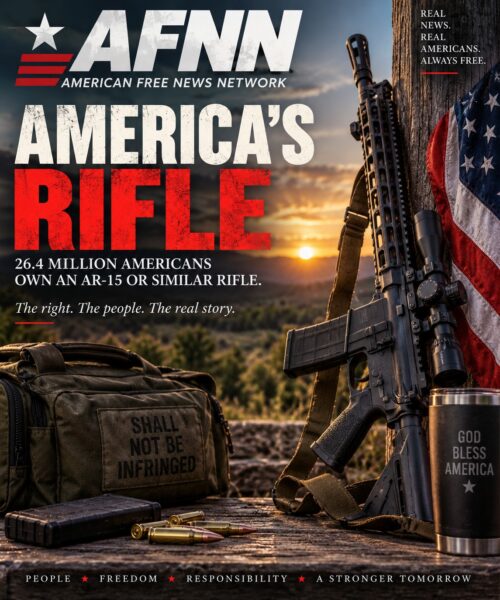
America’s Rifle: The 26 Million People You Didn’t See on the Evening News

The evening news shows you the criminal with an AR-15. It rarely shows you the millions of Americans who own one, go to work, raise families, shoot matches, hunt, protect their homes—and never hurt anybody. The 2026 National Firearms Survey estimates 26.4 million Americans own an AR-15 or similar semiautomatic rifle. At that point, perhaps we should stop pretending it’s some exotic fringe firearm and call it what it has become: America’s Rifle. Behind every blade of grass? Maybe not—but we’re certainly working on it. God bless America. Shall not be infringed.

25 Years Later, and We Still Don’t Know the Whole Truth About 9/11

Twenty-five years after 9/11, Americans still have questions—and apparently asking them remains more dangerous to polite society than leaving them unanswered. We know intelligence agencies had information about future hijackers, critical information wasn’t effectively shared, early accounts of the military response proved inaccurate, Saudi-connected individuals assisted two hijackers, and Building 7 became the first known tall building to completely collapse primarily from uncontrolled ordinary-content fires. None of that proves an inside job. It proves something much simpler: “trust us” isn’t an acceptable substitute for history. Open the remaining files, follow the evidence wherever it leads, destroy the stupid conspiracy theories with facts—and answer the legitimate questions. After 25 years, Americans have earned something better than a press release.

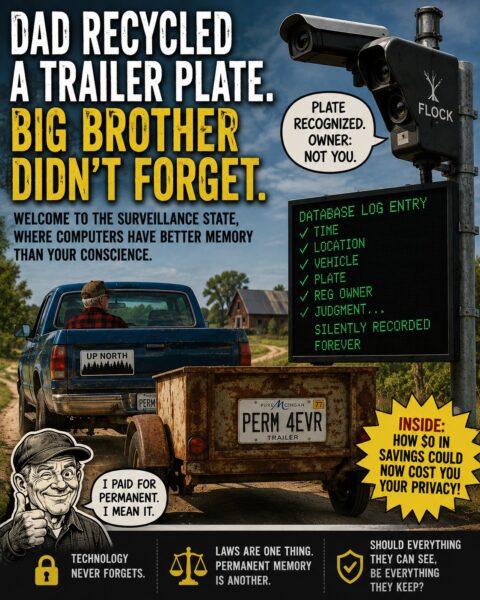
Dad’s Permanent Trailer Plate Has Entered the Surveillance State

Dad thought “permanent trailer plate” meant permanent. Government apparently meant, “until you buy another trailer, peasant.” For generations, recycling an old trailer plate was the kind of technically-wrong rural economics nobody noticed unless a cop had an actual reason to look. Today, cameras, databases, and algorithms potentially can notice—and remember—things no human officer ever would have bothered with.

That raises a bigger question than Dad’s Great Trailer Plate Crime Spree: **When technology makes it possible for government to notice nearly everything, should it?**

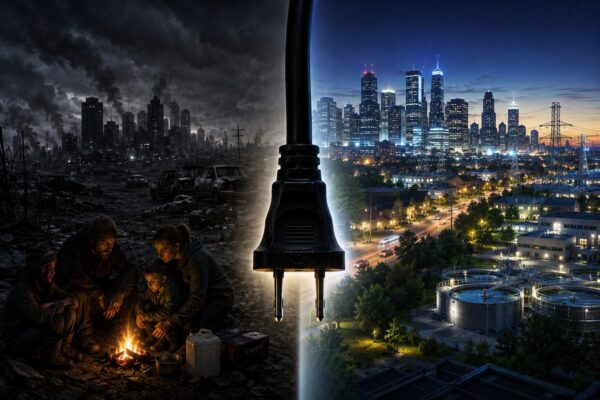
90 Days without Juice: Welcome Back to 1850 America

Electricity was once a luxury. Today, it is the invisible life-support system of modern civilization. Take the grid away for three months and the problem isn’t simply darkness—it’s water, sewage, refrigeration, medicine, fuel, communications, and millions of people discovering that civilization has outsourced most of their basic survival skills. America’s Achilles’ heel may not be that an enemy can defeat our military, but that someone could disrupt the enormous electrical extension cord connecting nearly everything that keeps us alive.

Bad Gramer

I get a lot of comments about grammar. And after having studied the subject for years—mainly by reading thousands of critically acclaimed cereal boxes—I’ve decided to answer questions from readers who inquire about various errors in my work.

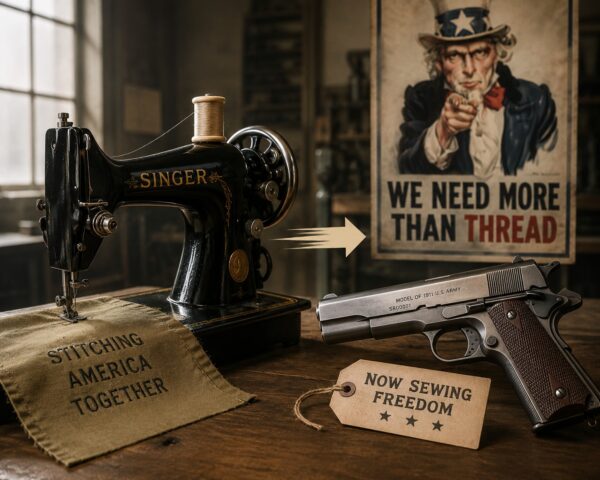
When Uncle Sam Ordered a Sewing Machine Company to Make a .45

Before America entered World War II, Uncle Sam looked at the Singer Sewing Machine Company and essentially asked, “Nice factory. Can you make a .45?” The result was just 500 Singer M1911A1 pistols—one of today’s great military-firearms collectibles. Singer wasn’t forced into gunmaking by the Defense Production Act; that law wouldn’t exist until 1950. Instead, the Army paid civilian companies to learn military production before the shooting started. It was industrial mobilization with refreshingly little mystery: you cannot surge a factory you don’t have.

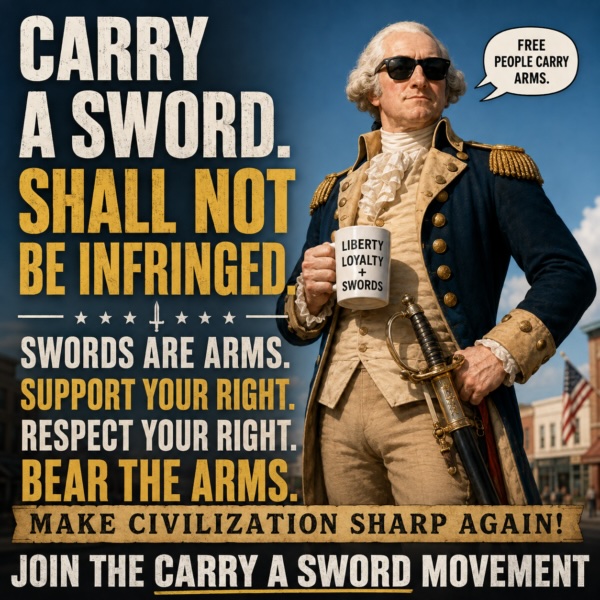
The Carry a Sword Movement: Bring Back the Original Open Carry

America once produced men who wouldn’t leave the house without a sword hanging from their belt. Washington carried one. Patton designed one. West Point cadets still have them. Yet today, strap on a saber for a trip to Home Depot and suddenly you’re the weird guy. Maybe it’s time to bring back the original open carry. Swords are arms. Shall not be infringed. Support the right. Respect the right. Carry a sword.

When Government Rewards Evil: The Biblical Line Between Obedience and Resistance

Christians are frequently reminded that Romans 13 tells us to obey governing authorities. Fair enough. But what happens when government reverses its God-given assignment—punishing good, protecting evil, or commanding Christians to violate their conscience? Scripture actually answers that question, and the answer is considerably less comfortable than “just obey.”

Snark: Just Eat the Bugs: Washington’s Brilliant Solution to the American Beef Problem

Perhaps we’ve been looking at America’s beef crisis all wrong. Beef is expensive. The cattle herd is historically small. Drought hammered ranchers. Feed got expensive. Equipment got expensive. Interest got expensive. Land got expensive. Mexican cattle imports were disrupted because a flesh-eating parasite decided to make a comeback. Obviously, the solution is simple. Eat bugs. …

Read more

Romans 13 and Revelation 13: Two Chapters, One Warning

Romans 13 and Revelation 13 aren’t enemies. They’re bookends. One describes government as God intended it to be: rewarding good and restraining evil. The other warns what happens when government abandons that mission and begins demanding loyalty that belongs to God alone. History is filled with examples of Romans 13 being used to justify kings, slavery, and authoritarian regimes, while Scripture repeatedly reminds believers that their highest allegiance is not to a political party, a flag, or a nation. Christians are called to be good citizens, but faithful disciples. God first. Everything else second.

Two Flags, One Heart: Keeping the Faith Should the Republic Crumble

What happens when a nation begins to lose faith in its own elections, institutions, and leaders? History suggests that political polarization can quickly become tribalism, and tribalism can consume a republic from within. But Christians have walked this road before. The Bible never calls believers to place their ultimate hope in governments, political parties, or personalities. Instead, it teaches an ordered loyalty: love your country, serve your neighbors, pray for your leaders—but worship God alone. When the world grows chaotic, the Church should become the calmest place in it, remembering that while kingdoms rise and fall, the Kingdom of God has never required a recount.

Michigan’s Trojan Horse: The Brilliant Surprise Attack That Captured Fort Michilimackinac

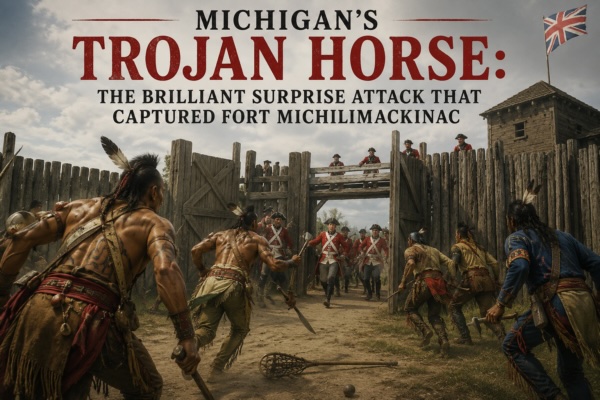
In 1763, Fort Michilimackinac fell without an artillery barrage, a breached wall, or a prolonged siege. The Ojibwe used something far more effective: deception, surprise, a lacrosse game—and a British commander who ignored warnings that an attack was coming. What followed was one of the most audacious actions in Michigan history, preserved for us through the eyewitness account of a fur trader who somehow survived it.

If Colonel Townsend Whelen Had an iPhone

Colonel Townsend Whelen spent a lifetime proving that only accurate rifles are interesting. But imagine handing him an iPhone and asking ChatGPT for a 6.5 Creedmoor load. After staring at it for thirty seconds, he’d probably ask, “What the hell is Wi-Fi?” Then he’d type, “Best accuracy load. 140 Berger. H4350. Go.” After 41 years behind a rifle, I did exactly that—and one of the best first-round load developments of my career popped out. Luck? Maybe. Or maybe AI just read a hundred years of load manuals, match reports, and internet arguments in about half a second. Either way, it didn’t pull the trigger. It just saved a little barrel life. And these days, that’s worth its weight in powder.