My New “Dumbphone”

My phone finally arrives in the mail. It’s small. Ugly. It’s “dumb.” And it looks like it was invented during the Herbert Hoover administration.
Citizen Writers Fighting Censorship by Helping Americans Understand Issues Affecting the Republic.
My phone finally arrives in the mail. It’s small. Ugly. It’s “dumb.” And it looks like it was invented during the Herbert Hoover administration.

How did I get here? What career path led me to this moment? Why am I onstage, before several hundred, shaking my fundaments?

I like Pennsylvania. They’re nice here. They say “yous” and “yinz” and “soda pop.” They have Appalachian manners, a steelman’s work ethic, and potholes big enough to swallow Peterbilts.

Here is how the typical morning of a columnist goes. You sit down at the computer. And before you write, you begin by asking yourself the age-old question, “Why should anyone care what I have to say?”
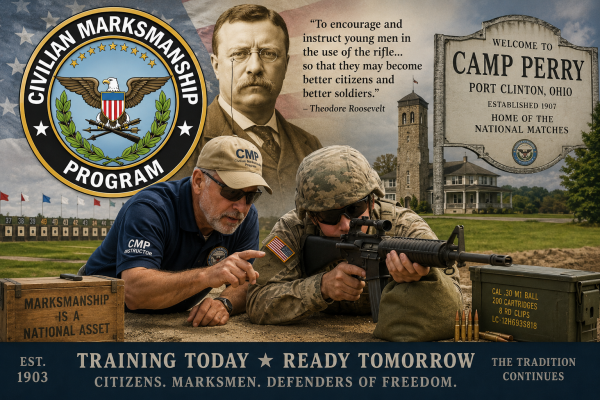
The Civilian Marksmanship Program is more than a shooting organization. It is a self-funded national-security asset that preserves firearms safety, competitive marksmanship, and a reserve of civilian expertise. During the Iraq War, CMP volunteers even traveled to military installations such as Fort Campbell to help the U.S. Army Marksmanship Unit train deploying soldiers as Squad Designated Marksmen. What looks like recreation on Saturday can become battlefield capability when the nation needs it.

Wake up. Start coffeemaker. Turn on TV. A panicky news journalist is saying America is doomed and only minutes away from exploding. And if not America, at least my house. Turn off TV.

Most sports belong to the young. Smallbore prone is different. At Camp Perry this July, competitors will fire 640 record shots over four grueling days, plus a practice day and a team championship, all while trying to keep every bullet in a tiny X-ring at 50 and 100 yards. The winner won’t necessarily be the strongest or the fastest—it will be the one who can stay mentally sharp after nearly a week of relentless precision. In one of America’s oldest sports, experience isn’t a handicap. It just might be the greatest competitive advantage of all.

The news is in. Less than one third of Americans have ever written a physical letter in their lifetime.

**The Hunter’s Paradox:** We want more hunters, so we remove barriers. More online classes. More convenience. More participation. But when the tool in your hands is capable of taking a life, is convenience always the right answer? As a Hunter Education instructor and retired Army officer, I believe knowledge can come from a computer—but safe gun handling must be passed from one human being to another. The future of hunting depends on growing our ranks without compromising the traditions and safety that built them.
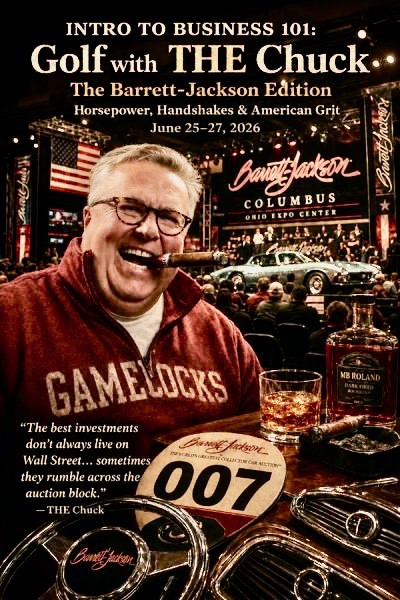
For thousands of enthusiasts who made their way to Columbus, Ohio, the weekend of June 25 through 27, 2026, was one of those rare occasions when passion takes the wheel. While golfers elsewhere chased pars and markets chased quarterly numbers, Barrett-Jackson hosted its inaugural collector car auction in the Midwest at the Ohio Expo Center & State Fairgrounds.
Three days of roaring engines, vintage muscle, modern supercars, vendor villages, and manufacturer experiences reminded everyone present that this country still knows how to build dreams that roll on four wheels.
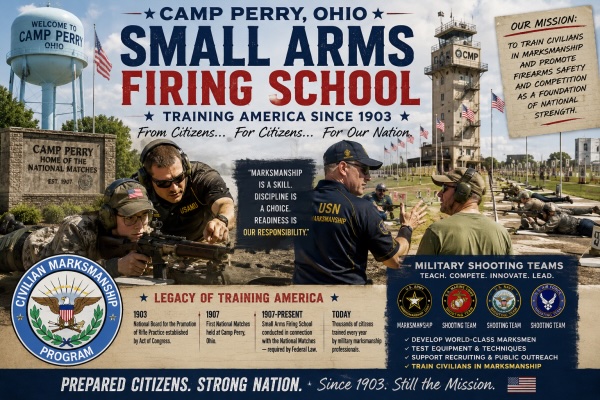
For more than 120 years, America’s military marksmanship teams have done far more than chase medals. Every summer at Camp Perry’s Small Arms Firing School, they pass generations of hard-earned knowledge to ordinary citizens—teaching safe firearms handling, precision marksmanship, and personal responsibility. It’s a quiet mission rooted in federal law since 1903, built on a simple idea: a nation is stronger when its citizens are capable, disciplined, and prepared. The trophies are impressive, but the real legacy is American readiness.

Sean Dietrich pithily responds to reader mail in a manner that only he can.

Can America’s newest graduates explain the difference between a two-stroke and a four-stroke engine? Probably not—and that’s the point. Somewhere along the way, we traded shop class for screen time and mechanical know-how for digital convenience. This isn’t really about lawn mowers or chainsaws. It’s about what happens when a society can build apps but struggles to understand the machines that keep the lights on, the food growing, and the country moving. Maybe it’s time to ask whether practical knowledge still deserves a place in a modern education.
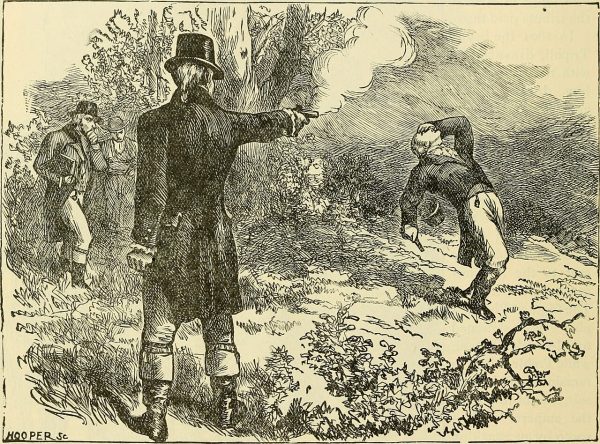
On July 12, 1804, former Treasury Secretary Alexander Hamilton died from injuries sustained in a duel against Aaron Burr. Burr had challenged Hamilton following a long string of overheard political attacks over the years. But who was right, and who was wrong?

Americans are arguing right now. And believe me, I get it. There is a lot going on. Everyone has differences of opinion.
But I wondered if we Americans couldn’t put aside our disagreements for a moment, and agree on a few things we love.
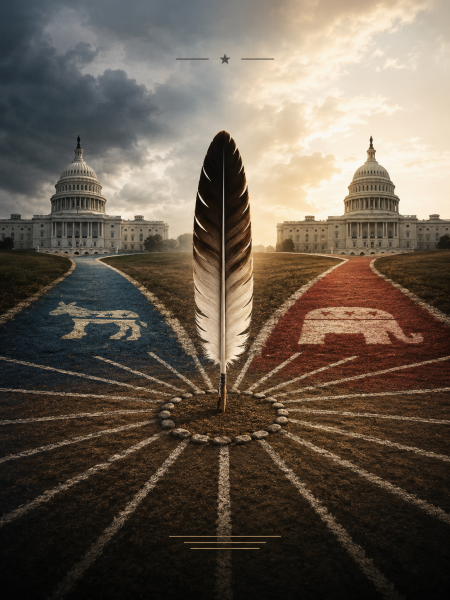
The myth that America would magically function better with more political parties ignores one stubborn fact: more factions don’t automatically create more agreement. Look at the 574 federally recognized tribal governments. They don’t speak with one voice—and they shouldn’t be expected to. The 2022 renaming of 643 geographic features proved that even within Native communities, history, language, and culture are far more complex than Washington’s one-size-fits-all solutions. Diversity of opinion is a strength, but pretending there’s only one “correct” voice is politics masquerading as consensus.
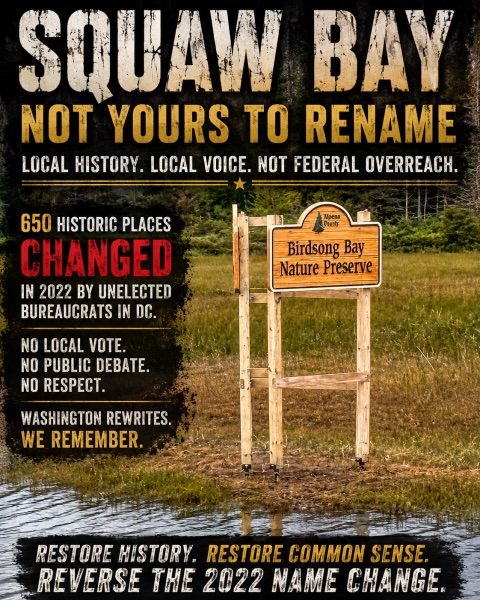
In 2022, during the peak of America’s DEI-driven renaming campaign, Washington quietly rewrote more than 650 historic geographic names with the stroke of a pen. No vote in Alpena County. No referendum in Michigan. No debate in Congress. Just appointed federal officials deciding what generations of local residents should call their own landmarks. Whether you believe the name should stay or go isn’t the only question. The bigger one is this: Who gets to decide? If local history can be edited from a desk in Washington today, what piece of your community’s heritage gets rewritten tomorrow? It’s time to restore local control, preserve historical context, and remind the federal government that not every issue belongs in Washington.

Dear God,
It’s me again. Actually, I don’t know what you want me to call you. For all I know, you might prefer to be called something Hebrew, Latin, or maybe you don’t want to be called anything at all.
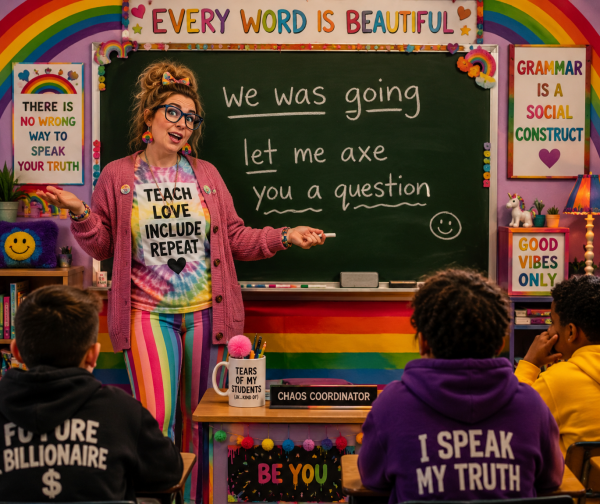
California insists it’s teaching culture, not replacing standards. Critics aren’t buying it. They argue that schools should be teaching every student the language of college, careers, and civic life—not spending precious classroom time redefining grammar. A common language has long been one of America’s greatest unifying forces. Respect every culture, absolutely—but don’t confuse lowering standards with expanding opportunity. “Idiocracy” was supposed to be a comedy, not a curriculum roadmap.

It seems like everyone is talking about AI. It’s on the news. It’s in every newspaper. “AI is taking over the world,” the media headlines declare. “AI replaces 12 million jobs.” “AI wins Miss America Pageant.” AI might be writing this right now. There’s no way to know.