Nice Toy, Sharp Edges: Iran and the World’s First AI War

We’ve got a new toy. It’s sleek, fast, doesn’t get tired, doesn’t argue, and it can chew through more data in a minute than a staff section could in a week. We bolted it onto the most capable military on earth and told it to help us find targets. Then we dropped it into a live fight in one of the most complex battlespaces on the planet and acted surprised when the results were… mixed. Welcome to the world’s first real AI war.

Trusted There. Restricted Here; Restoring Trust and Rights

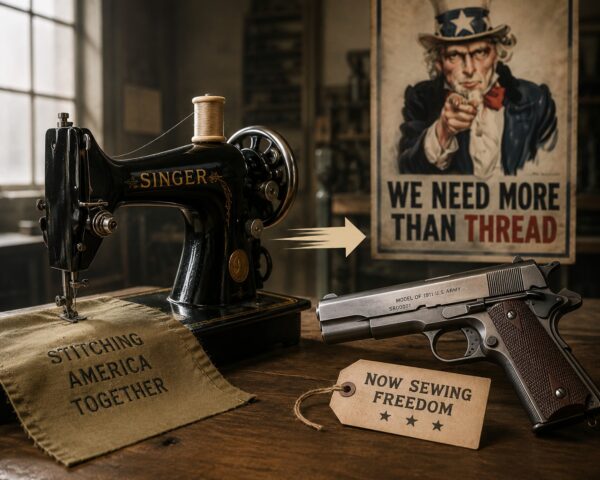
If we trust a service member overseas with a loaded rifle, real rules of engagement, and life-and-death decisions in a combat zone, it makes no sense to suddenly treat that same disciplined professional like a liability the moment they step onto a stateside installation; this policy correction acknowledges a simple truth long overdue—responsibility doesn’t evaporate at the gate. The men and women we entrust to defend the nation are trained, vetted, and held to standards far above the civilian baseline, and if we truly believe in that system, then extending reasonable trust for personal defense at home isn’t radical, it’s consistent. And if someone genuinely cannot be trusted with a firearm under controlled conditions on base, then the harder question isn’t about policy—it’s about why they’re in uniform in the first place.

Two Wings, One Bird: How We Traded a Republic for a Revenue Machine

We like to pretend we live in a fierce two-party system. Red vs. blue. Left vs. right. Cable news gladiators screaming like it’s the Super Bowl of righteousness. But step back far enough and the illusion fades. What you actually see is one bird with two wings—and that bird doesn’t care about your values, your vote, or your virtue. It worships one thing: money.

Hormuz Isn’t Guadalcanal: Iran Is Playing Chess While We’re Still Planning Amphibious Landings

Somewhere in the Pentagon filing cabinets sits a 2017 document that reads less like doctrine and more like a warning label we ignored. The Joint Concept for Access and Maneuver in the Global Commons (JAM-GC) laid it out plainly: the United States wins wars because we can show up anywhere on earth, kick in the door, and maneuver freely across air, sea, space, and cyber. That’s our superpower. Not just firepower—access. And the bad guys figured that out.

From Freedom Convoy to Financial Control: The Rise of Instant Compliance

If you want a glimpse of how modern pressure can scale fast, look north to the winter of 2022 and the protests known as the Freedom Convoy. What began as a cross-country movement of truckers opposing cross-border vaccine requirements turned into a broader protest against mandates and restrictions. The response from the Canadian government under Justin Trudeau was decisive: emergency powers were invoked, certain financial accounts connected to the protests were frozen, and law enforcement moved to clear blockades. Supporters called it necessary to restore order; critics saw it as a warning shot—how quickly financial access and mobility can be restricted in a modern, digitally connected system.

The Fog of Fear – Emergency Powers, Permanent Habits: What We Did in COVID

By late 2020, vaccines arrived under emergency authorization. That should have been the turning point—the moment where risk became individualized again. Instead, the dial kept turning in one direction: more control, more pressure, more compliance. By September 2021, the federal government, under Joe Biden, pushed for sweeping mandates, including a requirement aimed at large employers through OSHA. It was framed as necessity. It was enforced as urgency. And it was received, in many corners, as coercion.

The Real Virus: How Fear, Stress, and Certainty Changed Us

You didn’t need a history degree to recognize what was happening during the pandemic—you just needed to pay attention to how quickly ordinary people changed under pressure. Not all at once, not everywhere, but enough to notice a pattern. Stress, fear, and anxiety didn’t just shape policy; they reshaped behavior. And in many cases, they …

Read more

From Wolf to Weapon System: How Man Engineered the Dog After the Reset

Forget the timeline arguments for a minute. Set aside the academic cage match over dates, carbon curves, and who’s got the better spreadsheet of ancient dust. Start instead with something far more obvious—there was a world before everything went sideways, and there was a world after.

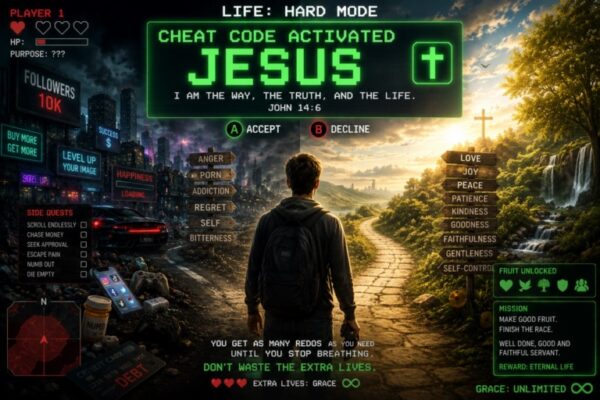
Who Was Jesus, Really? The Mystery Behind ‘Son of Man’ and ‘Son of God

Who was Jesus? It is a question that has echoed across centuries, whispered in quiet prayer, debated in universities, and argued in the streets. For Christians, the answer is not a simple label but a profound tension held together in Scripture: Jesus is both the Son of Man and the Son of God. And the confusion surrounding these titles is not accidental—it is the result of trying to compress a divine mystery into human categories.

Smoke, Steel, and 1,000 Yards: The Great International Rifle Match at Dollymount

The year was 1875, and long before ESPN, endorsement deals, or even organized leagues as we know them, one of the most electric sporting events on earth unfolded on a windswept stretch of Irish coastline at Dollymount, just outside Dublin. This was the Great International Rifle Match—a transatlantic clash that, for a brief window in history, made precision rifle shooting a premier spectator sport.

The War on Man: How Western Civilization Was Taught to Hate Itself, PART II

By the 1980s and 1990s, the ideology had outgrown academia. It entered culture.

This is how psywar works: you don’t argue the premise—you embed it.

Film, television, and literature stopped asking whether humans were the problem and started asking how many humans were too many. Environmental messaging quietly shifted from stewardship to guilt. Children were framed as carbon footprints. Population decline was reframed as progress.

Mayday, Mayday: The Return of the American Strike Fantasy

The roots go back to the late 19th century, when American labor was less “9 to 5” and more “sunup to collapse.” The rallying cry was simple: eight hours for work, eight for rest, eight for life. In 1886, that demand erupted into nationwide strikes, culminating in the infamous Haymarket Affair in Chicago. A bomb, gunfire, dead police, dead civilians, and a trial that still sparks debate today. It was messy, chaotic, and deeply human—exactly the kind of event that leaves a permanent scar on history.

The War on Man: How Western Civilization Was Taught to Hate Itself, PART I

For most of Western history, the value of human life was not debated. It was assumed. Rooted in the Judeo-Christian worldview, mankind was understood as imago Dei—created in the image of God, endowed with dignity, moral responsibility, and stewardship over creation. Nature was not divine. Man was not expendable. Humanity had both authority and accountability.

From Shield to Sword: Japan Quietly Loads the Tomahawk

There was a time—not long ago—when the Japan Maritime Self-Defense Force operated like a disciplined sentry: alert, capable, and formidable, but fundamentally reactive. Their destroyers were built to defend sea lanes, hunt submarines, and intercept incoming threats, not to reach deep into an adversary’s homeland. That posture wasn’t an accident. It was the product of history, law, and a deliberate national choice to remain a shield in a dangerous neighborhood. But shields, as it turns out, are only comforting until someone realizes they don’t have to stand in front of them.

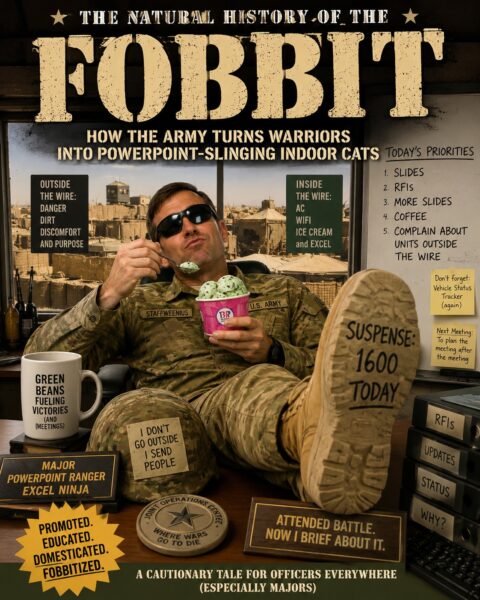
When Deployment Felt Like Relief: The Pre-9/11 Army We Pretend to Forget

Büdingen, Germany, late ’90s. The barracks were “historic,” which was Army-speak for old, fragile, and nobody wants to pay to fix it. The plumbing was past its expiration date—backups, leaks, that constant low-grade stench that never quite left your clothes. And that’s where we put our enlisted soldiers. The pitch from leadership bordered on parody: “You’re living in a historic building—Adolf Hitler once gave a speech here. See the photo!” That didn’t land. Not even close.

China: The New World Order They Intend—And the Life You’d Live Inside It

Under a Chinese-led global order, you wouldn’t necessarily feel “ruled” by China in a direct sense. You would feel aligned to it. Your country’s economy would be plugged into Chinese supply chains. Your infrastructure might be financed, built, or maintained through Chinese-linked systems. Your technology stack—networks, platforms, standards—would quietly converge with theirs because it’s cheaper, faster, and already widely adopted.

From Opium to Algorithms: How China Turned Humiliation into Dominance

In the early 19th century, Britain had a problem. China produced what the world wanted—tea, silk, porcelain—and demanded payment in silver. The British Empire was bleeding hard currency. Rather than accept the imbalance, Britain engineered a solution: opium. Grown in British India and smuggled into China, the drug created dependency at scale. Millions became addicted. Silver began flowing back out of China.

Gold, God, and the Grift: How “Patriot” Pitchmen Sold Fear and Made Millions

There’s a hard truth nobody likes to say out loud: this didn’t just happen because of a few shady coin dealers—it happened because trusted voices carried the water. When names like Glenn Beck, Bill O’Reilly, and Rudy Giuliani lent their platforms—directly or indirectly—to gold pitches, it wasn’t background noise. It was a credibility transfer. And when shows hosted by Laura Ingraham, Mark Levin, and Mike Huckabee ran those same ads day after day, it didn’t just sell metal—it sold trust. That trust had value, and someone cashed it.

The Flying Persian MoPed of War: Why the Shahed-136 Is Everyone’s Problem

The Shahed-136 is not a masterpiece of engineering. It’s not stealthy, not fast, not elegant, and certainly not impressive in the way a fifth-generation fighter is. It sounds like a weed whacker with anger issues. It flies like a lawn dart with a GPS addiction. And yet—this ugly little flying triangle has exposed a brutal truth about modern warfare: You don’t need to be advanced to be effective. You just need to be cheap, numerous, and good enough.