The Flying Persian MoPed of War: Why the Shahed-136 Is Everyone’s Problem

The Shahed-136 is not a masterpiece of engineering. It’s not stealthy, not fast, not elegant, and certainly not impressive in the way a fifth-generation fighter is. It sounds like a weed whacker with anger issues. It flies like a lawn dart with a GPS addiction. And yet—this ugly little flying triangle has exposed a brutal truth about modern warfare: You don’t need to be advanced to be effective. You just need to be cheap, numerous, and good enough.

Dispelling the Myth of Christian Nationalism: Understanding True Christian Values

Christian nationalism is a term that has garnered attention in recent years, often used to describe a perceived blending of Christianity and nationalist beliefs. However, it is crucial to understand that Christian nationalism is not an ideology that any Christian self-proclaims to be a member of. Instead, it is a term that has been fabricated by those who oppose Christianity, intending to isolate, polarize, and ostracize believers.

The 10-to-4 Problem: What Rimfire Teaches That Centerfire Hides

At distances out to 100 yards, the differences between rimfire and centerfire aren’t subtle—they are foundational. A .22 LR match round leaves the muzzle at roughly 1050 feet per second, already flirting with the sound barrier and quickly settling into subsonic flight. Compare that to a typical centerfire round—say a .308—moving at nearly three times that speed, carrying significantly higher ballistic efficiency, and backed by a rigid, jacketed bullet designed to punch through the air rather than cooperate with it.

TSSA: $10 Billion for Airports, $0 for Kids: America’s Backward Security Priorities

There’s a quiet absurdity baked into modern America, and like most absurdities, we’ve lived with it so long we stopped questioning it. Every day, the federal government spends billions protecting people who fly occasionally—while leaving tens of millions of children sitting in classrooms with wildly inconsistent security. Let that sink in. We’ve normalized a system where you can’t bring a bottle of water through an airport without federal scrutiny, but your kid can walk into a school where security depends entirely on the zip code.

Cognitive Warfare: The Fight You’re Already In (Whether You Know It or Not)

NATO didn’t invent cognitive warfare, but they did something important: they named it. And once you name something, you can’t pretend it isn’t there. Their definition isn’t wrapped in science fiction or Hollywood nonsense. It’s blunt. Cognitive warfare is about influencing or disrupting how people think in order to shape what they do. Not just soldiers, not just leaders—everyone. Entire populations. Allies, adversaries, and increasingly, your own backyard.

ICE: Ragbags with Badges… When Federal Authority Starts Looking Like a Yard Sale

There’s a fine line between tactical flexibility and looking like you lost a bet at a surplus store—and right now, ICE is stumbling all over it. Let’s get something straight: uniforms are not about fashion. They’re not about vanity. They are about authority, discipline, and instant recognition. A uniform says, without a word, this person represents the state, is accountable to it, and operates under a standard.

Why TSA Is Security Theater Stupidity on Repeat

The Transportation Security Administration was born in the immediate aftermath of the September 11 attacks—a moment of national trauma where speed mattered more than strategy, and action mattered more than accuracy. That’s understandable. What’s not understandable is why we’re still running the same playbook a quarter century later like nothing has changed.

This Time We’re Smarter: The Most Dangerous Lie Every Generation Tells Itself

Every few generations, a fresh batch of true believers shows up convinced they’ve cracked the code that baffled every civilization before them. Not tweaked it. Not improved it. Solved it. Permanently. The pitch is always the same—just with better branding, cleaner fonts, and a heavy dose of moral certainty.

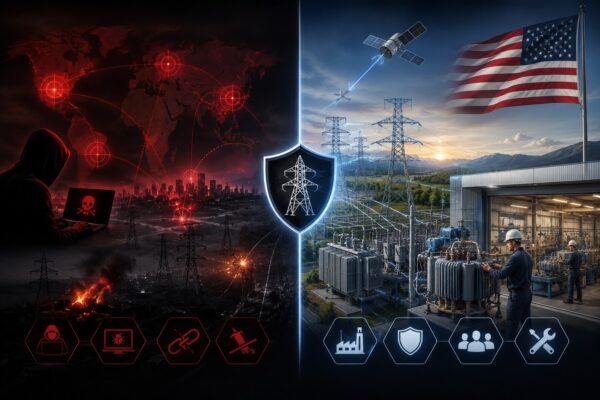
The Fragile Grid: Powered by Electricity, Dependent on Foreign Steel

We all love electricity. Flip the switch, lights come on. Coffee maker fires up. Wi-Fi router blinks happily. Data centers hum. Teslas charge. Life is good. Modern civilization runs on electricity the way the human body runs on oxygen. The only time people think about the electrical grid is when it fails—and then suddenly everyone becomes an expert on transformers, substations, and utility companies. But here’s a fun little detail almost nobody knows: the entire grid quietly depends on a specialized material most Americans have never heard of.

Iran, Tucker, and the Information War at Home: How Distrust Is Becoming America’s Greatest Enemy

There was a time when America could screw up a war and still hold itself together. Bloody? Yes. Messy? Always. But there was still a basic assumption that the people in charge weren’t feeding you a carefully plated narrative with a side of spin. That assumption is gone—and nobody seems particularly interested in getting it back.

Hormuz: The Reality TV War and China’s Unfortunate Front-Row Seat

Modern war has acquired an odd new feature. It now comes with graphics, dramatic music, and a nightly highlight reel. Precision bombs streak across the screen. Drones glide in cinematic slow motion. Social media fills with grainy infrared footage of things exploding in the desert while commentators nod gravely and say phrases like “escalation dynamics” and “rules-based order.”

The Age of Narrative: When Psychological Operations Run the World

For most of history, lies moved slowly. A king issued a proclamation. A priest told a story. A rumor drifted across a village. Today, narratives move at the speed of fiber optics, algorithmically amplified and psychologically engineered. What once required an empire now requires a social media campaign.

The Drone Revolution: Warfare’s Latest Game of Technological Ping-Pong

The basic idea of unmanned warfare actually dates back more than a century. During World War I, armies experimented with remotely controlled aircraft and explosive “aerial torpedoes.” They were crude and unreliable, but the concept was already there: send a machine instead of a pilot into harm’s way. Through the Cold War the idea matured into reconnaissance drones used primarily for surveillance. The United States began using early UAVs over Vietnam and later refined the concept in the 1990s and early 2000s.

AI for Me, Not for Thee: When Students Get Punished for What Leaders Get Paid to Do

A couple years ago, when ChatGPT first exploded onto the scene, I was teaching at a Christian school. My philosophy with technology has always been simple: learn it before you fear it. Every major technological shift in history has followed the same pattern—first confusion, then panic, then acceptance once people realize it’s not going away. So I did what teachers are supposed to do. I explained the technology to my students.