Uniforms Matter: Why the Constitution Draws a Hard Line Between Warriors and Police

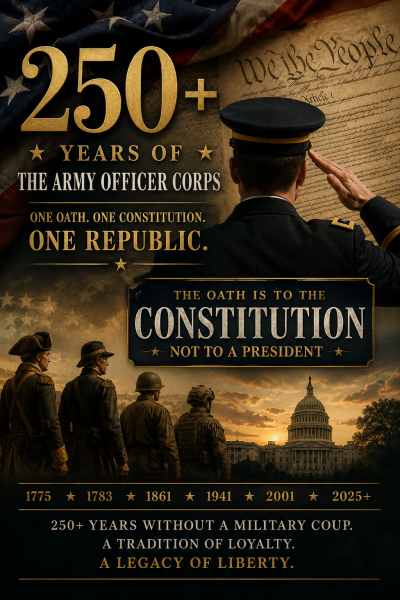
Uniforms are not decoration. They are language. Long before an officer speaks a word or a citizen weighs compliance, the uniform announces intent, authority, and the rules that govern the encounter. In a free society—especially one built on constitutional limits—this signaling is not cosmetic. It is foundational.

9/11 Permanent Emergency: The Long Game That’s Dismantling America – Part II

If Part I was about how we got here, Part II is about the uncomfortable truth most Americans are living with now: the system hasn’t collapsed—but it no longer works the way it used to. We are in the uncanny valley between order and chaos, where institutions still function, shelves are stocked, paychecks clear, and elections are held—but trust is gone, legitimacy is fractured, and nothing feels durable.

Evil Without Horns: Jeffrey Epstein, Steve Bannon, and a Calm Conversation With the Unrepentant

Epstein sits before the camera not as a man crushed by exposure, but as one still convinced the rules apply differently to him. He speaks in abstractions. He talks about systems, reputation, philanthropy, misunderstanding. The victims are nowhere to be found—not as people, not as faces, not as lives interrupted. They exist only as legal problems, public-relations complications, inconvenient footnotes to an otherwise impressive résumé. This is not the language of remorse. It is the language of a man who believes morality is negotiable if one is clever enough.

9/11 Permanent Emergency: The Long Game That’s Dismantling America – Part I

Americans didn’t wake up one morning and decide they wanted to live under surveillance, financial precarity, endless war, and algorithmic babysitting. This wasn’t a vote. It wasn’t even a debate. It was a process—slow, technical, wrapped in flags and fear, and sold as “temporary” at every stage.

When Government Tries to Replace God: How Bad Theology Turned Borders into a Moral Sin

Modern political Christianity has a dangerous habit of confusing compassion with chaos. Somewhere between yard signs and virtue-signaling sermons, the Church was told that borders are immoral, laws are unloving, and governments exist primarily to replace God as the ultimate provider. None of that is biblical. In fact, Scripture teaches almost the opposite.

From Scorched Earth to Empty Shelves: How Some Wars Are Fought Without Firing a Shot

Future wars won’t thunder across borders on tanks or scream overhead in fighter jets. That’s old-fashioned, noisy, and—worst of all—obvious. The next wars will arrive quietly, wearing lab coats, carrying clipboards, and insisting it’s “just a naturally occurring disruption.” No explosions. No declarations. Just empty shelves, euthanized livestock, and a government spokesperson calmly reminding you that there is no evidence of foul play at this time.

Educated to Destroy: The Rise of the College-Trained Wrecking Class

For decades, political science was the academic punchline—the major you picked when calculus broke you, engineering filtered you out, and chemistry made you cry. Everyone knew the line: If you can’t do anything else, go poli-sci. Parents nodded approvingly because “college is good for you,” administrators cashed tuition checks, and students emerged four years later fluent in theory, jargon, and grievance—but functionally incapable of building, fixing, or running anything in the real world. What no one admitted at the time was that political science didn’t just produce underemployed graduates; it quietly trained a generation in how to dismantle systems they never understood and could never rebuild.

Color Revolution Phase 2: Barking in the Streets for a Hunter You’ll Never See

Phase 2 of a color revolution is the “streets on fire” phase. It looks organic. It feels spontaneous. It’s loud, chaotic, righteous, and emotionally intoxicating. This is where the dogs flood the streets. Students, activists, professional grievance collectors, and social-media revolutionaries with ring lights and Venmo links all sprint after the same thing: meaning.

It’s Pretti Messed Up When Rights Don’t Come With Responsibility

The facts were never complicated: an armed civilian inserted himself into a volatile confrontation with federal agents during an active operation. That’s not a courtroom debate. That’s a high-adrenaline environment where every decision carries lethal stakes. Rights don’t suspend physics. They don’t freeze human reaction time. They don’t override use-of-force laws that have existed for decades. You can be legally armed and still behave recklessly enough to trigger a fatal chain of events.

Concrete Mushrooms, Mandatory Fitness, and Manufactured Fear: Albania’s Paranoid Inheritance

Concrete mushrooms were everywhere.

They sat in fields, along roads, on hillsides, near villages, even edging farmland—small, dome-shaped bunkers of reinforced concrete, half-buried and impossible to ignore. At first, they looked defensive. After a while, they felt like something else entirely: fear made permanent.

Men of Renown, Gods of Deception: Why Greek and Roman Myths Sound Like the Bible’s Oldest Warning

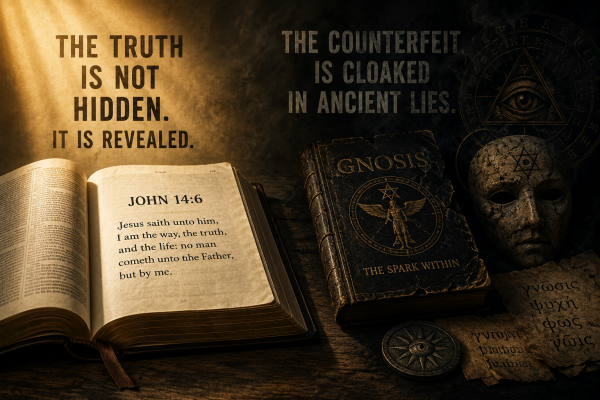
Below the marble statues and museum mythology, the Greek and Roman “lesser gods” look suspiciously like something the Bible already warned us about: rebellious spiritual beings posing as divine authorities, corrupting humanity, and manufacturing a counterfeit religion of power, lust, blood, and “enlightenment.”

Welcome to Fifth-Generation Politics: When Revolutions Don’t Need Guns

A color revolution isn’t primarily about violence. Violence is sloppy. It scares donors and ruins the optics. The real weapon is narrative. The objective is to convince enough people that the existing authority has morally expired. Once that belief spreads, the government doesn’t collapse from force — it collapses from ridicule and doubt.

While America Has a Nervous Breakdown, China Is Measuring the Curtains

History has a sense of humor, and it’s rarely kind. As the United States barrels headlong into a Fourth Turning crisis—complete with generational rage, institutional distrust, ritualized protest, economic anxiety, and ideological self-harm—China isn’t protesting anything. It’s watching. Quietly. Patiently. With a spreadsheet.

NRA 2.0 or Collapse: The $160 Million Lawsuit and the Price of Division

A house divided cannot stand. Right now, the National Rifle Association is living that proverb in real time, and it’s painful to watch—because for generations the NRA wasn’t just an organization. It was the standard-bearer. The steward. The institution that most Americans, whether they owned a firearm or not, understood as the big dog in the fight over the Second Amendment.

Tyranny With a Smile: The Lesser Evils Running the Republic

America doesn’t usually lose its freedoms in one dramatic, movie-worthy moment. We lose them the way you lose your hearing at rifle range: one “WHAT?” at a time, until your wife is yelling from the kitchen and you’re just smiling like a happy idiot because you can’t hear the damage anymore.

Minneapolis: Watching a Color Revolution Come Home (Live, Local, and “Mostly Peaceful”)

Minneapolis isn’t “going through a moment.” Minneapolis is running a script.

And not the kind of script where everybody just hugs it out at the end and the credits roll over a lake with a canoe and a golden retriever. This is the other kind—the kind you used to see overseas, the kind cable news used to narrate like a nature documentary: Observe the fascinating uprising in its natural habitat. Note the coordinated chants. The symbolic signage. The sudden appearance of professionally printed banners that definitely came from someone’s garage printer.