President Eisenhower’s “I Told You So” Moment: The Eye-Popping Costs of Military Expenditures

Today in Cloft’s Corner, Dave channels President Eisenhower and his warning, “Beware the Military Industrial Complex.”
Citizen Writers Fighting Censorship by Helping Americans Understand Issues Affecting the Republic.
 David T. Cloft
Today in Cloft’s Corner, Dave channels President Eisenhower and his warning, “Beware the Military Industrial Complex.”

Most sports belong to the young. Smallbore prone is different. At Camp Perry this July, competitors will fire 640 record shots over four grueling days, plus a practice day and a team championship, all while trying to keep every bullet in a tiny X-ring at 50 and 100 yards. The winner won’t necessarily be the strongest or the fastest—it will be the one who can stay mentally sharp after nearly a week of relentless precision. In one of America’s oldest sports, experience isn’t a handicap. It just might be the greatest competitive advantage of all.

**The Hunter’s Paradox:** We want more hunters, so we remove barriers. More online classes. More convenience. More participation. But when the tool in your hands is capable of taking a life, is convenience always the right answer? As a Hunter Education instructor and retired Army officer, I believe knowledge can come from a computer—but safe gun handling must be passed from one human being to another. The future of hunting depends on growing our ranks without compromising the traditions and safety that built them.
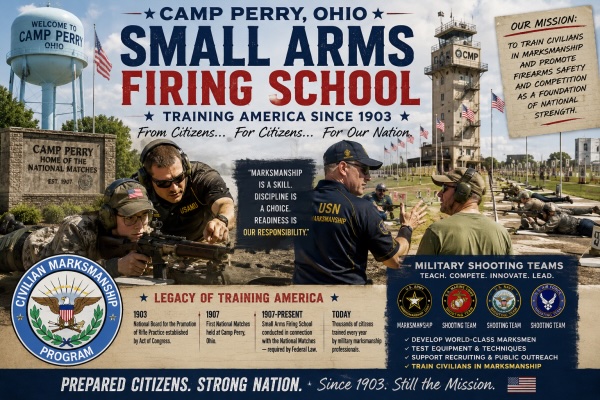
For more than 120 years, America’s military marksmanship teams have done far more than chase medals. Every summer at Camp Perry’s Small Arms Firing School, they pass generations of hard-earned knowledge to ordinary citizens—teaching safe firearms handling, precision marksmanship, and personal responsibility. It’s a quiet mission rooted in federal law since 1903, built on a simple idea: a nation is stronger when its citizens are capable, disciplined, and prepared. The trophies are impressive, but the real legacy is American readiness.

Can America’s newest graduates explain the difference between a two-stroke and a four-stroke engine? Probably not—and that’s the point. Somewhere along the way, we traded shop class for screen time and mechanical know-how for digital convenience. This isn’t really about lawn mowers or chainsaws. It’s about what happens when a society can build apps but struggles to understand the machines that keep the lights on, the food growing, and the country moving. Maybe it’s time to ask whether practical knowledge still deserves a place in a modern education.
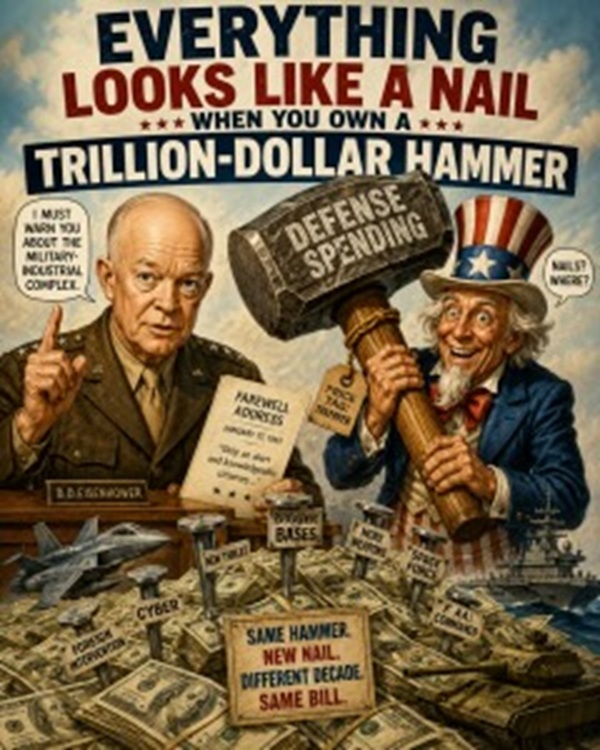
Eisenhower didn’t warn America about a foreign army. He warned us about ourselves. A five-star general looked into the future and cautioned that a permanent military, a permanent defense industry, and a permanent government bureaucracy could become so intertwined that only an “alert and knowledgeable citizenry” could keep them in check. Sixty-five years later, we spend roughly a trillion dollars a year on national defense, the Pentagon still can’t earn a clean financial audit, and many Americans know more about celebrity gossip than federal spending. The question isn’t whether Eisenhower was right. The question is whether we’re still the alert and knowledgeable citizens he believed liberty required.
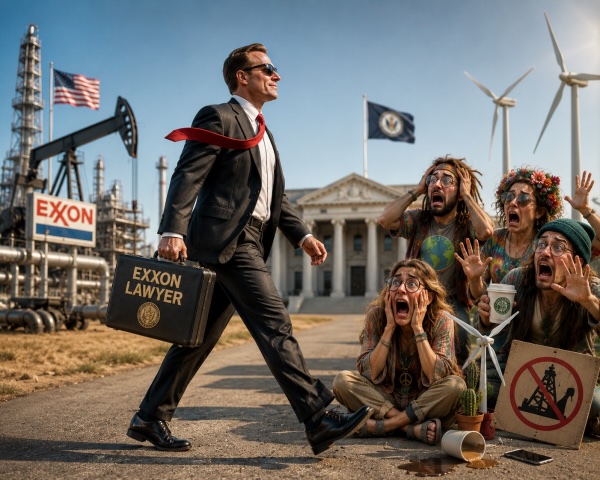
America is about to need more electricity than at any time in generations. AI, reshored manufacturing, data centers, and national security don’t run on hashtags—they run on abundant, reliable energy. So when a veteran ExxonMobil attorney joins the Justice Department, the usual professional panic merchants act like civilization is ending. Maybe it’s not a conspiracy. Maybe it’s just common sense. If America wants to outbuild China instead of outsourcing its future, we’d better start hiring people who know how to keep the lights on.
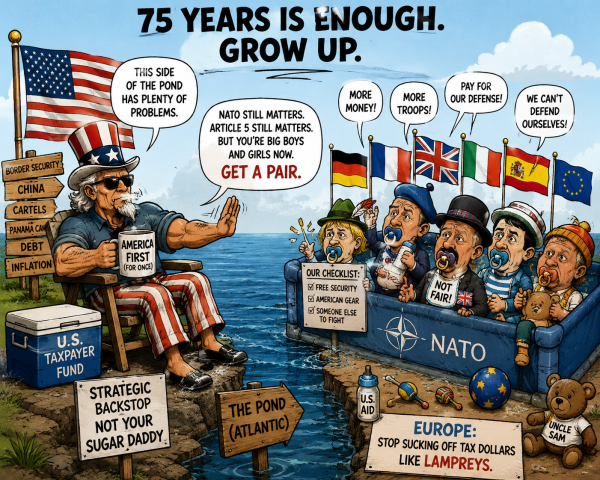
For 75 years, America has been Europe’s security blanket. Maybe it’s time to fold it up. The Monroe Doctrine wasn’t about policing the entire planet—it was about protecting our own hemisphere first. NATO still matters. Article 5 still matters. But Europe’s wealthy democracies aren’t helpless children anymore. Build your armies. Fund your defense. Guard your own neighborhood. Uncle Sam can still be the backstop—but it’s time to stop treating him like an unlimited credit card with a standing military attached.
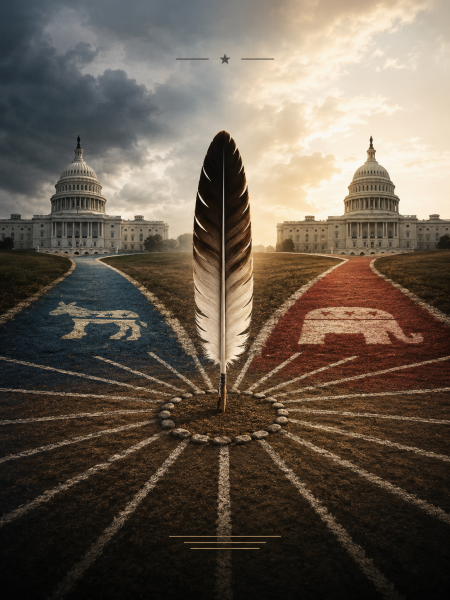
The myth that America would magically function better with more political parties ignores one stubborn fact: more factions don’t automatically create more agreement. Look at the 574 federally recognized tribal governments. They don’t speak with one voice—and they shouldn’t be expected to. The 2022 renaming of 643 geographic features proved that even within Native communities, history, language, and culture are far more complex than Washington’s one-size-fits-all solutions. Diversity of opinion is a strength, but pretending there’s only one “correct” voice is politics masquerading as consensus.
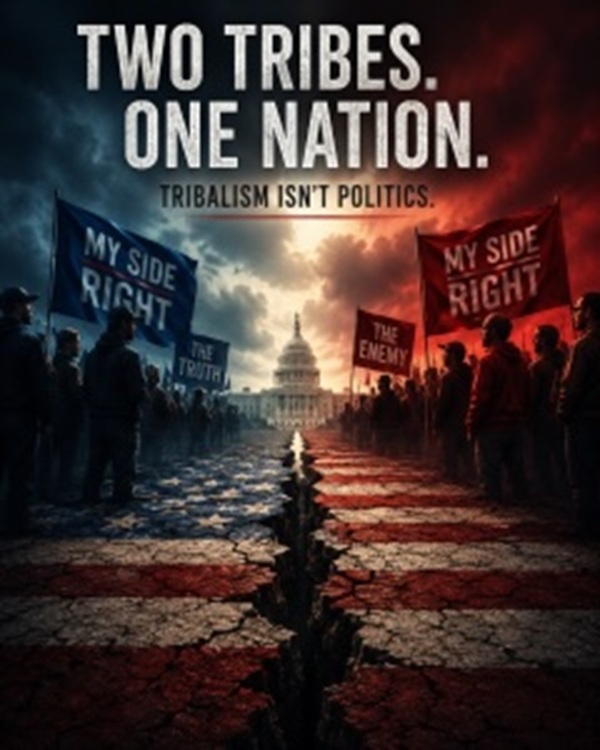
The real problem isn’t that America has two political parties—it’s that we’ve rediscovered tribalism. I remember growing up in the 1980s when your “tribe” was mostly your family, your neighborhood, your church, or the people your parents spent time with. Democrats and Republicans certainly disagreed, but most Americans weren’t immersed in the other side’s outrage 24 hours a day. Social media changed that. Today we’re constantly exposed to the loudest, angriest voices from the “other tribe,” and algorithms profit by keeping us divided, suspicious, and emotionally invested in conflict. Every insult, every viral clip, and every political flashpoint reinforces the idea that our fellow Americans are enemies rather than neighbors. When political hatred escalates into threats or acts of violence—including attacks targeting public figures—it should remind us that tribalism, left unchecked, stops being politics and starts becoming something far more dangerous. A constitutional republic cannot survive if our highest loyalty is to the tribe instead of to the principles that bind us together.

In 2022, during the peak of America’s DEI-driven renaming campaign, Washington quietly rewrote more than 650 historic geographic names with the stroke of a pen. No vote in Alpena County. No referendum in Michigan. No debate in Congress. Just appointed federal officials deciding what generations of local residents should call their own landmarks. Whether you believe the name should stay or go isn’t the only question. The bigger one is this: Who gets to decide? If local history can be edited from a desk in Washington today, what piece of your community’s heritage gets rewritten tomorrow? It’s time to restore local control, preserve historical context, and remind the federal government that not every issue belongs in Washington.

History is full of mysteries—but mystery is not evidence. From ancient aliens to Atlantis, from the Watchers of Enoch to the archaeological puzzles of the pyramids, competing theories attempt to explain humanity’s distant past. Some are grounded in evidence, others in speculation. This article compares the major worldviews, examines where they overlap and where they diverge, and asks the most important question of all: Are we following the evidence, or simply the story we want to believe?

California insists it’s teaching culture, not replacing standards. Critics aren’t buying it. They argue that schools should be teaching every student the language of college, careers, and civic life—not spending precious classroom time redefining grammar. A common language has long been one of America’s greatest unifying forces. Respect every culture, absolutely—but don’t confuse lowering standards with expanding opportunity. “Idiocracy” was supposed to be a comedy, not a curriculum roadmap.
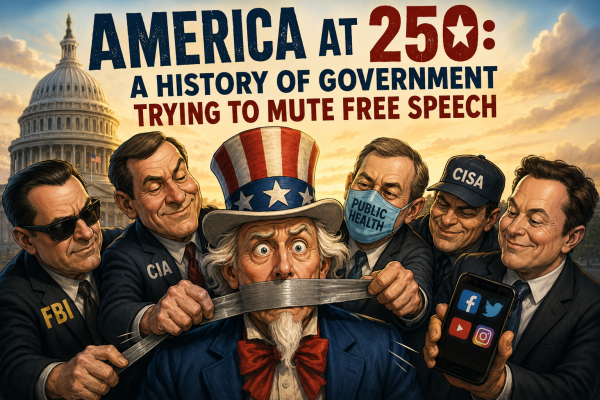
The First Amendment was ratified in 1791. Just seven years later, Congress passed the Alien and Sedition Acts, making it a crime to criticize the federal government. Since then, nearly every generation has been told that “this” crisis—war, communism, terrorism, or COVID—justifies limiting speech “for the greater good.” The slogans change. The excuses evolve. But one lesson has remained remarkably consistent for 250 years: governments don’t usually attack free speech head-on—they simply find a reason why yours should be the exception.

If you’ve ever wondered why some people seem allergic to national healing, follow the incentives. Misery has an economy. Outrage has a payroll.

Although “Piss Christ” never reached the Supreme Court, the controversy helped lead to the 1998 case National Endowment for the Arts v. Finley. The Court ruled that while artists have broad First Amendment rights to create controversial work, they do not have a constitutional right to taxpayer funding. The lasting debate wasn’t whether Serrano could make the photograph—it was whether the public should have to help pay for it.

America did not become irreligious. It simply changed religions. The old civic faith placed God above man and man above government; the new one places the self above reality and bureaucracy above everything else. Scientism supplies the lab coat, wokeism supplies the moral panic, and government arrives as savior, priest, therapist, and parole officer. This is not progress. It is ancient Gnosticism with Wi-Fi.
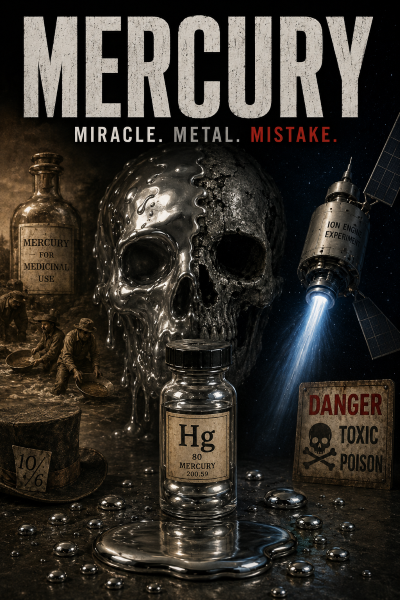
Mercury was once the miracle metal. Doctors prescribed it. Gold miners depended on it. Hat makers worked with it. NASA even launched it into space as the propellant for experimental ion engines. Then science caught up. The same liquid metal that advanced civilization was quietly attacking the human brain, poisoning rivers, and climbing the food chain. Mercury is a reminder that some of humanity’s greatest innovations come with a simple question we often ask too late: What if the miracle is actually the warning?

For a nation founded by farmers, we sure spend a lot of time maintaining grass we can’t eat. The American lawn wasn’t born out of practicality—it was imported from European aristocrats as a symbol of wealth. Today, millions of us faithfully burn fuel, spread fertilizer, and surrender our Saturdays maintaining tiny suburban kingdoms that exist mostly to impress the neighbors. We rejected kings in 1776, then spent the next two centuries pretending to be them, one freshly mowed lawn at a time.

Every generation claims it has finally uncovered the “real” Jesus. Strip away two thousand years of Christian teaching, mix in a little philosophy, sprinkle in some secret knowledge, and suddenly Christ becomes something entirely different. The tragedy is that the oldest counterfeit never disappears—it simply changes its vocabulary. The apostles warned that false gospels would come. They weren’t predicting the distant future; they were describing their own day. Two thousand years later, the same deception persists. The names have changed, but the message remains the same: replace the Savior with a teacher, repentance with self-discovery, and grace with the promise that the answer has been inside you all along. Counterfeits don’t succeed because they’re obviously false—they succeed because they look just enough like the truth to deceive those who never compare them to Scripture.