Why TSA Is Security Theater Stupidity on Repeat

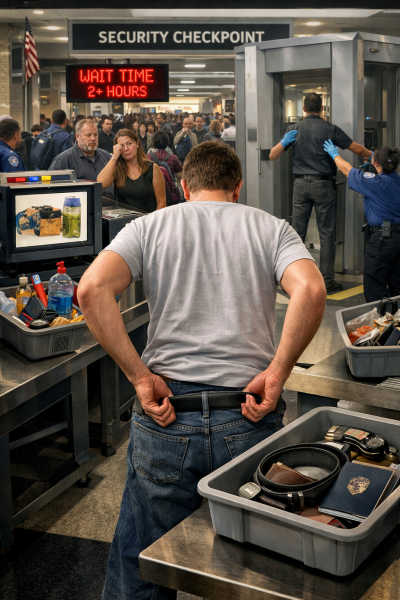
The Transportation Security Administration was born in the immediate aftermath of the September 11 attacks—a moment of national trauma where speed mattered more than strategy, and action mattered more than accuracy. That’s understandable. What’s not understandable is why we’re still running the same playbook a quarter century later like nothing has changed.

Electric heat is fine, as far as it goes, but I always want a backup

That rascally rodent, Punxsutawney Phil projected six more weeks of winter, something which should have expired on Monday, but Tuesday sure was cold as well. We know that the groundhog’s projections are scientific, because the Weather Channel sends very scientifically-minded Meteorologist Jen Carfagno to cover it. Alas! Not only did we not get an early …

Read more

The Surveillance State and the Tyrannical Bird

The Founders built a system based on an assumption that now sounds almost quaint: government power would be limited by reality. Communication was slow. Information was scarce. The federal government had trouble collecting taxes, let alone tracking the daily movements of its citizens. If the government wanted to watch someone in 1790, it needed a horse, a spy, and probably a tavern receipt.

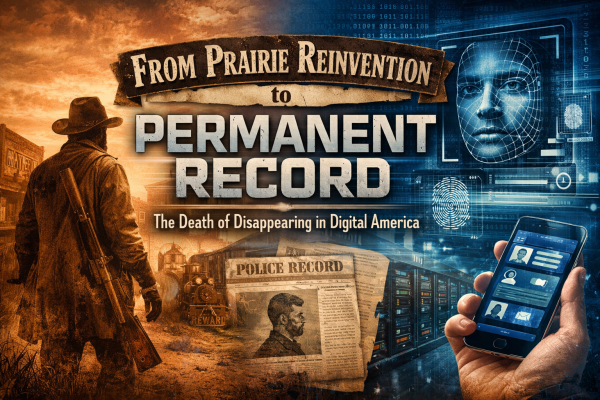
From Prairie Reinvention to Permanent Record: The Death of Disappearing in Digital America

There was a time in America when you could punch your Army captain, skip town, grow a beard, head west, and become “Samuel Whitaker, cattleman and church deacon.” Today? You can’t change your Instagram handle without a two-factor authentication code, three archived screenshots, and your ex forwarding it to your employer.

Quiet Readiness: A Simple Reminder for Concealed Carriers After a Tense Weekend

There has already been at least one geopolitically connected incident reported in Austin, Texas. That doesn’t mean anything is about to happen in your town, and it doesn’t mean you should change your daily routine. What it does mean is that uncertain times are a good moment to make sure your equipment is working the way it should. Calm preparation beats last-minute scrambling every time.

Is the new “Restore Britain” movement in the U.K. a blueprint for America?

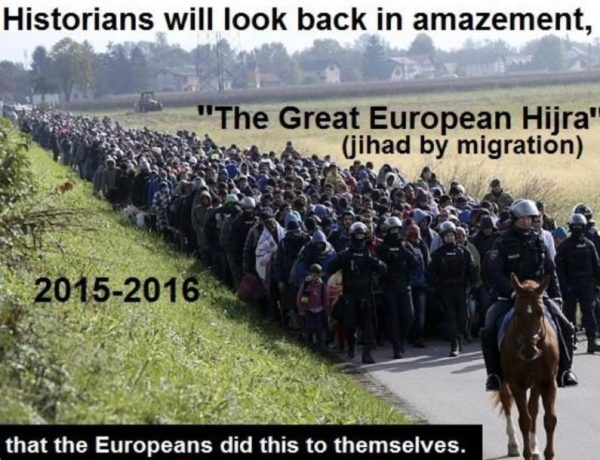
We are squandering our country’s wealth to accommodate 10-15 million unskilled, unvetted, third-world intruders who were invited to surge America’s open borders by Joe Biden and his duplicitous Democrat underlings.

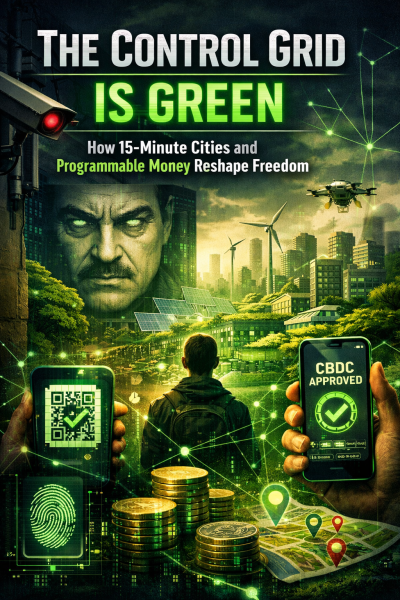
The Control Grid Is Green: How 15-Minute Cities and Programmable Money Reshape Freedom

George Orwell didn’t imagine tyranny arriving with solar panels and fiber optic cable. He imagined telescreens and ration cards. But swap telescreens for smart meters and ration cards for CBDCs, and suddenly 1984 doesn’t look retro — it looks beta-tested.

A Military Retiree’s Survival Guide

Retirement is not the end of the fight. It’s the change of terrain. Most men in modern America are stalked by two relentless beasts: long-term income and healthcare. Miss either one and your freedom is conditional. You are one layoff, one market crash, or one diagnosis away from panic. That’s not pessimism. That’s math. A military retiree is different.

The Secret to Life

The Secret to Life is the Ability to Adapt to Change. I’ve been facing that challenge for the past few months. I’m voluntarily giving up an appendage and a mindset that has been part of me everyday, all day for 60+ years: I’ve stopped carrying a concealed firearm.   I’ve carried, or had close at …

Read more

Small Nukes, Big Idea: Why SMRs Are the Future Catching Up With the Past

SMR stands for Small Modular Reactor. The concept is simple: instead of building massive, one-off nuclear cathedrals that take fifteen years, billions of dollars, and three generations of lawyers, you build smaller reactors that are standardized, factory-produced, shipped in modules, and deployed where power is actually needed. They’re designed to be safer, faster to build, easier to scale, and—most importantly—repeatable.

The Day the Fighting Cocks Died: How West Point Traded the Warrior Ethos for Political Safety

That was 1967. Vietnam was raging. Cadets were not being groomed for cable news panels or Senate confirmation hearings. They were being prepared for jungles, rice paddies, ambushes, and body counts. Humor, especially gallows humor, wasn’t a problem to be solved—it was a survival mechanism. The name “Fighting Cocks” wasn’t vulgar to them; it was irreverent, aggressive, and just juvenile enough to signal that these were young men who understood they were not being trained for polite society. They were being trained for war.

Educated to Destroy: The Rise of the College-Trained Wrecking Class

For decades, political science was the academic punchline—the major you picked when calculus broke you, engineering filtered you out, and chemistry made you cry. Everyone knew the line: If you can’t do anything else, go poli-sci. Parents nodded approvingly because “college is good for you,” administrators cashed tuition checks, and students emerged four years later fluent in theory, jargon, and grievance—but functionally incapable of building, fixing, or running anything in the real world. What no one admitted at the time was that political science didn’t just produce underemployed graduates; it quietly trained a generation in how to dismantle systems they never understood and could never rebuild.

NRA 2.0 or Collapse: The $160 Million Lawsuit and the Price of Division

A house divided cannot stand. Right now, the National Rifle Association is living that proverb in real time, and it’s painful to watch—because for generations the NRA wasn’t just an organization. It was the standard-bearer. The steward. The institution that most Americans, whether they owned a firearm or not, understood as the big dog in the fight over the Second Amendment.