The Political Daycare: How Washington Manages Voters Like Toddlers

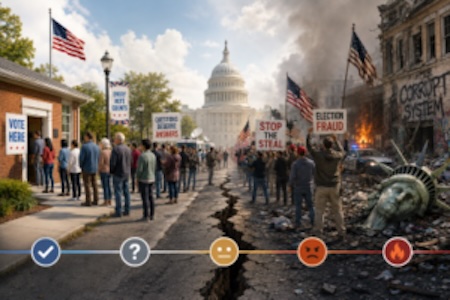
Politicians understand something about human nature that civics textbooks politely ignore: most voters do not follow policy, read legislation, or track long-term economic trends. They respond to a handful of very simple signals. Think of it as the national political dashboard. There are four blinking lights that determine whether the public is happy or furious.

From Mushroom Clouds to Lab Leaks: How Civilization Could End in a Shipping Error

Today’s extinction event probably doesn’t arrive in a missile silo. It arrives in a mislabeled vial, a shipping manifest error, a warehouse with 1,000 genetically modified mice, or a “harmless research sample” that accidentally skipped customs paperwork.

America at 250: Public Servants Were the Idea. Tax Servants Is What We Got

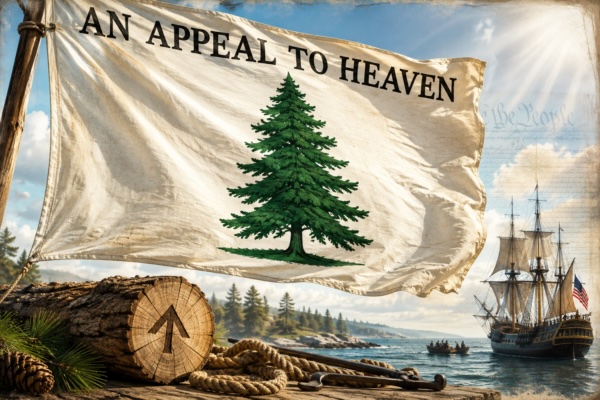
Two and a half centuries ago, the American founders attempted something radical. They built a government specifically designed not to accumulate too much power. It was intentionally slow, limited, and divided against itself. The idea was simple: if ambition countered ambition, tyranny would have a hard time getting traction.

Hormuz: 21 Miles of History Proving Geography Still Rules the Modern World

The modern world likes to believe it has outgrown geography. Satellites circle the planet, data moves at the speed of light, and weapons can strike targets from continents away. Military theorists speak confidently about cyber war, artificial intelligence, and fifth-generation conflict conducted across digital networks and orbital platforms. Yet despite all this technological sophistication, the global economy still depends on an astonishingly simple fact of physical geography: about twenty-one miles of ocean between Iran and Oman control roughly a quarter of the world’s oil and enormous quantities of energy-related commodities such as petrochemical feedstocks and fertilizer inputs.

The Lone Wolf Factory: How the Internet Became the World’s Largest Radicalization Machine

Today the world’s largest radicalization engine runs twenty-four hours a day, recruiting globally with the efficiency of an Amazon warehouse. You don’t need a secret meeting. You don’t need a physical training camp. You need Wi-Fi and a keyboard. Congratulations — you now have access to what might be called the Lone Wolf Factory, where the raw materials are grievance, identity crisis, and algorithmic amplification.

The Surveillance State and the Tyrannical Bird

The Founders built a system based on an assumption that now sounds almost quaint: government power would be limited by reality. Communication was slow. Information was scarce. The federal government had trouble collecting taxes, let alone tracking the daily movements of its citizens. If the government wanted to watch someone in 1790, it needed a horse, a spy, and probably a tavern receipt.

From Prairie Reinvention to Permanent Record: The Death of Disappearing in Digital America

There was a time in America when you could punch your Army captain, skip town, grow a beard, head west, and become “Samuel Whitaker, cattleman and church deacon.” Today? You can’t change your Instagram handle without a two-factor authentication code, three archived screenshots, and your ex forwarding it to your employer.

The Day the Soviets Built the King of Boom

In October of 1961 the Cold War was already a tense, paranoid chess match played with nuclear weapons instead of pawns. The United States and the Soviet Union were staring each other down across oceans, missile silos, and enough megatonnage to turn the planet into a glowing charcoal briquette. But Soviet Premier Nikita Khrushchev decided the world needed a reminder of just how big the Soviet hammer could be. So the Kremlin did what any superpower with a bruised ego might do. They built the largest nuclear bomb in human history and lit it off over the Arctic.

Safety Above Freedom: How Good Intentions Built the Modern Nanny State

These phrases are the verbal equivalent of pulling the fire alarm in an argument. Once someone says them, anyone who disagrees immediately looks like a monster. After all, who wants to be the guy standing up and saying, “Actually, I prefer freedom even if it’s risky”? That’s not exactly a great campaign slogan. But history shows that these exact phrases — the language of safety, fairness, and collective good — are often the first step in breaking down systems built on individual responsibility and replacing them with systems built on control.

Seventeen Pages and the Price of Legitimacy: Restoring Election Confidence Before 2028

In recent election cycles, public trust in the electoral process has measurably declined. Surveys from multiple institutions show that large portions of the electorate—across party lines—harbor doubts about integrity, administration, or transparency. That reality, by itself, is destabilizing. It does not require proof of systemic fraud to create risk. It only requires sustained disbelief.

Clausewitz, Jomini, and DIME-FIL: Why a 200-Year-Old War Theory Still Explains the Iran War

Start with Clausewitz. His most famous line remains the most brutally accurate description of war ever written: war is the continuation of politics by other means. In other words, wars are not random explosions of violence. Nations fight because they want political outcomes—territory, influence, regime survival, deterrence, or control of strategic regions.

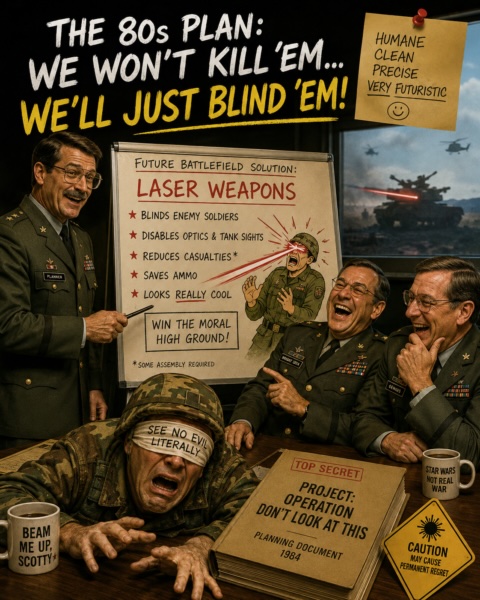
Death Rays on a Budget: How the U.S. and Israel Turned Electricity into Air Defense

If you grew up on Austin Powers, you remember the joke. Dr. Evil didn’t want nukes. He didn’t want tanks. He wanted lasers. The audience laughed because lasers were cinematic nonsense. Fast forward to 2026 and Israel is fielding the Iron Beam, and the U.S. military has ship-mounted and vehicle-mounted high-energy laser systems actively burning small threats out of the sky. Turns out Dr. Evil was just early.

Iran: The Revolution That Ate Its Own Children – A Brief History

When Americans think about Iran, the story usually begins in 1979—angry crowds, burning flags, and a stern cleric named Ayatollah Khomeini taking control of the country. But that snapshot hides something important. Iran—historically Persia—is one of the world’s oldest civilizations. Its history stretches back thousands of years, and the country that emerged after 1979 is not the inevitable outcome of Persian history. In many ways, it was a political accident born from revolution, miscalculation, and a brutal consolidation of power.

The Roosevelt Problem: What Teddy Said About Muslim Conquests That Would End a Political Career Today

If Theodore Roosevelt were transported into modern America and handed a microphone, the man wouldn’t survive a single news cycle. Not because he was shy, confused, or prone to carefully worded diplomatic statements. Quite the opposite. Roosevelt had a remarkable ability to say exactly what he thought about history, religion, and civilization without the slightest concern for whether it might offend a future diversity committee.

The Michigan Deer Debacle: How the DNR Managed to Fail Hunters, Farmers, and the Deer Herd All at Once

For generations, deer hunting has been woven into Michigan’s identity. Opening day used to look like a state holiday. Orange jackets in diners at 4 a.m., rifles leaning in pickup trucks, kids learning from their dads and grandfathers that hunting wasn’t just about venison—it was about discipline, stewardship, and tradition. But if you look at the numbers today, something has gone badly wrong. The Michigan Department of Natural Resources has spent decades regulating, restricting, tweaking, and “managing” the deer herd, yet the results speak for themselves: declining harvests, shrinking hunter participation, and a system so tangled that it now struggles to produce enough hunters to even keep the herd under control.

Unoffendable and the Warrior: Reconciling Patton with the Sermon on the Mount

When my church announced that our next Bible study would be based on “Unoffendable” by Brant Hansen, I’ll admit it — I was irritated (slightly offended). The title alone sounded like something designed to sand the edges off men. “Unoffendable” feels like the spiritual equivalent of bubble wrap. And if you’ve spent decades in uniform, leading soldiers, planning operations, and living inside a culture where decisiveness matters and hesitation kills, your instinct is to bristle.

Stones, Spectacle, and Shortcuts: The Wilderness Temptation and the Blueprint We Pretend Not to See

The temptation of Jesus Christ in the wilderness is one of those passages Christians nod at politely and then immediately ignore when Monday morning rolls around. Forty days of fasting, a barren desert, and Satan offering three proposals that look suspiciously like modern self-help advice. If you think it’s a children’s Sunday school story about resisting candy, you’ve missed the plot. It’s a masterclass in how power, identity, and survival actually work in the real world.

Atlas Rebooted: When the Department of War Decides Your Company Belongs to the State

In Atlas Shrugged, the government doesn’t seize Rearden Metal with bayonets. It does something far more modern. It surrounds it with emergency language, regulatory edicts, patriotic necessity, and administrative suffocation until saying “no” becomes illegal in everything but name. The state never shouts, “We are stealing this.” It simply declares the product too important to be privately controlled.