When Veteran YouTube Geopolitical Talking Heads Start Acting Like Internet Trolls

Now let’s be clear about something. Veterans arguing about foreign policy is not the problem. In fact, it’s healthy. People who have worn the uniform should absolutely debate how American power is used. The military has always produced strong opinions—usually accompanied by horrible coffee and worse briefing slides. But what used to separate professional disagreement from internet drama was something the officer corps once valued deeply: discipline.

The Kurds – The Enemy of My Enemy Is My Friend (Until Tuesday)

For many Americans, the story is simple. Saddam Hussein gassed the Kurds in the 1980s—most infamously at Halabja. They suffered horribly. When the United States eventually removed Saddam from power in 2003, the Kurds were portrayed as natural allies: brave fighters, pro-Western, reliable partners in a messy region.

Blood, Guts, and Winning Wars: Why Patton Still Makes Modern Leaders Uncomfortable

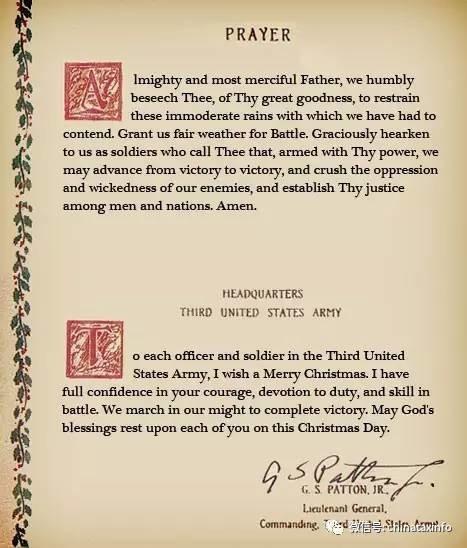
Patton’s most famous line, delivered to the Third Army in 1944, captured his philosophy better than any manual ever written: “No bastard ever won a war by dying for his country. He won it by making the other poor dumb bastard die for his country.” That was not just colorful language. It was a direct rejection of the romantic nonsense that had gotten an entire generation slaughtered in World War I. Patton had seen that war. He had been wounded in it. He understood that modern industrial warfare was not a stage for heroic poetry. It was a contest of logistics, speed, firepower, and will. His job was not to produce martyrs. His job was to produce victory.

The Dollar Isn’t Backed by Gold — It’s Backed by DIME and a Carrier Strike Group

Let’s retire the fairy tales.

The U.S. dollar is not backed by gold. It’s not backed by “faith.” It’s not backed by vibes. It’s backed by power — specifically the kind of power that sails in carrier strike groups, negotiates trade deals, controls sea lanes, writes sanctions law, insures shipping, and can ruin your economy before your stock market even opens.

What We’re Seeing Today Didn’t Start Yesterday — It Started the Night Obama Won

The first big shift was philosophical. After the wars in Iraq and Afghanistan, the Obama administration openly argued that America needed to move away from large, unilateral military commitments. The 2010 National Security Strategy said U.S. leadership could not be defined by war alone and emphasized partnerships, international institutions, and diplomacy over long-term occupation. That sounds reasonable on paper, and after two exhausting wars, a lot of Americans agreed. But it also marked a clear departure from the post-Cold War mindset where the United States acted as the unquestioned global enforcer. Instead of “we lead, others follow,” the tone became “we lead, but only if everyone signs off first.”

We’re Great at Regime Change… It’s the Aftermath We Keep Screwing Up

Every time the United States gets involved in a foreign conflict, the opening act is usually impressive. Precision strikes, shock-and-awe, special operations raids, satellites, drones, cyber, carrier groups—the whole high-tech orchestra. When it comes to breaking things, the U.S. military is the undisputed heavyweight champion of the world. Regimes fall, palaces empty, statues get pulled down, and cable news runs dramatic graphics about “the end of an era.”

Quiet Readiness: A Simple Reminder for Concealed Carriers After a Tense Weekend

There has already been at least one geopolitically connected incident reported in Austin, Texas. That doesn’t mean anything is about to happen in your town, and it doesn’t mean you should change your daily routine. What it does mean is that uncertain times are a good moment to make sure your equipment is working the way it should. Calm preparation beats last-minute scrambling every time.

Verdun with Drones: How the Future of War Looks Suspiciously Like 1916

We were promised glide paths into a frictionless era of war. Precision would replace mass. Networks would replace mud. Information dominance would compress decision cycles so tightly that victory would arrive before the coffee cooled. Instead, the war in Ukraine settled into trenches, minefields, artillery duels, and casualty math that feels uncomfortably familiar to anyone who’s ever read about 1916. The aesthetic is pure World War I, except now every trench has a charging cable.

World War III Started With a Virus — Now It’s a Multi-Regional Fight and the U.S. Is Running All Four DIME Tools at Once

The modern battlefield isn’t just military anymore. It’s what the national security crowd calls DIME — Diplomacy, Intelligence, Military, and Economy — and right now the United States is fighting on all four fronts at the same time, in multiple regions, with fewer resources than it had even ten years ago. That’s not a conspiracy theory. That’s just what happens when a superpower tries to hold together a global order that is starting to come apart.

The Destruction of the Military Pension: When ‘Obama Reform’ Meant Saving Money, Not Soldiers

Somewhere between speeches about “supporting the troops” and glossy recruiting commercials, the United States quietly decided that a guaranteed military pension was a little too generous. Not immoral. Not unfair. Just… expensive. And so, without much noise or public debate, the traditional 50% military retirement pension was downgraded, rebranded, and sold as “modernization.” Enter the …

Read more

The Interface, the Code, and the War: Why Christianity Becomes Offensive

Some of the sharpest minds of the last century sensed the reductionist story was missing something. Carl Jung looked inward and saw conflict. The ego — the conscious “I” — wants control, moral self-justification, narrative dominance. It insists on sovereignty. Jung recognized the ego was not the whole self and that something beyond it pressed inward, demanding humility and reordering. He called that pressure the “Self.” He diagnosed the tension correctly. He simply refused to name the external authority behind it.

The Control Grid Is Green: How 15-Minute Cities and Programmable Money Reshape Freedom

George Orwell didn’t imagine tyranny arriving with solar panels and fiber optic cable. He imagined telescreens and ration cards. But swap telescreens for smart meters and ration cards for CBDCs, and suddenly 1984 doesn’t look retro — it looks beta-tested.

Not Random, Not Accidental: Chuck Missler and the Case for an Engineered Reality

When Missler said we may be living in something like a simulation, he meant that physical reality functions like a user interface. We experience the front end. The underlying code — the laws, constants, and constraints — operate beneath our direct perception. Just as you don’t see the binary code behind your screen but interact with its output, we interact with a physical world governed by informational architecture we didn’t write.

Why Christians Feel Obligated to Defend Israel—and Why the Bible Never Commands It

There is a quiet anxiety baked into much of modern American Christianity: if you don’t support Israel—always, loudly, and without qualification—God might notice. Entire churches treat Israeli foreign policy as a third sacrament. Question a settlement policy or a military response and someone will reach for Genesis 12 like it’s a theological panic button. This fear wears the costume of faith, but it isn’t biblical. It’s superstition with a study Bible.

A Military Retiree’s Survival Guide

Retirement is not the end of the fight. It’s the change of terrain. Most men in modern America are stalked by two relentless beasts: long-term income and healthcare. Miss either one and your freedom is conditional. You are one layoff, one market crash, or one diagnosis away from panic. That’s not pessimism. That’s math. A military retiree is different.

“The 51st Star We Never Voted On: How Israel Became America’s Problem Child”

Let’s dispense with the polite fiction. The United States has 50 states on paper and one premium subscription state overseas that gets all the benefits with none of the awkward obligations like paying federal taxes or pretending to listen to Washington. Welcome to Israel, America’s unofficial 51st state — the only one close enough to lecture Congress but far enough away that we pretend it’s “just an ally.”

At 250, the Republic Is Missing: How America Quietly Rebuilt the Tyranny It Rebelled Against

At 250 years old, the United States has not collapsed. There are no tanks in the streets or dictators on balconies. Instead, America has done what nearly every revolution before it has done: it defeated an obvious form of tyranny and then slowly reconstructed a more efficient, more sophisticated version of it.

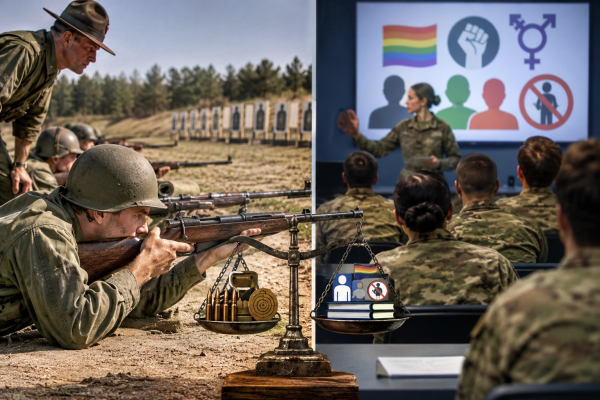
From Garand to AR-15: When Service Rifles Stopped Belonging to the Nation and Started Belonging to Lawyers

When the M1 went ashore in Normandy, no one wondered who owned the blueprints. When the M16 went to Vietnam, arguments over chrome lining, ammunition specifications, and intellectual property simmered behind the scenes. The rifle itself became entangled in acquisition disputes and contract language. Even improvements—like later A2 modifications—unfolded within a world shaped by lawyers as much as logisticians.

Promises, Pivots, and Surveillance: How Trump Went From FISA Foe to FISA Friend

Campaign Trump told voters the surveillance state was dangerous and abused. Governing Trump is preserving the surveillance state with adjustments. Campaign Trump framed FISA as existential corruption. Governing Trump treats it as infrastructure in need of maintenance.

Since 1942, the United States Has Been Going to War Illegally — and Everyone Pretends That’s Fine

Enter the War Powers Resolution — Congress’s attempt to look relevant after Vietnam without actually reclaiming its authority. The War Powers Resolution is often defended as a guardrail. In reality, it’s a constitutional fig leaf stapled to a surrender note.