In 1987, Trump predicted this. He explained what needed to be done in Iran. Now he is doing it.

In 1987, Barbara Walters of ABC (then owned by Capital Cities) interviewed Donald and Ivana Trump. He was 41 and they were still married. Walters asked him about Iran, which had a decade earlier had broken international law by seizing the U.S. Embassy and holding all its American employees hostage.

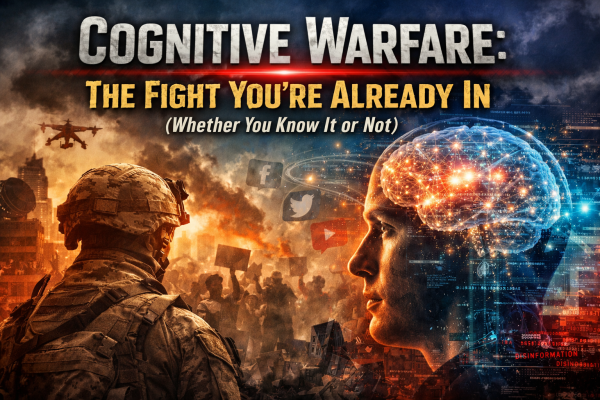
Cognitive Warfare: The Fight You’re Already In (Whether You Know It or Not)

NATO didn’t invent cognitive warfare, but they did something important: they named it. And once you name something, you can’t pretend it isn’t there. Their definition isn’t wrapped in science fiction or Hollywood nonsense. It’s blunt. Cognitive warfare is about influencing or disrupting how people think in order to shape what they do. Not just soldiers, not just leaders—everyone. Entire populations. Allies, adversaries, and increasingly, your own backyard.

Seventeen Pages and the Price of Legitimacy: Restoring Election Confidence Before 2028

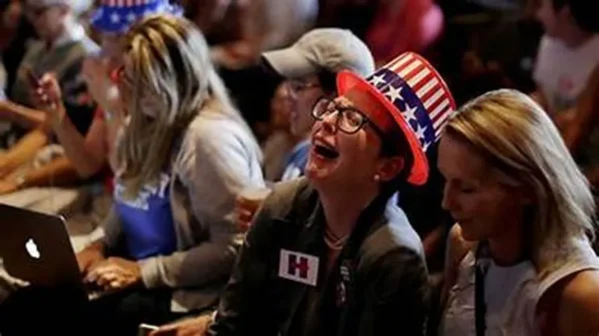
In recent election cycles, public trust in the electoral process has measurably declined. Surveys from multiple institutions show that large portions of the electorate—across party lines—harbor doubts about integrity, administration, or transparency. That reality, by itself, is destabilizing. It does not require proof of systemic fraud to create risk. It only requires sustained disbelief.

Unoffendable and the Warrior: Reconciling Patton with the Sermon on the Mount

When my church announced that our next Bible study would be based on “Unoffendable” by Brant Hansen, I’ll admit it — I was irritated (slightly offended). The title alone sounded like something designed to sand the edges off men. “Unoffendable” feels like the spiritual equivalent of bubble wrap. And if you’ve spent decades in uniform, leading soldiers, planning operations, and living inside a culture where decisiveness matters and hesitation kills, your instinct is to bristle.

Stones, Spectacle, and Shortcuts: The Wilderness Temptation and the Blueprint We Pretend Not to See

The temptation of Jesus Christ in the wilderness is one of those passages Christians nod at politely and then immediately ignore when Monday morning rolls around. Forty days of fasting, a barren desert, and Satan offering three proposals that look suspiciously like modern self-help advice. If you think it’s a children’s Sunday school story about resisting candy, you’ve missed the plot. It’s a masterclass in how power, identity, and survival actually work in the real world.

Introduction to Business 101: Golf with THE Chuck, A Tribute to Enduring American Grit The Deployment Freedom Cigar, Whataburger & War Edition February 27th, March 1, 2026

There are weekends when business gets discussed in boardrooms. And then there are weekends when business gets discussed over brisk Texas wind, a Whataburger wrapper, and a properly cut Deployment Freedom Cigar. This was one of those weekends.

Quiet Readiness: A Simple Reminder for Concealed Carriers After a Tense Weekend

There has already been at least one geopolitically connected incident reported in Austin, Texas. That doesn’t mean anything is about to happen in your town, and it doesn’t mean you should change your daily routine. What it does mean is that uncertain times are a good moment to make sure your equipment is working the way it should. Calm preparation beats last-minute scrambling every time.

An Introduction to Business 101: Golf with THE Chuck -A Tribute to Enduring American Grit February 20 – February 22, 2026

Some weekends feel bigger than sports. Some feel bigger than policy. And then there are weekends like this one where leadership, competition, conviction, and country all collide. I was working on this piece with a Deployment Freedom Cigar lit, paired with a very special small-batch pour of MB Roland Dark Fired Kentucky bourbon. Smoke steady. …

Read more

The Battlefield Moved, Humans Didn’t: Why a 1930s Historian Still Understands Modern War Better Than We Do

Nearly a hundred years ago, Sir Herbert Butterfield sat down and committed the unforgivable sin of telling historians, strategists, and polite academics something they still hate hearing today: war is not a clean system. It is not a spreadsheet problem. It is not solved by better charts, prettier maps, or a PowerPoint deck with the right color palette. War—every war—boils down to frightened human beings trying to reconcile self-preservation, honor, faith, and meaning while other frightened human beings try to kill them.

The Day the Fighting Cocks Died: How West Point Traded the Warrior Ethos for Political Safety

That was 1967. Vietnam was raging. Cadets were not being groomed for cable news panels or Senate confirmation hearings. They were being prepared for jungles, rice paddies, ambushes, and body counts. Humor, especially gallows humor, wasn’t a problem to be solved—it was a survival mechanism. The name “Fighting Cocks” wasn’t vulgar to them; it was irreverent, aggressive, and just juvenile enough to signal that these were young men who understood they were not being trained for polite society. They were being trained for war.

Color Revolution Phase 2: Barking in the Streets for a Hunter You’ll Never See

Phase 2 of a color revolution is the “streets on fire” phase. It looks organic. It feels spontaneous. It’s loud, chaotic, righteous, and emotionally intoxicating. This is where the dogs flood the streets. Students, activists, professional grievance collectors, and social-media revolutionaries with ring lights and Venmo links all sprint after the same thing: meaning.