Hormuz: The Reality TV War and China’s Unfortunate Front-Row Seat

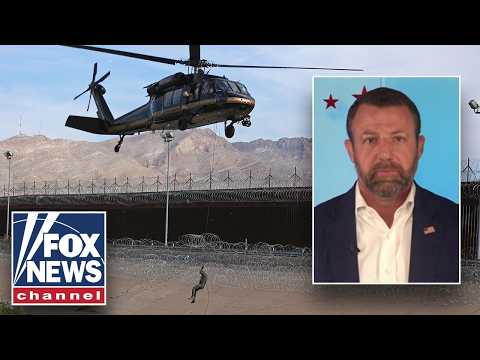
Modern war has acquired an odd new feature. It now comes with graphics, dramatic music, and a nightly highlight reel. Precision bombs streak across the screen. Drones glide in cinematic slow motion. Social media fills with grainy infrared footage of things exploding in the desert while commentators nod gravely and say phrases like “escalation dynamics” and “rules-based order.”

The Age of Narrative: When Psychological Operations Run the World

For most of history, lies moved slowly. A king issued a proclamation. A priest told a story. A rumor drifted across a village. Today, narratives move at the speed of fiber optics, algorithmically amplified and psychologically engineered. What once required an empire now requires a social media campaign.

The Drone Revolution: Warfare’s Latest Game of Technological Ping-Pong

The basic idea of unmanned warfare actually dates back more than a century. During World War I, armies experimented with remotely controlled aircraft and explosive “aerial torpedoes.” They were crude and unreliable, but the concept was already there: send a machine instead of a pilot into harm’s way. Through the Cold War the idea matured into reconnaissance drones used primarily for surveillance. The United States began using early UAVs over Vietnam and later refined the concept in the 1990s and early 2000s.

AI for Me, Not for Thee: When Students Get Punished for What Leaders Get Paid to Do

A couple years ago, when ChatGPT first exploded onto the scene, I was teaching at a Christian school. My philosophy with technology has always been simple: learn it before you fear it. Every major technological shift in history has followed the same pattern—first confusion, then panic, then acceptance once people realize it’s not going away. So I did what teachers are supposed to do. I explained the technology to my students.

The Surveillance State and the Tyrannical Bird

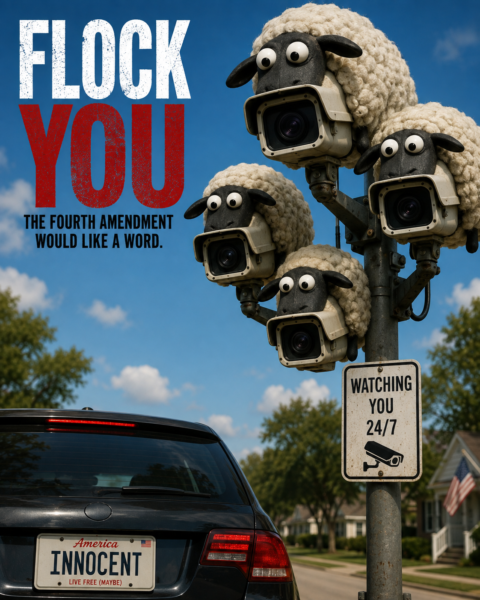
The Founders built a system based on an assumption that now sounds almost quaint: government power would be limited by reality. Communication was slow. Information was scarce. The federal government had trouble collecting taxes, let alone tracking the daily movements of its citizens. If the government wanted to watch someone in 1790, it needed a horse, a spy, and probably a tavern receipt.

The Day the Soviets Built the King of Boom

In October of 1961 the Cold War was already a tense, paranoid chess match played with nuclear weapons instead of pawns. The United States and the Soviet Union were staring each other down across oceans, missile silos, and enough megatonnage to turn the planet into a glowing charcoal briquette. But Soviet Premier Nikita Khrushchev decided the world needed a reminder of just how big the Soviet hammer could be. So the Kremlin did what any superpower with a bruised ego might do. They built the largest nuclear bomb in human history and lit it off over the Arctic.

Death Rays on a Budget: How the U.S. and Israel Turned Electricity into Air Defense

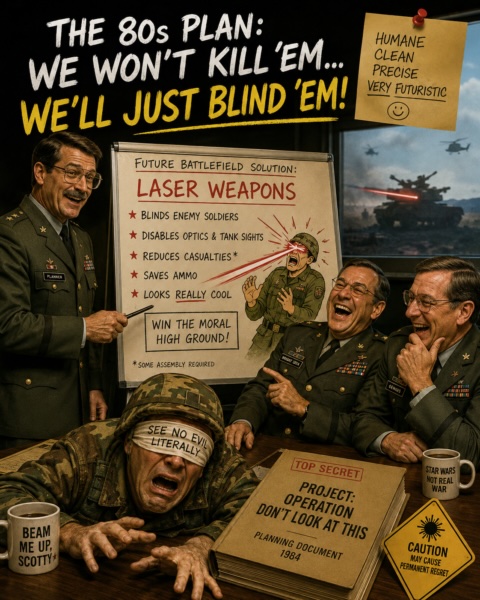
If you grew up on Austin Powers, you remember the joke. Dr. Evil didn’t want nukes. He didn’t want tanks. He wanted lasers. The audience laughed because lasers were cinematic nonsense. Fast forward to 2026 and Israel is fielding the Iron Beam, and the U.S. military has ship-mounted and vehicle-mounted high-energy laser systems actively burning small threats out of the sky. Turns out Dr. Evil was just early.

The Interface, the Code, and the War: Why Christianity Becomes Offensive

Some of the sharpest minds of the last century sensed the reductionist story was missing something. Carl Jung looked inward and saw conflict. The ego — the conscious “I” — wants control, moral self-justification, narrative dominance. It insists on sovereignty. Jung recognized the ego was not the whole self and that something beyond it pressed inward, demanding humility and reordering. He called that pressure the “Self.” He diagnosed the tension correctly. He simply refused to name the external authority behind it.

Small Nukes, Big Idea: Why SMRs Are the Future Catching Up With the Past

SMR stands for Small Modular Reactor. The concept is simple: instead of building massive, one-off nuclear cathedrals that take fifteen years, billions of dollars, and three generations of lawyers, you build smaller reactors that are standardized, factory-produced, shipped in modules, and deployed where power is actually needed. They’re designed to be safer, faster to build, easier to scale, and—most importantly—repeatable.

Penguins, Treaties, and Radar Dishes: The Quiet Militarization of Antarctica

There’s a comforting little bedtime story we tell ourselves about Antarctica. Nobody owns it. Nobody fights over it. Scientists in parkas share data and hot cocoa while penguins waddle around like tiny tuxedo diplomats. It’s the one place on Earth where humanity supposedly agreed to stop acting like humanity.

Hollywood Is Finally Telling Us the Truth: We Are Not Alone.

For decades, the official story was simple: UFOs weren’t real, and anyone who said otherwise was either confused, lying, or needed to spend less time staring at the sky and more time paying their taxes. “Swamp gas.” “Weather balloons.” “Venus.” “Camera artifacts.” The script never changed—only the excuse did. But while the grown-ups in government played dumb and the media treated the subject like a late-night punchline, Hollywood kept doing something far more dangerous: it kept normalizing the idea that we are not alone.

The Ancient Alien Narrative and the Oldest Deception in New Packaging

Words matter. UFO became UAP. Sightings became sensor data. Rumors became congressional hearings. And then came the most carefully engineered phrase yet: “non-human biologics.” That term didn’t exist to inform you—it exists to prepare you. It introduces a category without evidence, certainty without clarity, and authority without accountability. It tells your brain, “Accept the possibility first; we’ll define it later.” That’s not science. That’s narrative conditioning.

OMICRON variant SARS-CoV-2: The “Small O” That Saved the World 

Officially, the experts will tell you it means “small O.” Cute. Harmless. Like a Sesame Street vowel. And sure — in the Greek alphabet, that’s what it is. But that explanation is also the kind of tidy little classroom answer you give kids when you don’t want them asking follow-up questions. You know. Like the ones adults should’ve been asking in 2020.

Anus and Genital Rashes: Fox News, Big Pharma, and the Breakfast-Time

I turn on Fox News for the same reason a man checks the weather before he goes outside: I want to know what’s coming, and I’d prefer not to be blindsided by it. Is the world on fire? Are we at war? Did Congress accidentally pass something useful? Did somebody somewhere do something so insane it requires a full segment and a therapist?