Dad’s Permanent Trailer Plate Has Entered the Surveillance State
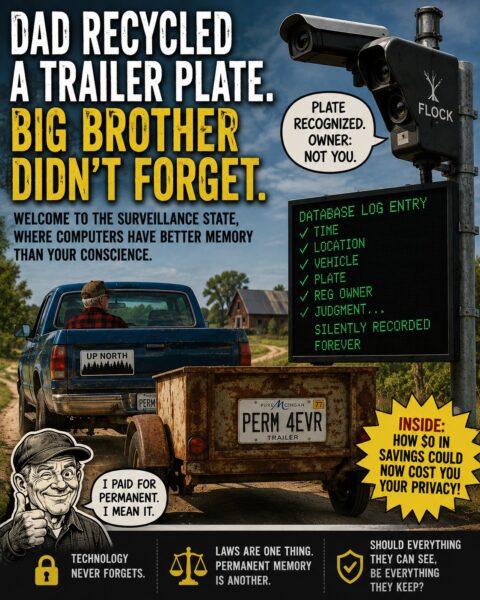
Dad thought “permanent trailer plate” meant permanent. Government apparently meant, “until you buy another trailer, peasant.” For generations, recycling an old trailer plate was the kind of technically-wrong rural economics nobody noticed unless a cop had an actual reason to look. Today, cameras, databases, and algorithms potentially can notice—and remember—things no human officer ever would have bothered with.

That raises a bigger question than Dad’s Great Trailer Plate Crime Spree: **When technology makes it possible for government to notice nearly everything, should it?**
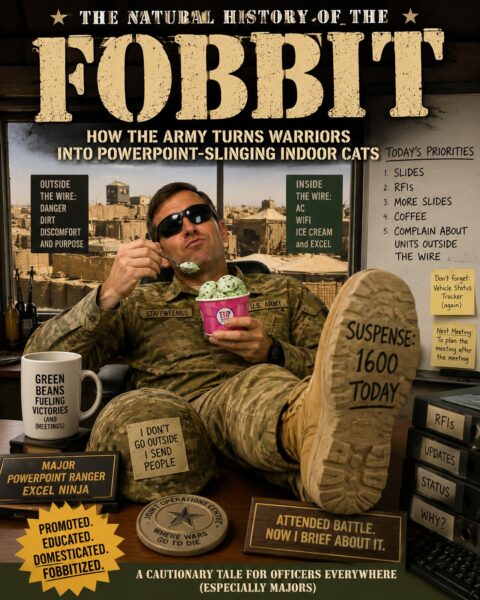
The FOBbit: How the Army Turns Warriors Into PowerPoint-Slinging Indoor Cats

The Army has a remarkable ability to take a perfectly functional warrior, promote him a few times, hand him three computer monitors, and turn him into a PowerPoint-slinging indoor cat. Thus begins the evolution of the FOBbit: that mysterious creature who once went outside the wire but now survives on RFIs, synchronization meetings, Green Beans coffee, and Baskin-Robbins. The real horror comes when you finally look down at your ice cream, look at your clean uniform, hit “Send” on another 1600 suspense, and realize the terrible truth: Oh, $h!tt! I’m the FOBbit.

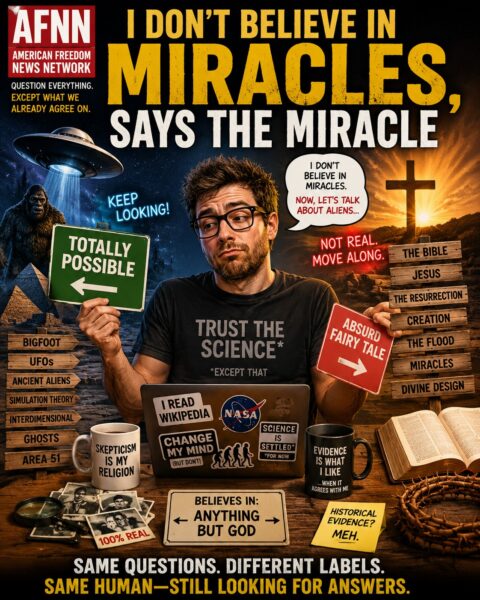
I Don’t Believe in Miracles, Says the Miracle

Modern man says he doesn’t believe in miracles while standing on a wet rock hurtling through space, made of stardust, possessing consciousness nobody can fully explain, pondering a universe nobody can explain why exists. God? Ridiculous. Ancient aliens? Now you have his attention. Maybe we didn’t stop believing—we just changed the vocabulary and became selectively skeptical about which mysteries are socially acceptable. Watch for AFNN next week as we ask the uncomfortable question: “I Don’t Believe in Miracles,” Says the Miracle.

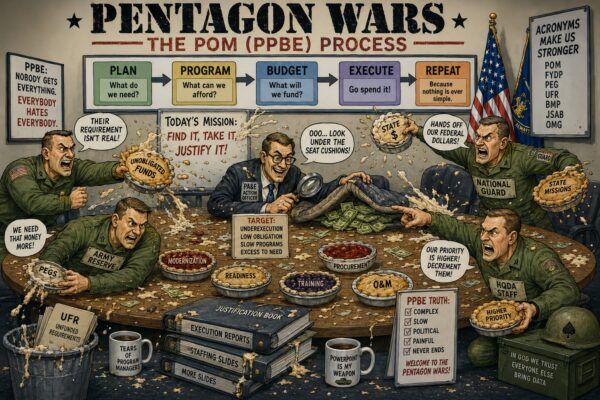
Welcome to the Pentagon Wars: The National Guard Still Hates Me

The Pentagon doesn’t fight just one kind of war. Some are fought with tanks and rifles; others with spreadsheets, PowerPoint, and somebody quietly asking, “Where haven’t they spent their money yet?” Born from Robert McNamara’s 1960s-era attempt to bring rational analysis to defense spending, the POM process evolved into an institutionalized food fight where the Active Army, National Guard, and Army Reserve defend their rice bowls while hunting for everyone else’s leftovers. I happened to be pretty good at looking under the fiscal seat cushions—and somewhere, I suspect, a retired National Guard programmer still mutters my name. Welcome to the Pentagon Wars.

The Greatest Generation Didn’t Have A Port Call Scheduled

The Greatest Generation didn’t have Wi-Fi, DoorDash, FaceTime, scheduled port calls—or an expected return date. They had a war to win. Today’s sailors aren’t the problem; they’re products of a culture that has become extraordinarily good at eliminating discomfort. The question isn’t whether young Americans are “soft.” It’s whether America still teaches resilience before history demands it the hard way.

The Pacific Ocean doesn’t have an HR department, and the enemy doesn’t care about your deployment schedule.

Flock You: The Fourth Amendment Would Like a Word

America has built a surveillance network King George III could only dream about. License-plate cameras may help catch criminals, but when government can potentially turn millions of innocent motorists into searchable dots on a map, the Fourth Amendment deserves a seat at the table. Catch the car thief. Find the missing child. But when the government wants to reconstruct where ordinary citizens have been, Americans should remember two beautiful words our Founders would appreciate: Flock you.

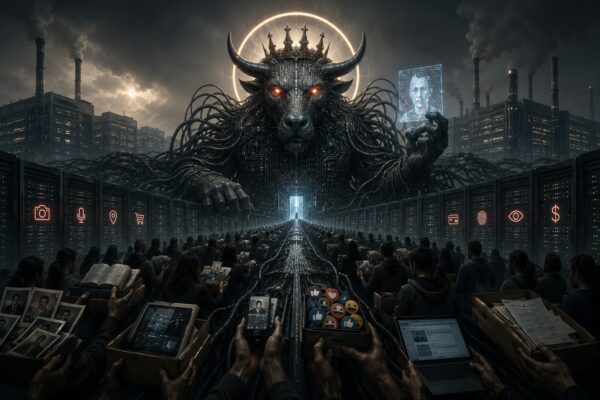
Feeding the Beast: And Lo, We Built It a Data Center

What if the Beast of Revelation didn’t rise from the sea—but arrived in a server rack? This fictional, extra-biblical excursion imagines AI as the Beast, data centers as its temples, and humanity enthusiastically feeding it electricity, water, privacy, knowledge, and eventually perhaps our autonomy. The disturbing part isn’t that the machine might conquer us. It’s that we may build it ourselves, connect everything to it, put it in our pockets—and stand in line for the upgrade.

The Carry a Sword Movement: Bring Back the Original Open Carry

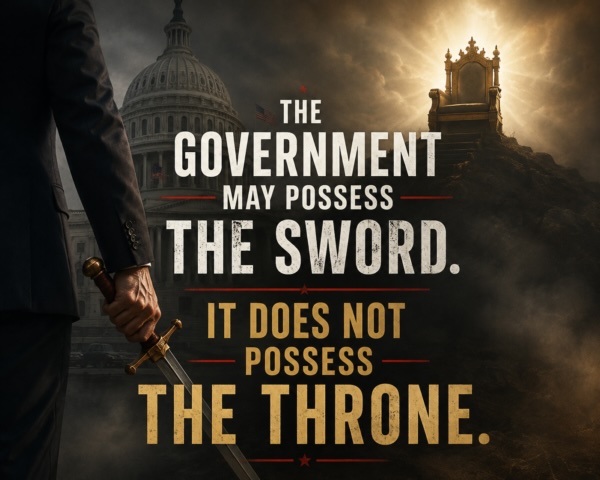
America once produced men who wouldn’t leave the house without a sword hanging from their belt. Washington carried one. Patton designed one. West Point cadets still have them. Yet today, strap on a saber for a trip to Home Depot and suddenly you’re the weird guy. Maybe it’s time to bring back the original open carry. Swords are arms. Shall not be infringed. Support the right. Respect the right. Carry a sword.

When Government Rewards Evil: The Biblical Line Between Obedience and Resistance

Christians are frequently reminded that Romans 13 tells us to obey governing authorities. Fair enough. But what happens when government reverses its God-given assignment—punishing good, protecting evil, or commanding Christians to violate their conscience? Scripture actually answers that question, and the answer is considerably less comfortable than “just obey.”

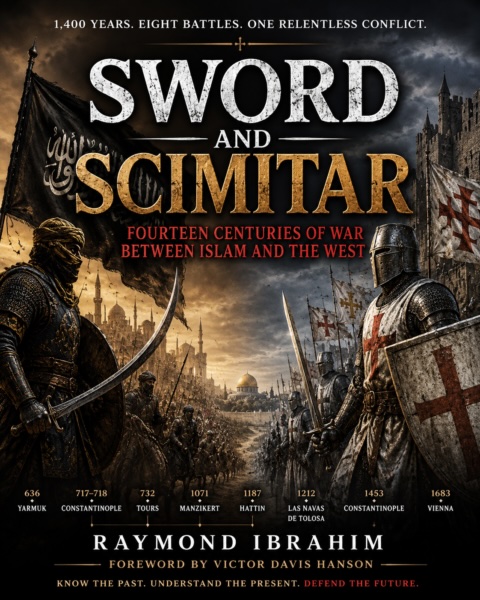
Sword and Scimitar: The 1,400-Year History We Somehow Forgot to Mention

Raymond Ibrahim’s *Sword and Scimitar* commits a dangerous act in modern history: it starts at the beginning. Long before the First Crusade of 1095, Christian lands across the Middle East, North Africa, Spain, and Anatolia had already faced centuries of Islamic conquest and warfare. Through eight pivotal battles spanning more than a thousand years, Ibrahim restores the part of the timeline that somehow keeps falling behind history’s couch cushions. His argument is uncomfortable, provocative, and difficult to dismiss: the Crusades weren’t Chapter One of the conflict—they arrived hundreds of pages into the story. You can debate Ibrahim’s conclusions, but you can’t understand 1095 while pretending 636 never happened.

Snark: Just Eat the Bugs: Washington’s Brilliant Solution to the American Beef Problem

Perhaps we’ve been looking at America’s beef crisis all wrong. Beef is expensive. The cattle herd is historically small. Drought hammered ranchers. Feed got expensive. Equipment got expensive. Interest got expensive. Land got expensive. Mexican cattle imports were disrupted because a flesh-eating parasite decided to make a comeback. Obviously, the solution is simple. Eat bugs. …

Read more

If Colonel Townsend Whelen Had an iPhone

Colonel Townsend Whelen spent a lifetime proving that only accurate rifles are interesting. But imagine handing him an iPhone and asking ChatGPT for a 6.5 Creedmoor load. After staring at it for thirty seconds, he’d probably ask, “What the hell is Wi-Fi?” Then he’d type, “Best accuracy load. 140 Berger. H4350. Go.” After 41 years behind a rifle, I did exactly that—and one of the best first-round load developments of my career popped out. Luck? Maybe. Or maybe AI just read a hundred years of load manuals, match reports, and internet arguments in about half a second. Either way, it didn’t pull the trigger. It just saved a little barrel life. And these days, that’s worth its weight in powder.

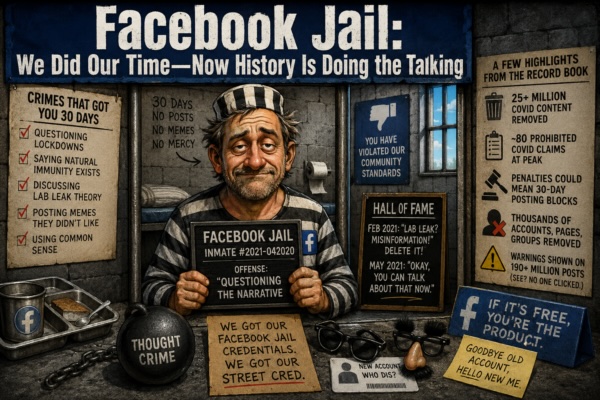
Facebook Jail: We Did Our Time—Now History Is Doing the Talking

Remember when asking the wrong question could earn you a 30-day sentence in Facebook Jail? Millions of posts disappeared, accounts were suspended, and countless users earned their digital “street cred” for challenging the Official Truth™ of the day. Then, as the science evolved, some forbidden topics quietly became acceptable discussion. This isn’t just a look back at the COVID years—it’s a satirical reminder that when a handful of powerful platforms decide what’s permissible to say, every free society should ask the same uncomfortable question: **Who decides what the truth is tomorrow?**

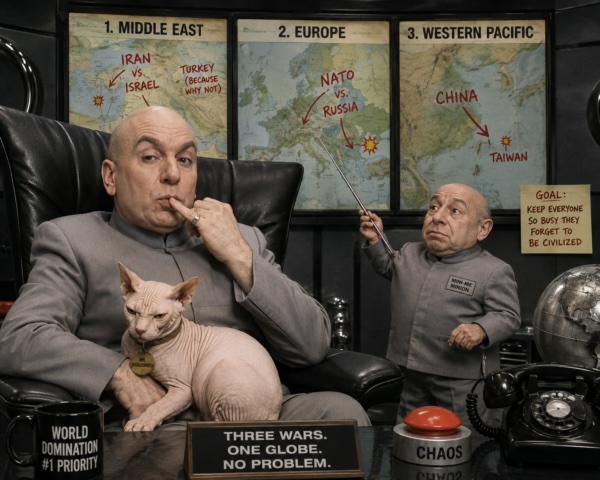
If I Were Dr. Evil: I’d Skip the Shark Death Ray and Start Three Wars

If I were Dr. Evil, I wouldn’t build a death ray—I’d build three crises. Light up the Middle East, keep NATO and Russia occupied in Europe, then watch China eye Taiwan while America tries to put out three fires with one garden hose. The nightmare isn’t one enemy defeating America; it’s several adversaries realizing they don’t have to take turns.

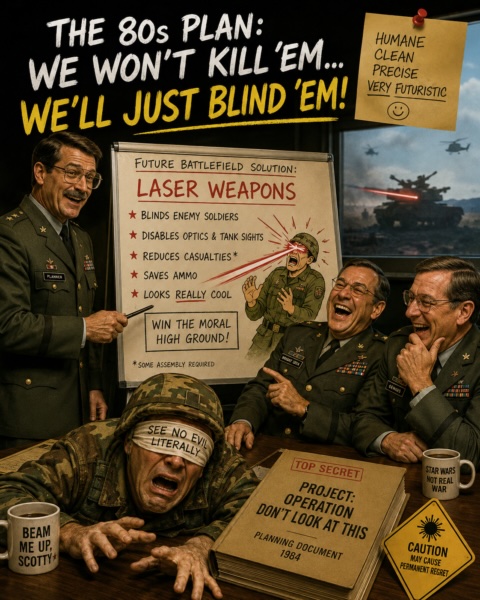
1985: The Future of Warfare Was Supposed to Be Blinding

Imagine explaining to a military planner in 1985 that the laser weapons designed to blind enemy soldiers would never become the future of warfare. During the Cold War, some experts genuinely believed that bullets would eventually give way to directed-energy weapons that would simply remove an enemy’s ability to see. Then reality intervened. It turned out that permanently blinding someone wasn’t viewed as the humanitarian breakthrough some had imagined. The battlefield stayed remarkably old-school, and the age of the battlefield ophthalmologist never quite arrived.

God Was Too Unbelievable, So We Gave Him a Spaceship

Somewhere along the way, America decided Genesis was too unbelievable—but extraterrestrials flying across the galaxy to genetically modify primitive hominids sounded perfectly reasonable. From Mark Passio’s theories to Ancient Aliens and today’s UAP obsession, an alternative creation story has quietly seeped into popular culture. We didn’t stop asking who created us; we just traded heaven for outer space, angels for aliens, and creation for a genetics lab in a spaceship. God was apparently too unbelievable—so we gave Him a spaceship.

North Korea Discovers Internet Porn

Imagine spending your entire life being told your country is the greatest civilization on Earth… then someone hands you a Wi-Fi password. According to a widely circulated—but unverified—report, North Korean troops may have discovered unrestricted internet access and promptly demonstrated why every dictatorship fears broadband more than bombs. Tanks can level buildings. The internet levels narratives. Somewhere, a political commissar is still trying to explain why the greatest threat to operational readiness wasn’t enemy artillery—it was the guest Wi-Fi passsord to PornHub.

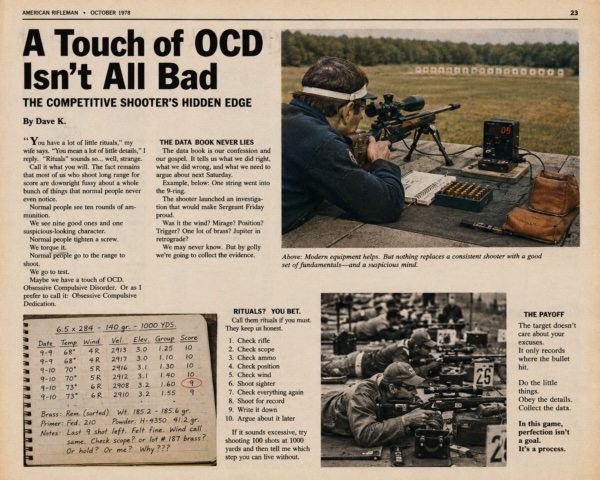
Compulsive Precision Disorder: Why Long-Range Shooters Are Not Normal

Compulsive Precision Disorder (CPD) – Spend enough time around long-range competitive marksmen and you’ll notice something curious. They all have a little… something. They measure powder to the kernel, torque screws to inch-pounds, record weather conditions like NOAA meteorologists, and can spend an hour investigating a single 9-ring hit like it’s the JFK assassination.

To the average person, this borders on insanity.

To a competitive marksman, it’s called Tuesday.

The funny part? Those obsessive personality traits that might seem excessive everywhere else are exactly what the sport rewards. The target doesn’t care about excuses—it only rewards consistency. Maybe that’s why engineers, machinists, scientists, and military veterans seem to thrive on the firing line. In one of the few places on Earth where perfectionism actually pays dividends, a little Compulsive Precision Disorder isn’t a bug…

Department of War: The Day the Batteries Died

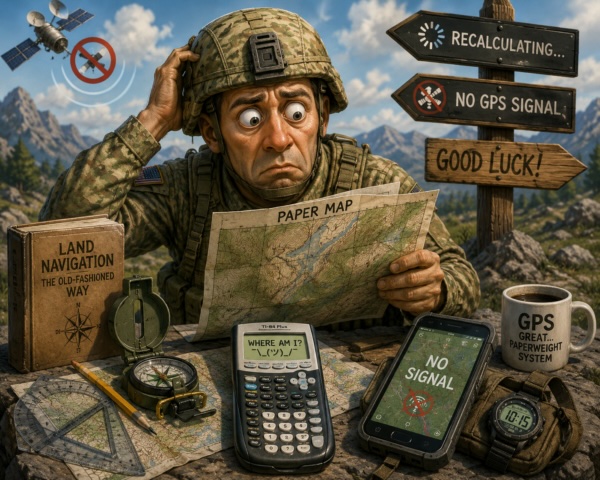
Technology has made us faster, smarter, and more capable than any generation that came before us. But somewhere along the way, we forgot an uncomfortable truth: every technological advantage eventually becomes a dependency. The Romans understood it. Napoleon understood it. The Army wrote it down more than a century ago. Use the calculator. Use the GPS. Use the ballistic computer. But never forget the skills that allow you to function when the batteries die. A truly advanced military isn’t the one that fights brilliantly when everything works. It’s the one that can still fight when nothing does.