CAMPAIGNING IN FULL SWING: Trump launches 32-day midterm blitz
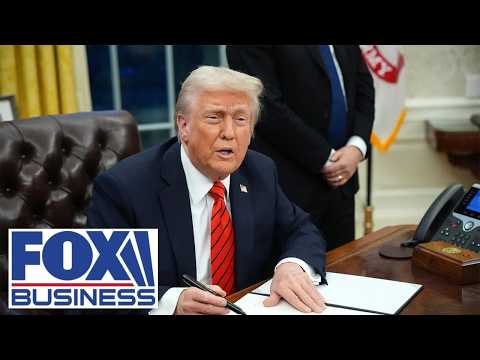
Fox News contributor Jason Chaffetz discusses the GOP’s midterm message on tax cuts, border security and energy production on ‘The Evening Edit.’
Citizen Writers Fighting Censorship by Helping Americans Understand Issues Affecting the Republic.
Fox News contributor Jason Chaffetz discusses the GOP’s midterm message on tax cuts, border security and energy production on ‘The Evening Edit.’

Let me tell you about a garden.
Not a metaphor about hope or healing or some poem you would find tacked to a kindergarten bulletin board. No. This is a garden about money, taxation, and the spectacular self-inflicted economic implosion of places like New York City and California. Stay with me.
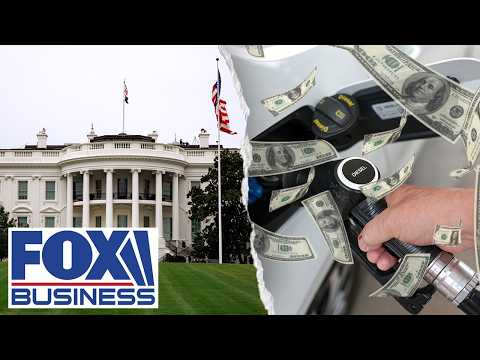
‘The Big Money Show’ panel discusses the White Houses’ efforts to combat diesel prices. Great Hill Capital Chairman Thomas Hayes says it’s good to see oil getting through the Strait of Hormuz.
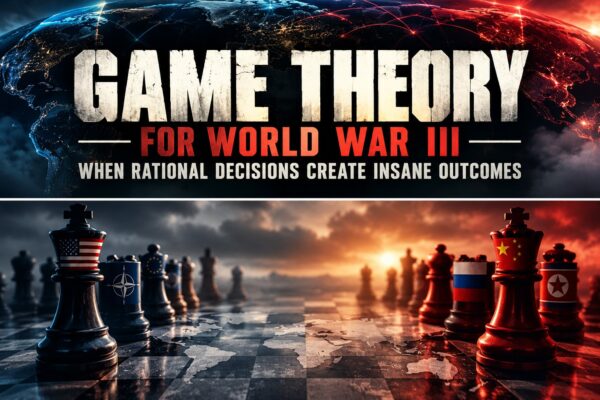
What if the geopolitical insanity of 2026 isn’t actually insane? Game theory suggests something more disturbing: perfectly rational nations, each acting in their own self-interest, can collectively produce disastrous outcomes that nobody actually wanted. Born from Cold War-era work at RAND, the Prisoner’s Dilemma explains everything from arms races to alliances and deterrence. Sometimes nobody has to be crazy for the world to go completely nuts.
Government Accountability Institute President Peter Schweizer discusses U.S. relations with China and Iran on ‘Jesse Watters Primetime.’
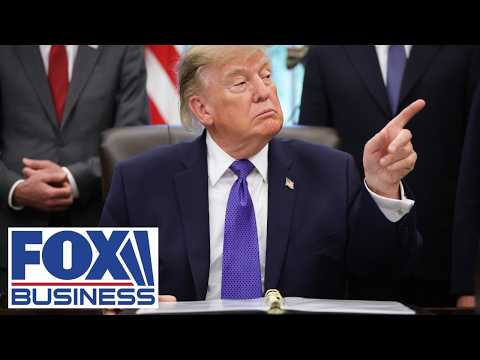
Rep. Greg Steube, R-Fla., discusses President Donald Trump’s historic Iowa steel plant announcement and the effects seen from the ‘Big Beautiful Bill’ on ‘The Evening Edit.’
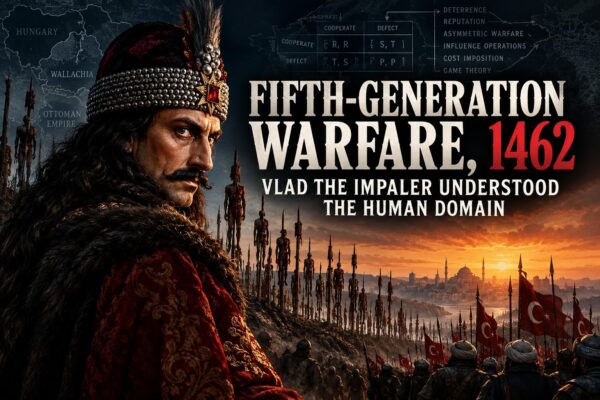
History remembers Vlad the Impaler as a blood-soaked medieval psychopath. But what happens if we assume Vlad was a rational actor? Suddenly the stakes, the terror, and the infamous Forest of the Impaled start looking less like random savagery and more like calculated deterrence. Vlad couldn’t outspend or outfight the Ottoman Empire, so he weaponized the one battlefield where a small power could compete with a giant: the human mind. Five hundred years before “fifth-generation warfare” became fashionable, Dracula was already playing game theory—with sharpened stakes.
Trump 47’s policies are improving our economy: In the third quarter it is projected to grow 6.2%. Non-residential fixed investment, which is the engine upon which economies grow, grew 11.7% during the second quarter. Factories are re-tooling and manufacturing jobs are expanding.
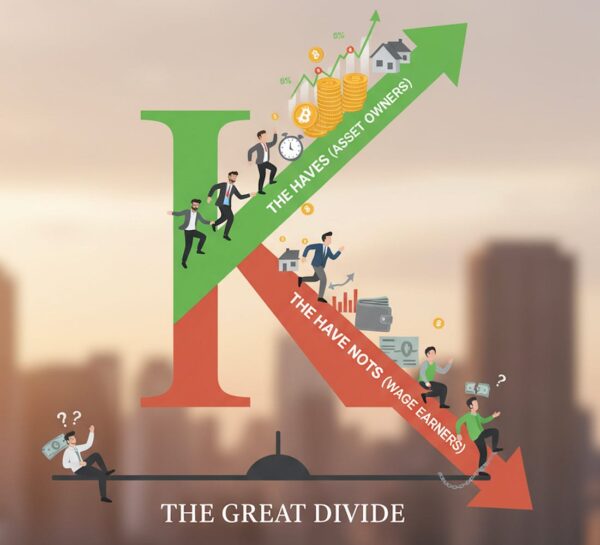
In This Instance? The ‘K’ is for ‘Kroger’
I have oft written of the K-Shaped Economy. To wit….
K Street Dominates DC – So a K-Shaped Economy Dominates the US
What is a K-Shaped Economy, you ask?:

Assimilation of new arrivals to the U.S. is an ongoing problem. Persistent failure of large immigrant groups to assimilate linguistically, civically, and economically can produce enduring ethnic enclaves, lower social trust, weaker shared civic norms, and political and cultural polarization that strain public institutions and social cohesion. This can lead to a direct threat to the American constitutional republic over time as respect for the U.S. rule of law fractures in favor of other ideological frameworks like Sharia law.

My dad, Tom, always had a theory that automobile insurance companies would eventually destroy deer hunting. Not because they hated hunters or because a shadowy cabal of claims adjusters met beneath Lansing every full moon, but because Dad understood basic economics: deer hit cars, insurance companies pay for cars, and insurance companies don’t enjoy paying for cars. To a hunter, a big Michigan whitetail is November tradition. To an insurance actuary, he’s a hood, grille, radiator, two airbags and a rental vehicle standing beside the highway eating grass. Dad didn’t need a conspiracy theory. He understood something far more powerful—incentives. Eventually, somebody was going to put Bambi into MS Excel.
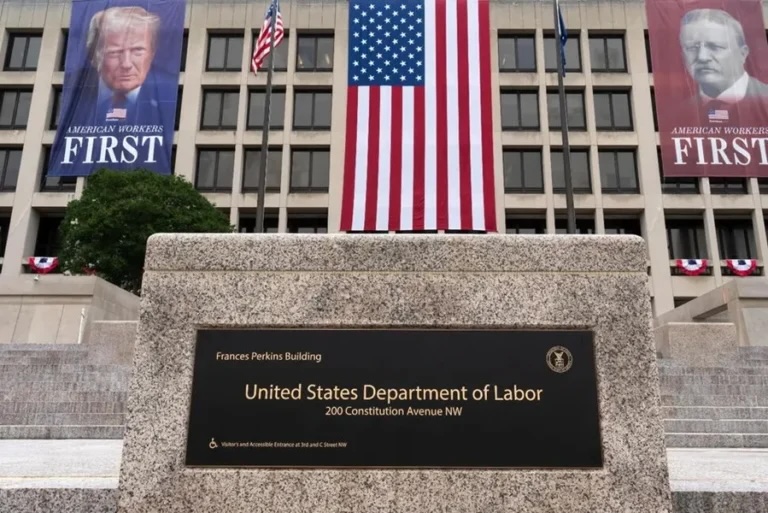
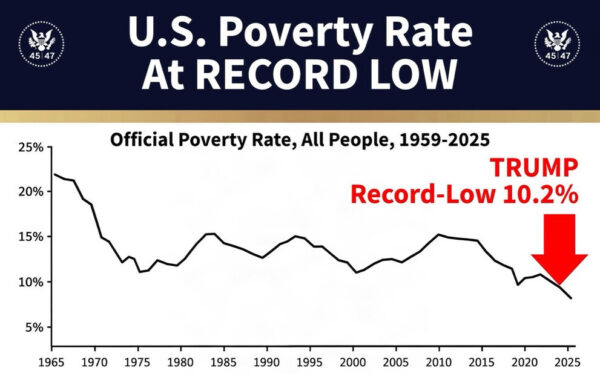
Poverty rate fell to the lowest level on record in 2025 while median household income climbed to a record high. Trump accomplished what LBJ’s “War On Poverty” failed to do: For the first EVER the official poverty rate dropped to 10.2% last year. Average household income rose by 2.6% to $87,460, the highest on record since 1967.

Where are the watchdogs? I have been asking myself that question for months. It is a story every American needs to hear, yet legacy media outlets have decided you don’t need to know.
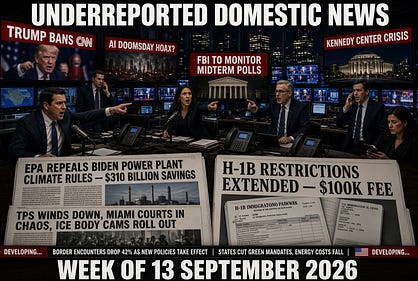
This is the seventh post in the ongoing weekly feature that highlights news and commentary on important geopolitical, cultural, and economic issues that the Democrat-media complex buries because they expose the hypocrisies associated with the continuing Marxist-Democrat narrative. Everything is properly sourced and linked for follow-up reading, whether from legacy media, independent sources, or social media.
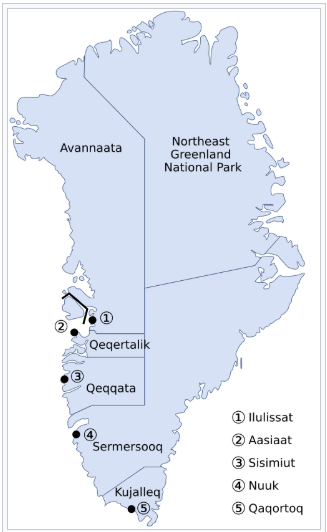
The population of Greenland is about 57,000 people. A government as small as Greenland’s needs the services of a competent outsider to protect its own internal agencies from making dangerous deals and allowing the enemy’s nose under the tent.
Former Reagan economist Art Laffer discusses the Fed’s decision to raise rates on ‘Kudlow.’
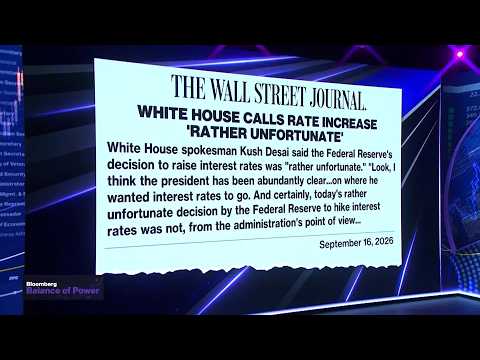
President Donald Trump says the Fed was wrong to raise interest rates by a quarter percentage point. In a Truth Social post, Trump said that US rates “should be 1%, or less.” Chris Phelan, White House Council of Economic Advisers chairman, agrees and says anyway you measure it – inflation is coming down. He is on “Balance of Power.”

Something happened to me not so long ago that caused me to revisit an idea made ubiquitous during the height of the Covid response by the Federal government and the states, severally; “non-essential jobs. I had had some work done on my jeep; new rear wheel bearings. Once I paid the bill, I drove …
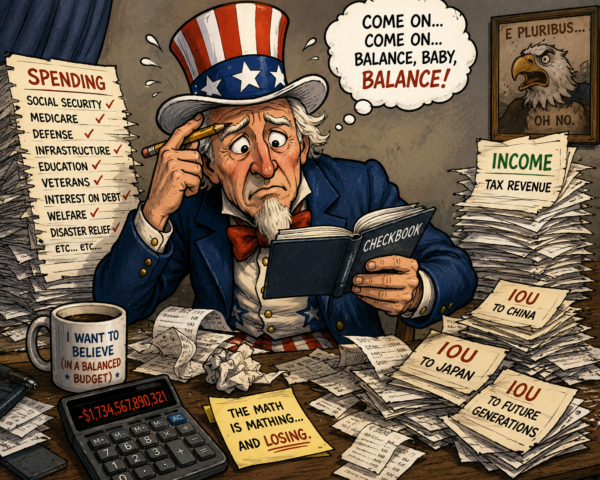
MAKE THE RICH PAY THEIR FAIR SHARE! But, do the guys with the private jets and their names on big buildings even have enough money stashed to balance Uncle Sam’s checkbook? My being an engineer, I figured math could answer that question.
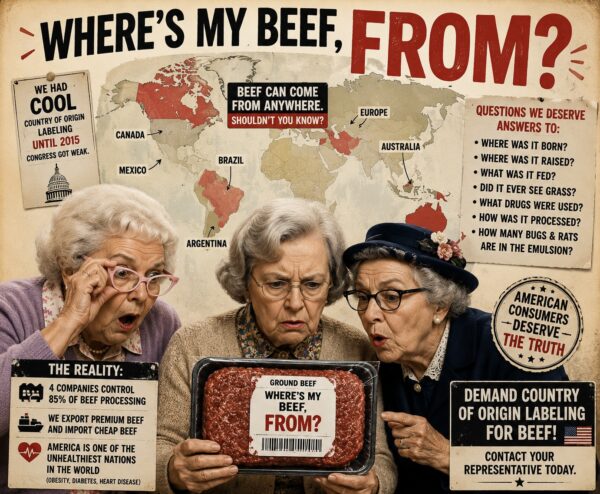
Remember the old Wendy’s commercial: “Where’s the beef?” In 2026, maybe the better question is: “Where’s my beef FROM?” America once required Country of Origin Labeling for beef—until Congress blinked in 2015. Now, while we export premium American beef and import foreign beef for our food supply, consumers deserve a simple answer about what they’re putting on the grill. Teddy Roosevelt took on the Beef Trust. Maybe it’s time to channel a little Bull Moose again.