WATCH: Trump boards brand-new Air Force One for the first time #foxnews #news #shorts

President Donald Trump boards the new Air Force One for the very first time.
Citizen Writers Fighting Censorship by Helping Americans Understand Issues Affecting the Republic.
President Donald Trump boards the new Air Force One for the very first time.

The Republican Party was birthed by Abolitionists who refused to compromise on slavery. They left the Northern Whigs who always compromised. Today, career politician Establishment Republicans always compromise or collaborate cheerfully. Their votes and budgets make a lie of their campaigns as “Republicans” and “Conservatives”. Career politicians made those labels utterly meaningless. Conversely, the Democrats …

La Reconquista is a fringe irredentist ideology promoted by some Chicano and Mexican-American activists. It calls for the cultural, demographic, or political “reclamation” of the U.S. Southwest, which Mexico lost after the Mexican-American War.

America at 250 years experienced epochal transitions from a Frontier to Agricultural to Industrial to (first-iteration) Post-Industrial society, from colonies to nation-state to world power and empire to super-power to global uber-super-power, economic crises, wars, and its terrible civil war of national definition in the War Between the States. Concurrently, each century had a paramount issue of national definition.

Former CENTCOM deputy commander Ret. Ret. Vice Admiral Robert Harward assesses negotiations with Iran, emphasizing the accomplishment of ships moving through the Strait of Hormuz, on ‘The Story.’

Brent oil fell below $80 a barrel for the first time in more than three months as the US-Iran deal to reopen the Strait of Hormuz boosted expectations for a revival in supply, with leading Wall Street banks reducing their price forecasts and regional benchmarks collapsing. Gasoline prices are also falling. Bloomberg Mike McGlone joins to discuss.

Rep. Carlos Gimenez, R-Fla., joins ‘Mornings with Maria’ to discuss Cuba’s reported drone capabilities, concerns about foreign adversaries operating on the island and his outlook on the future of the Cuban regime.
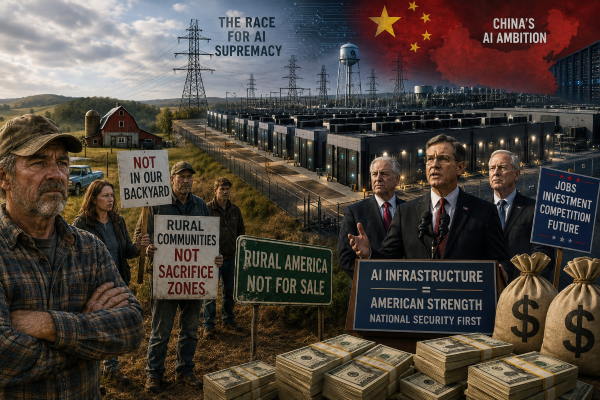
America’s next great divide may not be red versus blue. It may be the people who benefit from artificial intelligence versus the people forced to host its infrastructure. Across rural America, communities are being asked to accept massive data centers, increased power demands, and growing water consumption in the name of national security and the AI race with China. Meanwhile, the economic benefits often flow elsewhere. As politicians, tech companies, and investors promise prosperity and strategic advantage, local residents are left asking a simple question: who gets the rewards, and who carries the burden? The emerging battle over data centers is about far more than technology—it’s about trust, fairness, and whether rural America is a partner in the future or merely the place where the future gets built.

What if one of the freest, safest, and most stable nations on Earth built its national defense around ordinary citizens instead of distant institutions? Switzerland’s centuries-old militia tradition treats marksmanship, military service, and civic responsibility as parts of citizenship, not relics of the past. While much of the West increasingly views citizens as liabilities to be managed, the Swiss continue to trust their people with serious responsibilities. The result is a culture where freedom is paired with duty, rights are balanced by obligations, and the citizen remains at the center of the republic. Perhaps the most surprising lesson from Switzerland isn’t about rifles at all—it’s about trust.
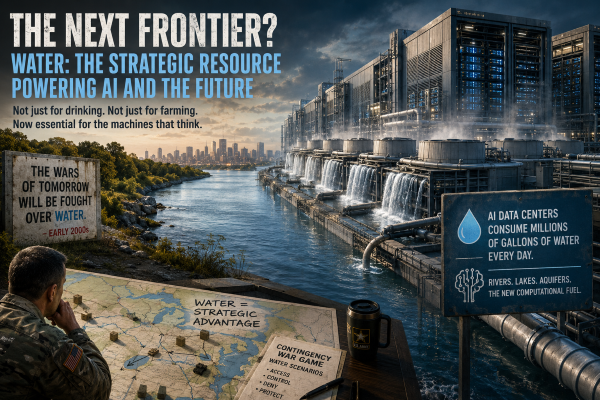
Twenty years ago, military planners and policy experts warned that the wars of the future would be fought over water. The wars never came—at least not in the way we expected. Today, however, a new competitor is entering the fight for one of humanity’s most precious resources: artificial intelligence. As massive data centers consume vast amounts of power and cooling water, rivers, lakes, and aquifers are becoming strategic assets once again. The future battle for water may not involve tanks and soldiers, but corporations, regulators, and communities struggling to determine who gets access to the fuel that powers the digital age. Perhaps the water warriors of the early 2000s weren’t wrong. They were simply ahead of their time.
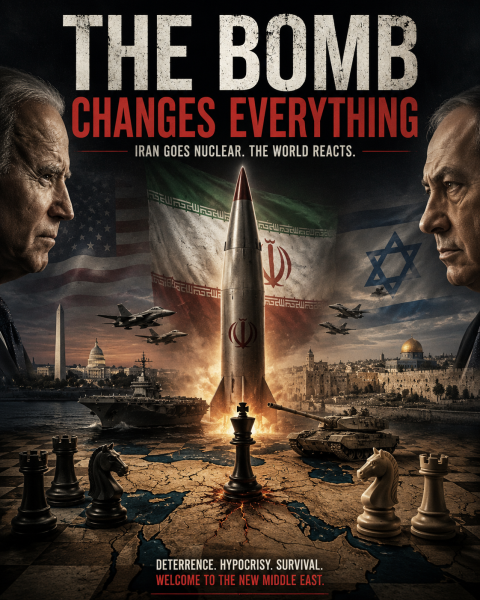
The world has spent decades arguing that nuclear weapons preserve peace through deterrence. Fair enough. But if they are essential for our security, on what basis do we claim they are unnecessary for someone else’s? That’s the uncomfortable question at the heart of the Iran debate. The world’s nuclear powers insist these weapons are too dangerous for others while simultaneously declaring them indispensable for themselves. Whether that position is wise, necessary, or pure hypocrisy depends entirely on which side of the missile silo you’re standing.
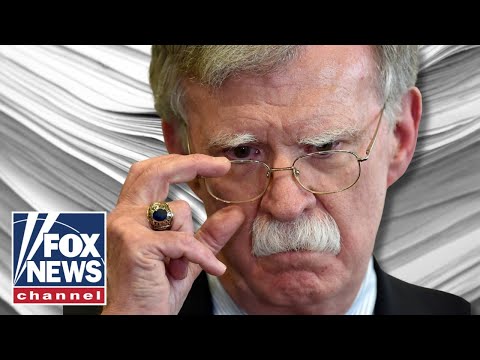
Fox News legal analyst Gregg Jarrett discusses the potential consequences facing former national security advisor John Bolton for allegedly retaining classified documents on ‘Hannity.’

Sen. Marsha Blackburn, R-Tenn., discusses State Secretary Marco Rubio’s comments on the Trump administration’s Cuba policy and the war in Iran on ‘The Evening Edit.’

Former Attorney General Pam Bondi told the House Oversight Committee that then-Deputy Attorney General Todd Blanche was in charge of the Justice Department’s botched release of the Jeffrey Epstein files, acknowledging that there were “redaction errors” in the handling of documents, according to Bondi’s opening statement, which was obtained by MS NOW.
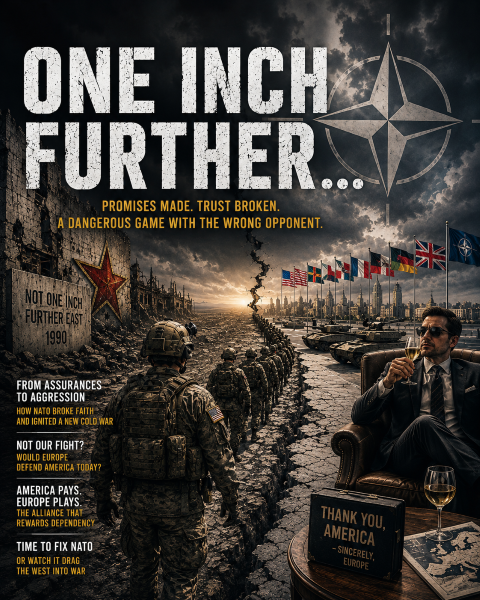
NATO was created to keep Europe from destroying itself again. Instead, decades after the Cold War ended, the alliance kept marching east while pretending Russia would simply accept endless expansion with polite concern and a diplomatic smile. From the Balkans to Ukraine, the promises of “not one inch further” slowly became a geopolitical punchline written in bureaucratic doublespeak and missile deployments. Meanwhile, Europe outsourced its defense, America paid the bill, and the alliance drifted from deterrence into an ideological security machine increasingly disconnected from reality. The question now is no longer whether NATO once served a purpose. The question is whether it still protects peace — or whether it has become a Cold War institution sleepwalking the West toward a conflict nobody truly wants to fight.

Former acting DHS Secretary Chad Wolf raises questions about White House security after an armed suspect neared security checkpoint.

The gunman has been identified as Nasire Best, 21, two sources briefed on the matter told MS NOW. He was transported to George Washington University Hospital, where the Secret Service said he died.

Rep. Carlos Gimenez, R-Fla., discusses the DOJ’s indictment of Raul Castro on ‘The Bottom Line.’
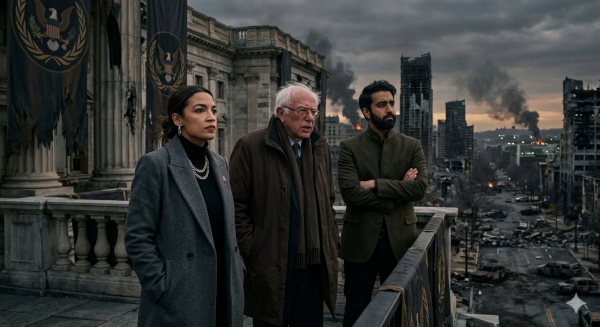
I would agree with Senator Bernie Sanders on one thing – we must oppose the oligarchy! But what, or who, exactly is that? And does Bernie even know what he is talking about?
Let us start by defining an oligarchy – which is a small elite group, usually very well-off (wealthy), who use their positions to serve themselves (note – not serve the people)…This is not politics; the democrat oligarchy is undertaking a Blood Revolution to subvert and destroy America. That is why AOC said she is not interested in titles, her goal is to change the country. Believe her, Bernie, Mamdani and other democrat oligarch, as they all want to change our country forever.

Hudson Institute senior fellow David Feith explains the importance of deterrence regarding Taiwan on ‘Kudlow.’